- Europe, like you've never read before -
Sunday, 7 December 2025
No Result
View All Result
  • it ITA
  • en ENG
Eunews
  • Politics
  • World
  • Business
  • News
  • Defence
  • Net & Tech
  • Agrifood
  • Other sections
    • Culture
    • Diritti
    • Energy
    • Green Economy
    • Finance & Insurance
    • Industry & Markets
    • Media
    • Mobility & Logistics
    • Sports
  • Newsletter
  • European 2024
    Eunews
    • Politics
    • World
    • Business
    • News
    • Defence
    • Net & Tech
    • Agrifood
    • Other sections
      • Culture
      • Diritti
      • Energy
      • Green Economy
      • Finance & Insurance
      • Industry & Markets
      • Media
      • Mobility & Logistics
      • Sports
    No Result
    View All Result
    Eunews
    No Result
    View All Result

    Home » Business » Rider directive, agreement among EU countries. Germany and France remain alone

    Rider directive, agreement among EU countries. Germany and France remain alone

    With the support of Greece and Estonia, the compromise text presented by the Belgian presidency passes at the EU Employment Council. Member country's duty to set terms of legal presumption of employment relationship, Italy gets exclusion of cab sector

    Simone De La Feld</a> <a class="social twitter" href="https://twitter.com/@SimoneDeLaFeld1" target="_blank">@SimoneDeLaFeld1</a> by Simone De La Feld @SimoneDeLaFeld1
    11 March 2024
    in Business
    rider

    Two deliveroo riders chat during a break in central Manchester on March 17, 2020, as Britain's Chancellor of the Exchequer Rishi Sunak unveiled a £330 billion ($400 billion, 363 billion euros) package of loans for virus-hit business. Britain on Tuesday, March 17, ramped up its response to the escalating coronavirus outbreak after the government imposed unprecedented peacetime measures prompted by scientific advice that infections and deaths would spiral without drastic action. (Photo by Oli SCARFF / AFP)

    Brussels – At the last chance on the timetable, the stalemate on new rules to protect the nearly 30 million riders and digital platform workers in the EU is broken. The front of the four member countries that opposed the adoption of the directive broke down: liberals in Germany and France put their foot down, but Greece and Estonia support the compromise text presented by the Belgian presidency of the EU Council and shelve the file.

    At the meeting of the labour ministers of the 27 countries, the lights were mainly on one agenda item: the last attempt to finalize the EU directive on digital workers before the end of the legislative term. By now a saga, with the first law coming out of the interinstitutional negotiations scuttled by member states back in December and the new agreement between the EU institutions on a second, much less ambitious text proposed by Belgium in February to break the impasse. Once again it was blocked by the council, with the uprising of a part of the parliament, which denounced the aggressive lobbying  by the gig economy giants and the privileged relations of some national leaders with some big companies.
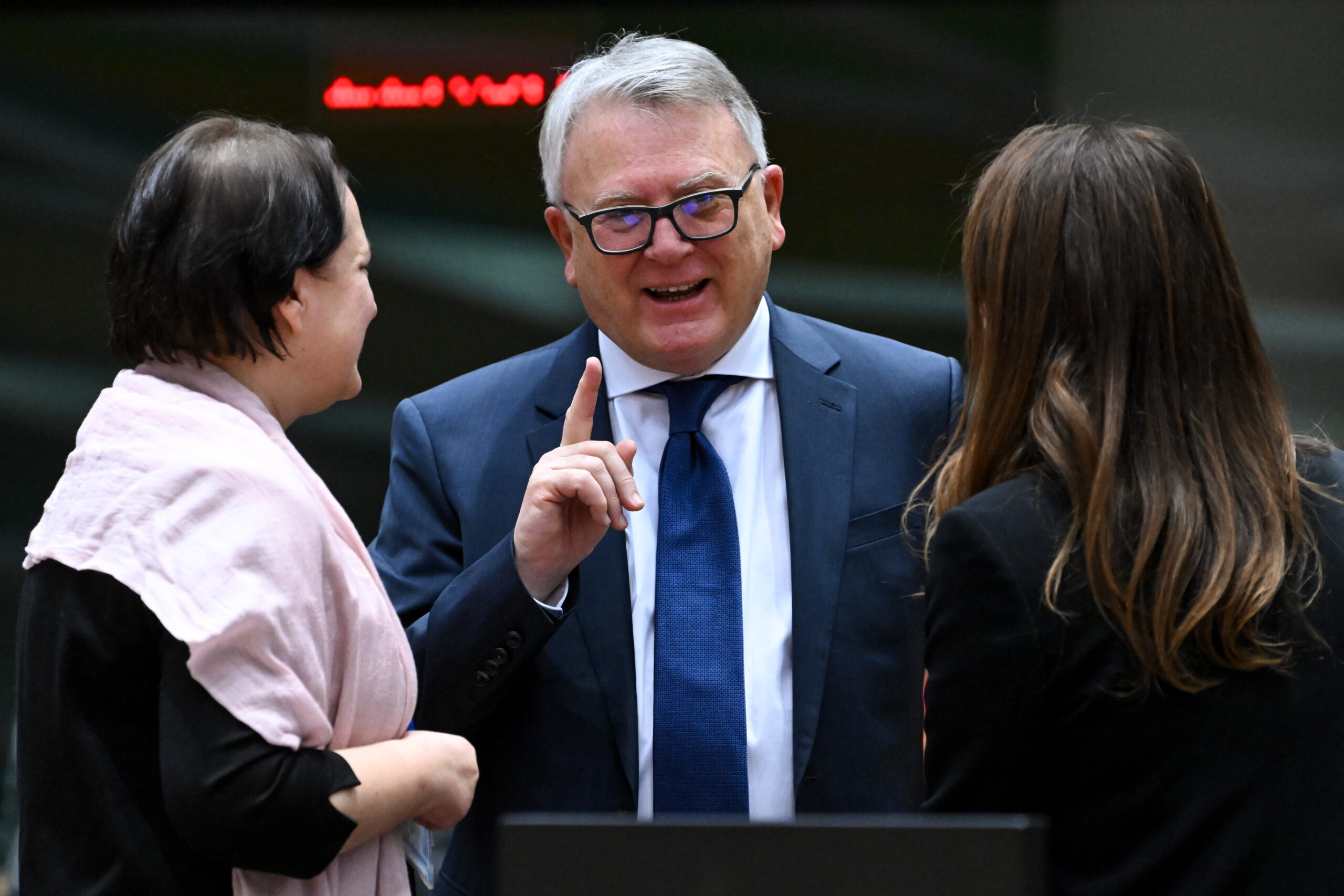
    Nicola Schmit, EU Commissioner for Labour, 11/03/24

    However, on the Belgian presidency’s text—and the increased flexibility left to member states to combat bogus self-employment—two of the four countries that formed a blocking minority at the EU Council gave in today. “The new EU rules will give platform workers more rights and protections without hindering the ability of platforms to develop,” exclaimed EU Commissioner for Jobs and Social Rights Nicolas Schmit.

    Yeses from Greece and Estonia break the blocking minority

    Turning the tables were Greece and Estonia. Athens’ Labour Minister, Domna Michailidou, informed EU counterparts that despite the “concerns that remain,” her government is ready to support the directive “to show a spirit of compromise.” For Greece, it remains “important to ensure a legal framework that works for employers, workers, and the market.” A similar address was delivered to the Council by the
    Estonian colleague.

    “Support with spirit of compromise,” stressing the need for “more clarity” and the importance of not legislating “at the expense of the business sector.”

    To be fair, Germany’s Labor Minister Hubertus Heil, also “in a personal capacity” wished the Belgian presidency well in finalizing the dossier, calling it “an important step for social Europe.” But the Social Democrat, a hostage of the liberals in Germany’s ruling traffic-light coalition, said he still had to abstain. France, which in recent days had tried one last time to water down the directive, presenting a clause that would effectively nullify the application of the presumption of subordinate relationship, confirmed its no vote. “From the beginning, we have advocated a legal presumption mechanism that would be clear, resting on elements that would make it possible to take into account the fake self-employed without, however, calling into question the status of the truly self-employed,” claimed the French diplomatic representative, Cyril Piquemal, on behalf of the Elysée.

    For Paris, despite “an evolution in the text” and “greater discretion” granted to national governments, it is still necessary to clarify that “it is for the member states alone to determine the notions of control and direction” that characterize an employment relationship. Assuming the point “is clarified in the coming days, France reserves the possibility of a positive vote when the directive is formally adopted,” Piquemal concluded.

    The main issues: the legal presumption and reversal of the burden of proof

    The main element of the compromise reached today revolves around a legal presumption that will help determine the proper employment status of people working in digital platforms. Based on collective agreements and EU case law, It will be up to member states to determine the facts indicating control and direction by employers necessary to trigger the presumption of an employer-employee relationship. That leaves the second pillar of the directive protecting digital workers: the reversal of the burden of proof, that is, the shift from the worker to the platform of the obligation to gather evidence to prove that a worker is truly self-employed.

    But the directive is also the first piece of EU legislation to regulate algorithmic management in the workplace: the agreement ensures that workers are duly informed about the use of automated monitoring and decision-making systems concerning, among other things, their employment, working conditions and earnings. As for automated decisions, they cannot be made without human supervision and evaluation. And workers will have the right to obtain an explanation and review of such decisions.
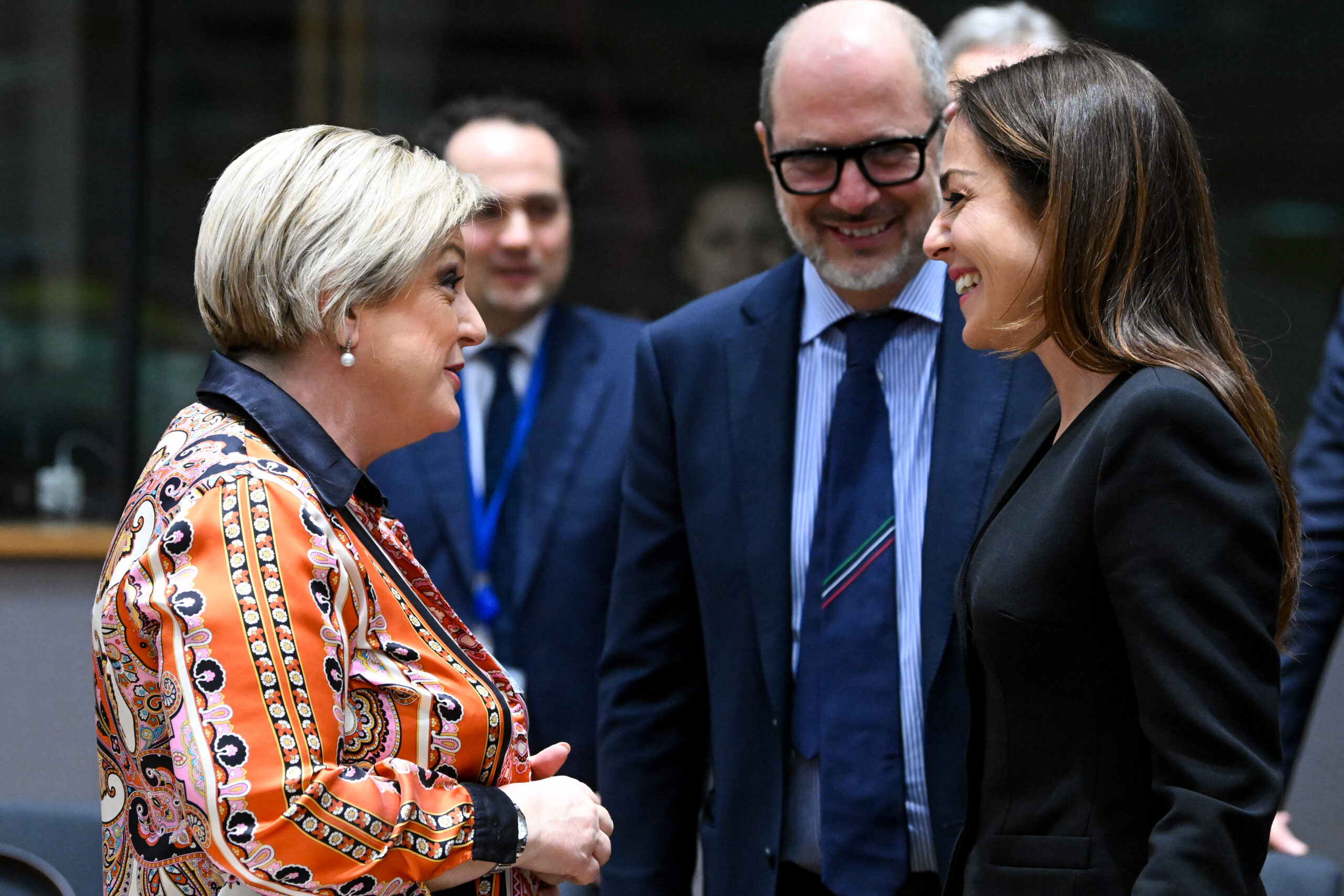
    Ministers Marina Elvira Calderone (Italy) and Domna Michailidou (Greece), 11/02/24

    Several member states stressed during today’s council meeting that they would support the compromise despite its weakness compared to the text that came out of the first trialogue, the one held in mid-December under the Spanish EU presidency. Starting with Madrid itself, which also warned that if the “French clause” is included in the final text it will withdraw its support. And it expressed its disagreement with the “final wording of the presumption of subordination.” Portugal, Bulgaria, Slovakia, Malta, Luxembourg, and the Czech Republic were also critical. But in the face of the knowledge that today’s was the last chance, the idea that the agreement is nevertheless an improvement on the current state passes for all.

    For Italy, Minister of Labour Marina Elvira Calderone expressed satisfaction with a “balanced solution” that “leaves us the freedom at the national level to decline the principles of the directive in our system, maintaining protections for workers regardless of their status, without penalizing companies.” The Italian government wins its small battle over the exclusion of the traditional cab sector from the directive: diplomatic sources confirm that the Commission has clarified that the rules “will not apply to the sector, as it is already regulated.”

    English version by the Translation Service of Withub
    Tags: accordogig economyrider

    Related Posts

    rider deliveroo gig economy piattaforme
    Business

    Who blocked the EU directive on the rights of riders and digital workers

    1 March 2024
    due diligence
    Business

    EU governments scuttle corporate due diligence directive. Strasbourg denounces pressure from industry associations

    28 February 2024
    Rider UE riders
    Business

    Riders, the road to more rights is all uphill. Member states scuttle (one more time) EU directive on digital workers

    16 February 2024
    riders lavoro digitale
    Business

    Riders, new EU (watered-down) agreement to stop fictitious self-employment

    8 February 2024
    map visualization
    US President Donald Trump gives a thumbs up as he departs the stage during the signing ceremony of a peace deal with the President of Rwanda Paul Kagame and the President of the Democratic Republic of the Congo Felix Tshisekedi at the United States Institute of Peace in Washington, DC, on December 4, 2025. Trump on Thursday brings the leaders of Rwanda and the Democratic Republic of Congo together to endorse a deal that Trump has hailed as his latest peace triumph despite ongoing violence on the ground. Trump hopes the agreement will pave the way for the United States to gain access to critical minerals in the eastern DRC, a violence-torn region home to many of the key ingredients in modern technologies such as electric cars. (Photo by ANDREW CABALLERO-REYNOLDS / AFP)

    The US wants to “cultivate resistance” to Europe’s decline. No comment from Brussels

    by Simone De La Feld @SimoneDeLaFeld1
    5 December 2025

    The National Security Strategy outlined by the Trump administration is a slap in the face to Europe, which risks the...

    OPERAIO ANZIANO OPERAI ANZIANI LAVORO FABBRICA PRODUZIONE GENERATE AI IA

    Italians to Meloni: ”No to raising retirement age”

    by Emanuele Bonini emanuelebonini
    5 December 2025

    The latest Eurobarometer survey sees a clear opposition to working more. Majority called for reforming work and health, strengthening the...

    Italian, EU, NATO and Latvian flags are lined up ahead of the mmeeting of the Italian and Latvian Prime Ministers in Riga on July 10, 2023. (Photo by Gints Ivuskans / AFP)

    ICE listens to Europe: “NATO’s new procurement policy and procedures”

    by Redazione eunewsit
    5 December 2025

    For the director of the Brussels Office, Tindaro Paganini, "it is essential that Italian companies are fully aware" of the...

    ANDREJ BABIŠ MEMBRO DELLA CAMERA DEI DEPUTATI DELLA REPUBBLICA CECA LEADER ANO

    Czech Republic: Andrej Babiš solves his conflict of interest; he’s no longer ‘Babisconi’

    by Enrico Pascarella
    5 December 2025

    The future prime minister has announced that he will dispose of the shares in his multinational company Agrofert. One hundred...

    • Director’s Point of View
    • Letters to the Editor
    • Opinions
    • About us
    • Contacts
    • Privacy Policy
    • Cookie policy

    Eunews is a registered newspaper
    Press Register of the Court of Turin n° 27


    Copyright © 2025 - WITHUB S.p.a., Via Rubens 19 - 20148 Milan
    VAT number: 10067080969 - ROC registration number n.30628
    Fully paid-up share capital 50.000,00€


    No Result
    View All Result
    • it ITA
    • en ENG
    • Newsletter
    • Politics
    • World politics
    • Business
    • General News
    • Defence & Security
    • Net & Tech
    • Agrifood
    • Altre sezioni
      • European Agenda
      • Culture
      • Diritti
      • Energy
      • Green Economy
      • Gallery
      • Finance & Insurance
      • Industry & Markets
      • Letters to the Editor
      • Media
      • Mobility & Logistics
      • News
      • Opinions
      • Sports
    • Director's Point of View
    • L’Europa come non l’avete mai ascoltata
    • Draghi Report
    • Eventi
    • Eunews Newsletter

    No Result
    View All Result
    • it ITA
    • en ENG
    • Newsletter
    • Politics
    • World politics
    • Business
    • General News
    • Defence & Security
    • Net & Tech
    • Agrifood
    • Altre sezioni
      • European Agenda
      • Culture
      • Diritti
      • Energy
      • Green Economy
      • Gallery
      • Finance & Insurance
      • Industry & Markets
      • Letters to the Editor
      • Media
      • Mobility & Logistics
      • News
      • Opinions
      • Sports
    • Director's Point of View
    • L’Europa come non l’avete mai ascoltata
    • Draghi Report
    • Eventi
    • Eunews Newsletter

    Attention