Brussels – Vladimir Putin is stalling. During a press conference in the Kremlin, he claimed that he is “in favour” in principle of a cessation of hostilities in Ukraine, but he also warned that there are still a number of “serious issues” to be resolved before he can give the green light to the truce. And he then kicked the ball into the stands, postponing further explanation until after talks he will have in the coming hours: first with Steve Witkoff, who landed in Moscow yesterday, and then (probably) on the phone with Donald Trump.
The whole world was waiting for him, with bated breath. But as usual, the Russian president did not get out of line. Speaking this afternoon (March 13) to reporters alongside his Belarusian counterpart Aleksander Lukashenko, he provided some comment on the proposal for an immediate 30-day ceasefire, put on paper by the Kyiv and Washington delegations meeting the day before yesterday in Jeddah in Saudi Arabia.
“The idea is good and we certainly support it,” he said, adding that Russia agrees with “ending the conflict peacefully.” But “there are issues that need to be discussed and negotiated with our American colleagues and partners, perhaps through a phone call with President Trump.” A little for one, a little for the other.

Putin said he was “technically supportive” not so much of the agreement in its current wording—about which the Kremlin yesterday had already leaked some skepticism—but of the need to reach an end to hostilities through diplomatic means. However, he reiterated that there are a number of “nuances” and “serious issues” to be examined, including the situation in the oblast’ of Kursk, invaded by the Ukrainians last August. In other words, the draft truce does not take sufficient account of the crucial interests of the Federation, which will have to be “studied very carefully” during the upcoming rounds of negotiations.
In Moscow’s perspective, any acceptable truce will have to “lead to lasting peace and remove the root causes of this crisis,” a position that would signal, according to some analysts, that Putin has no intention at all of abandoning his maximalist demands related to the overall security architecture on the Old Continent (regarding especially the role of NATO, against which he lashed out for the umpteenth time today through a joint statement with Lukashenko).
Before the president spoke, a Russian official had conveyed that the agreement negotiated by emissaries from Kyiv and Washington was substantially inadmissible as it would only serve to provide “breathing space” for the Ukrainian military, currently retreating from the Kursk area where Putin visited just yesterday and under great pressure along the entire front line, which stretches some 2,000 kilometers.

Putin is speaking this evening with Steve Witkoff, the White House Special Envoy for the Middle East (who despite this title is handling negotiations on the war in Ukraine), and may hear from his U.S. counterpart Donald Trump on the phone in the next few hours, although a talk has not yet been officially scheduled.
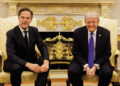
From Washington, meanwhile, it appears that the tycoon is growing impatient: “We need to conclude the agreement quickly,” he said from Washington, shortly after claiming that the negotiations “are going well.” Trump, who received today in the Oval Office the head of NATO Mark Rutte, added that he would find it “very disappointing” if Putin rejected the ceasefire, while yesterday he had made some allusions to possible financial retaliation with which the United States could strike Russia if the latter pulled out of the negotiations.
English version by the Translation Service of Withub

![Il presidente ucraino, Volodymyr Zelensky (a sinistra) con il presidente del Consiglio europeo, Antonio Costa [Bruxelles, 6 marzo 2025. Foto: European Council]](https://www.eunews.it/wp-content/uploads/2025/03/costa-zelensky-350x250.jpg)