Brussels – The Vatican as a framework for new negotiations between Russia and Ukraine? This is the question that has been circulating among the chancelleries halfway around the world in the last few hours, following a series of contacts between Washington, the EU capitals, Italy, and the Holy See. Around the eternal city—and the new pontiff Leo XIV—the meshes of international diplomacy seem to be tightening to bring Moscow and Kyiv to the negotiating table, overcoming the failures of previous rounds of negotiations.
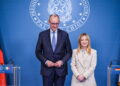
The speculation about the potential role of the Vatican in the negotiations between Russia and Ukraine was given fresh impetus last night (21 May) by a scant note from Palazzo Chigi reporting on a phone conversation between Prime Minister Giorgia Meloni and the new pope Leo XIV, born Robert Francis Prevost.
The Prime Minister found “in the Holy Father the confirmation of willingness to host the next talks between the parties in the Vatican,” the statement reads. The confrontation between the two followed, it turns out, Donald Trump‘s ‘request’ to test the waters at the Holy See regarding a potential involvement of papal diplomacy in the ongoing (or rather stalled) negotiations on the Ukraine war.

Shortly after the election to the throne of Peter, the pope expressed his desire to give a new centrality to the Vatican as a mediator in global conflicts, though without directly mentioning the conflict in Ukraine. In recent days, Leo XIV met with Volodymyr Zelensky and White House number two, JD Vance, accompanied by Secretary of State Marco Rubio. In what has been touted by the Italian government as a political success for the premier, Vance also confronted Ursula von der Leyen, who finally seems to be taken into some consideration by Trump.
The star-studded diplomatic chief expects the Kremlin to present its terms for a ceasefire soon, “perhaps in a few days”. The US administration will then scrutinise the Russian proposal, Rubio says, to determine Vladimir Putin’s “seriousness” with respect to a negotiating process that has been jammed for months and is greatly annoying Washington, which has already threatened several times to withdraw from the talks.
In spite of the
public declarations of openness to direct talks with the Ukrainian leadership, the tsar’s concrete gestures do not so far suggest any readiness to engage in real negotiations with Kyiv. This is demonstrated, in broad daylight, by the deadlock reached so far in the meetings between the delegations of the belligerents: the indirect one in Riyadh, last March, and the direct one in Istanbul last week.
.

On the other hand, there does not seem to be much incentive for Moscow to cease hostilities, at least at this stage. On the ground, the situation is favourable to the Russian army, while diplomatically, the front of Kyiv’s allies has proved particularly fragile since Trump decided to take the matter into his own hands, showing himself to be overly lenient towards the aggressor and even offering him business opportunities with the United States.
The tsar, moreover, has never explicitly recognised the legitimacy of Zelensky or Ukraine as a sovereign and independent nation. On the contrary, the maximalist demands that the Russian negotiating team continues to put on the table—including the ‘neutralisation’ of the Ukrainian state, the renunciation of NATO membership and the de jure cession of the occupied territories to the Federation—seem to go in the opposite direction. This, at least, is the leitmotif in Brussels, where, just yesterday, the Twenty-Seven gave the green light to the 17th package of sanctions against the Kremlin to continue ‘putting pressure’ on Putin.
I had a good conversation with the President of the Council of Ministers of Italy @GiorgiaMeloni. As always, cool ideas.
We discussed yesterday’s talks with President Trump and European leaders. We are coordinating our positions. Italy supports all efforts aimed at achieving a… pic.twitter.com/YdEl26IZ3g
– Volodymyr Zelenskyy (@ZelenskyyUa) May 20, 2025
English version by the Translation Service of WithubBe that as it may, international diplomacy still won’t give up. The Meloni-Prevost call is the latest in a relentless series of phone calls that are ringing frantically in the offices of foreign ministries in many countries. From Tirana to Washington, from Brussels to Istanbul, from London to Warsaw, from Paris to Helsinki, from Berlin to Kyiv, via Rome and the Vatican.
Palazzo Chigi announced that “It was agreed to maintain close coordination between the partners with a view to a new round of negotiations for a ceasefire and a peace agreement.” There is no shortage of conspiracy theories about diplomatic blunders between allies, fuelling political debate both at home and abroad. The forthcoming meetings, according to those involved, will adopt ‘fluid’ formats and may involve variable geometries. It remains to be seen to what extent these meetings will be able to seriously bring a diplomatic solution to the crisis that has been tearing at the heart of Europe for 11 years.