



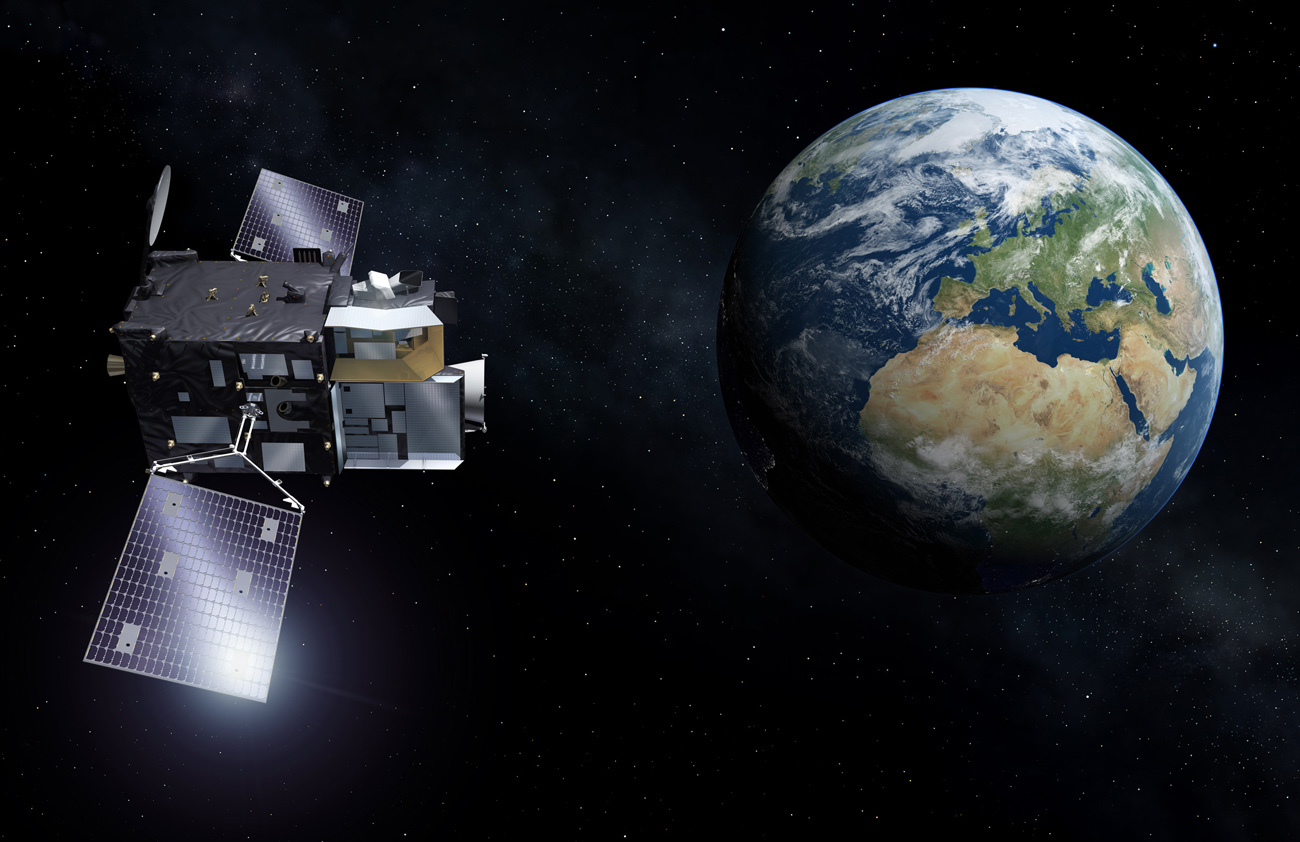
Brussels – The successful launch of the Sentinel-4 satellite from Cape Canaveral yesterday, 1 July 2025, marks a major step forward for air quality monitoring in Europe. Sentinel is part of the Copernicus programme, the European Union’s Earth observation system, and is the first satellite in geostationary orbit (i.e. a circular orbit around the Earth at a distance that allows the satellite to complete its orbit in 24 hours). Unlike other satellites, it also does not have an autonomous body but is hosted by Eumetstat’s meteorological satellite MTG-Sounder (MTG-S) and uses a UVN spectrometer, an advanced instrument capable of detecting pollutants such as ozone, formaldehyde, and sulphur dioxide.
The main novelty of the Sentinel-4 mission, however, concerns the rapidity with which it will be able to monitor, identify, and react to air pollution peaks and smog movements. In fact, it is now possible to monitor these phenomena in real time, unlike polar satellites that provide data once a day, and this is one of the reasons why air pollution causes (in Europe alone) some 600,000 premature deaths each year.
Air pollution also tends to accumulate more in particular areas, including the Po Valley, due to geographical conditions, and ground-based monitoring networks are often not evenly distributed and fail to provide a complete, and above all, timely view of air quality.
The Sentinel-4 data will be crucial in supporting major EU environmental policies, such as the Zero Pollution Action Plan and the Green Deal. With data that can identify critical areas in real-time and provide unprecedented insights, this satellite represents an important tool in the service of science, institutions, and, above all, citizens and their health.
English version by the Translation Service of Withub






![La video riunione dell'Eurogruppo [27 marzo 2026. Foto: European Council]](https://www.eunews.it/wp-content/uploads/2026/03/eurogruppo-260327-120x86.jpg)
