



Brussels – Preparing for the worst, knowing what to do if it happens. The European Commission is continuing along the line inaugurated at end of March, with the survival ‘guide’ to the first 72 hours of the crisis. Now, it is starting to name the “worst” that could happen: natural disasters, antibiotic resistance, viruses with pandemic potential that can be contracted through breathing as well as chemical attacks and biological warfare. For all these types of threats, there is a call for improved coordination, which is primarily political.
There are no resources to invest in this. At the moment, 5 billion euros are available for the whole period of 2021-2027 from the different programs related to health and crisis management (EU4Health, Horizon Europe and rescEU), and the Commission promises to make money available for crisis preparedness in the next multiannual budget, the first draft of which is expected next week (16 July).

EU Commissioner for Crisis Management, Hadja Lahbib [Strasbourg, July 9, 2025]
However, the Commissioner for Crisis Management, Hajda Lahbib, announces: “We will increase HERA’s resources between now and 2027,” in addition to creating a European network, because “with good coordination, we can save taxpayers’ money.” She adds, “Preparedness also has a cost, and it’s important to start exchanging information to avoid gaps and overlaps.” At the moment, she acknowledges, “We don’t know what other countries have in their inventories.”
What the Commission is urging is to start studying how to make medical and health countermeasures available in the event of a crisis. It’s not about stockpiling large quantities of medicines or equipment, but rather about developing a strategy for pooling, relocating, and supplying them. The ability to use armed forces for civil purposes will play a key role in this. The civil protection mechanism and the armies will need to be able to cooperate to deal with the crises that the EU will face. “First and foremost, threats must be recognized,” Lahbib stressed, emphasizing the importance of a control room to act as a “sentinel.”
“Our goal is clear – to protect people,” emphasizes Roxana Minzatu, Executive Vice-President of the Commission responsible for Social Rights and Preparedness. “Preparedness is a collective responsibility, and working with Member States, the EU can make a real difference. Whether facing natural disasters or biological threats, we must ensure essential goods remain available.”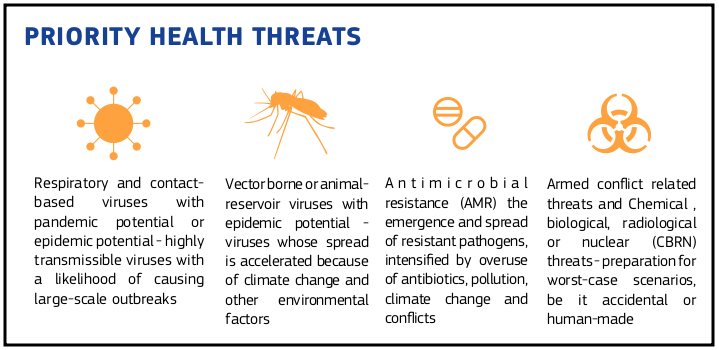
This is what the strategy is all about at the moment: ensuring that everything works even when things go wrong, guaranteeing access to essential goods and critical resources across the European Union through increased collaboration with Member States. In the wake of the COVID-19 pandemic, when the economy came to a standstill, forcing lockdowns and requiring the need to address rationing and shortages of goods, food, and medical supplies, the EU intends to establish an integrated European crisis management system with a comprehensive operational network.
There are five areas where the European solidarity network must be built, starting with emergency supplies of essential equipment and materials (such as tents, blankets, and water purification kits). Additionally, medical supplies are required, including vaccines, medications, and emergency medical equipment. Thirdly, states will need to lend critical raw materials, i.e., resources vital to industry and strategic autonomy. The fourth priority is energy equipment to maintain energy security (such as power generators and high-voltage equipment). Finally, agricultural and water security involves defining potential measures against food and water shortages in the event of a crisis.
Within this framework, the Commission will elaborate a list of essential medical countermeasures in the event of armed aggression or incidents involving chemical and biological agents. “Today we reinforce the European predictability framework in a world full of uncertainty,” assures Lahbib. “I welcome the adoption of these strategies, however, the financial provisions are missing”, stressed Tomislav Sokol, the EPP group coordinator in the Public Health committee. “These strategies are necessary to ensure our preparedness for future crises, based on the idea of solidarity. Solidarity —our fundamental value— is something we must preserve because without solidarity there is no European Union”.
English version by the Translation Service of Withub




![La video riunione dell'Eurogruppo [27 marzo 2026. Foto: European Council]](https://www.eunews.it/wp-content/uploads/2026/03/eurogruppo-260327-120x86.jpg)
