



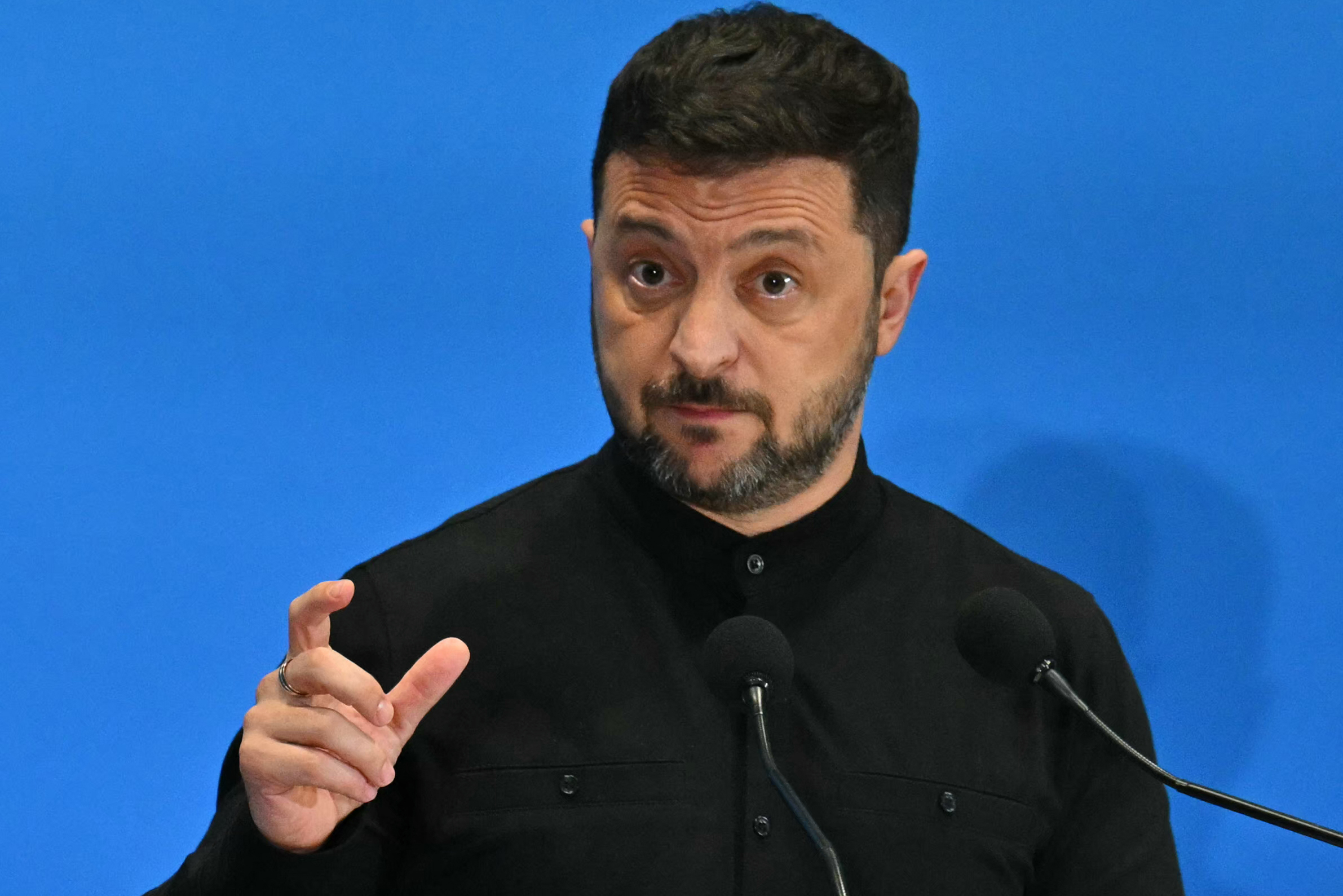
Brussels – For the third time in three months, the negotiating teams of Ukraine and Russia will meet tomorrow in Istanbul to try and break the diplomatic impasse. High on the agenda are fresh prisoner exchanges, the return of kidnapped Ukrainian minors, and a top-level meeting between the presidents of the two warring countries. But on this last point, as well as on the ceasefire agreement, expectations are rather low.
The announcement came late last night (July 21) from Volodymyr Zelensky himself. In a post on X, the Ukrainian president reported the suggestion by Rustem Umerov, the former defense minister and now head of the National Security Council, to “hold a new meeting of representatives in Turkey” to revive the negotiating track between Kyiv and Moscow.
“Ukraine is ready to work as productively as possible to secure the release of our people from captivity and the return of abducted children, and to prepare a leaders’ meeting,” Zelensky specified, revealing that the meeting between the delegations has been set for tomorrow (July 23) in Istanbul, at the same venue as the two previous rounds of talks held in mid-May and the beginning of June, respectively. Once again, Umerov will lead the Ukrainian team.
.
I held a meeting on the outcomes Ukraine needs from the negotiation efforts.
Secretary of the National Security and Defense Council of Ukraine, Rustem Umerov, reported on the implementation of the agreements reached at the second meeting with the Russian side in Istanbul, as… pic.twitter.com/0JQ1fGyaPC
– Volodymyr Zelenskyy (@ZelenskyyUa) July 22, 2025
From the Russian side, no official confirmation of the date of the talks has arrived yet. In contrast, there has been discordant information leaked to the national media. The Tass agency confirmed the Ukrainian version, stating that only one day of talks was scheduled for tomorrow, while RIA reported that talks were planned for Thursday and Friday (24 and 25 July).
At any rate, although the news that the emissaries of the two belligerent countries will once again sit down at the negotiating table is unquestionably positive in itself, expectations for a decisive breakthrough on the end of the war, almost three and a half years after its start in February 2022, are actually quite low.
The two previous meetings in Istanbul yielded no results, at least in terms of seeking an understanding on a possible truce, since the positions remain irreconcilable both in substance and approach. The Kremlin spokesman Dmitri Peskov reiterated this once again today, claiming he did not expect “miraculous progress” given the “diametrically opposed” positions of the two chancelleries.

On the substance, the respective demands are mutually unacceptable: among other things, Kyiv wants an immediate and total ceasefire, security guarantees, and the freedom to choose to join NATO and the EU. In contrast, Moscow demands the demilitarization and neutralization of the adversary, the withdrawal of Ukrainian troops from the four partially occupied oblasts (to annex them to its own territory, along with Crimea) and the cessation of Western military aid.
As for the approach, Russia does not even share the idea to stop fighting as a prerequisite for starting negotiations, as requested by the attacked country, as it does not believe it should lay down its arms until a comprehensive and lasting peace agreement has been reached to resolve what the Federation describes as the “root causes” of the crisis.
The objective of a global agreement remains a distant dream. To achieve it, the starting point would have to be for Zelensky to meet Putin face-to-face. On this point, Zelensky has long been urging his counterpart to engage. However, the Kremlin’s chief wants no part of it, as he considers his counterpart to be illegitimate because, he insists, his term of office expired in May 2024 (yet, due to the Russian invasion, Ukraine is under martial law, which prohibits new elections from being held).

After all, even Donald Trump appears to have run out of patience with the Russian president. After
months of taking a particularly soft stance toward Moscow, the White House’s chief recently threatened to impose “severe sanctions” if no significant progress is made in negotiations towards peace by the end of August.
In the meantime, Kyiv’s European allies maintain the hard line. Having overcome Slovakia’s opposition, the EU adopted its 18th sanctions package last week, targeting Russia’s energy and banking sectors. And in the new EU draft budget for post-2027, Ursula von der Leyen proposed creating a €100 billion special fund to support Ukraine.
As for the Istanbul talks scheduled for tomorrow, French foreign minister Jean-Noël Barrot sees them as “laudable”, but only “if they lead to a meeting at the level of heads of state, with a view to concluding a ceasefire.” “It has now been five months since Ukraine agreed to an unconditional 30-day ceasefire allowing for the opening of negotiations, because we don’t negotiate under bombs, and we have been waiting for five months for Vladimir Putin to accept the same principle,” the minister said, while on a mission in Eastern Ukraine.
English version by the Translation Service of Withub




![La video riunione dell'Eurogruppo [27 marzo 2026. Foto: European Council]](https://www.eunews.it/wp-content/uploads/2026/03/eurogruppo-260327-120x86.jpg)
