



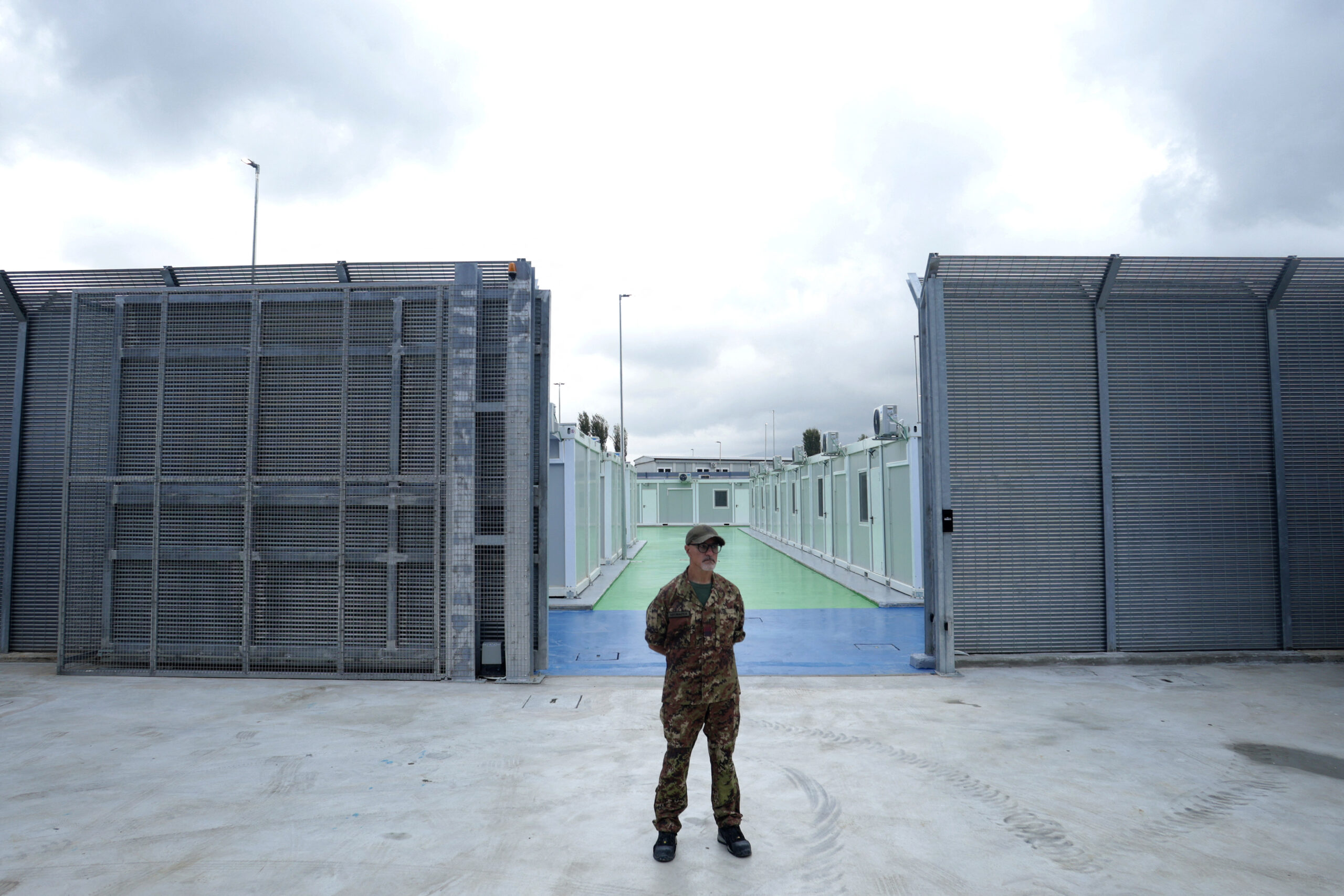
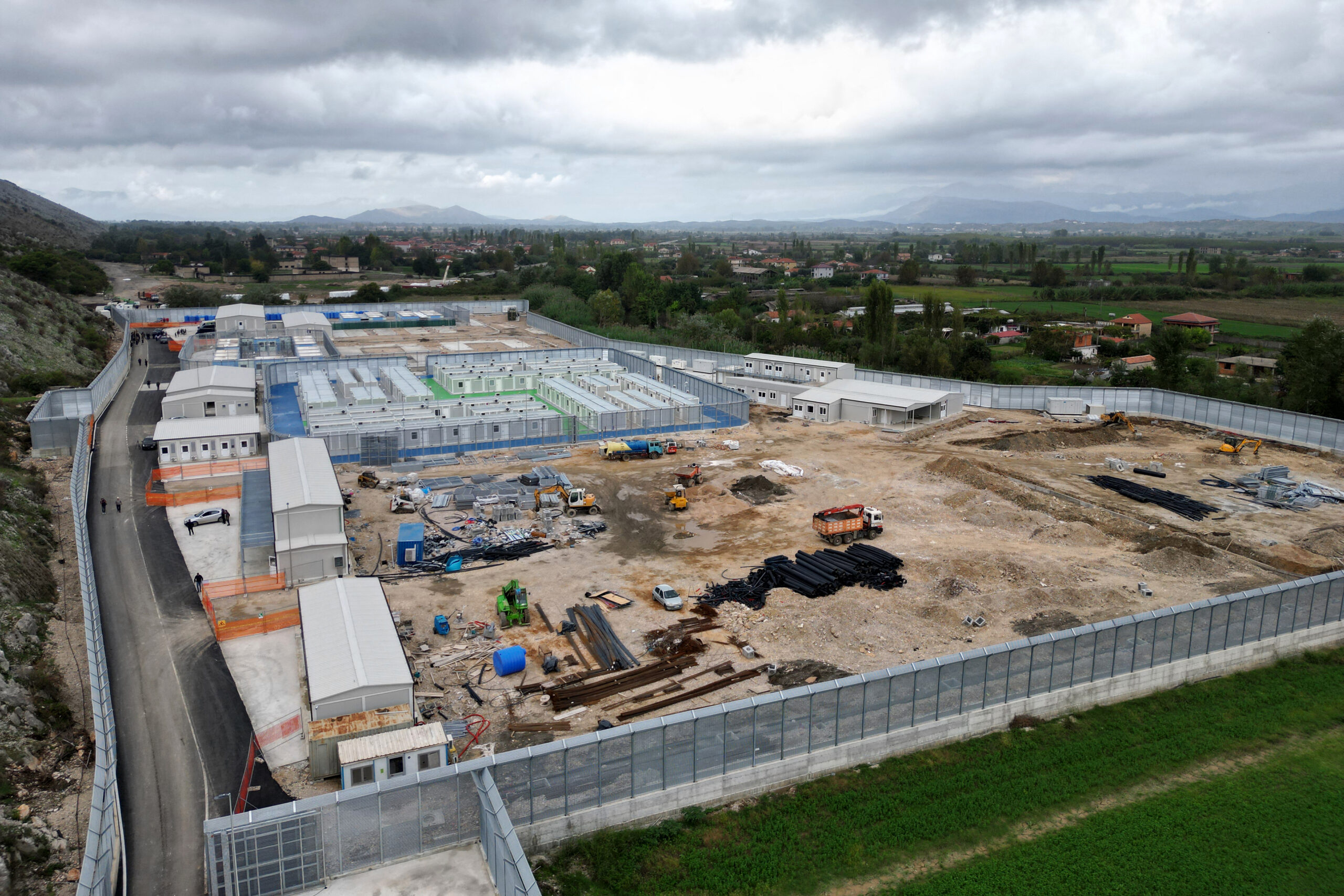
Brussels – Operation Albania is “the most expensive, inhuman and useless instrument in the history of Italian migration policies.” Or rather, European. This is the accusation launched by ActionAid, which, together with the University of Bari, has kept track of and released the secret accounts of the two detention facilities for asylum seekers that the Italian government opened on Albanian territory in October 2024. The numbers are mind-boggling: over 153,000 euros to set up a single bed, and 114,000 euros per day for just five days of operation in 2024 – all public money.
The data concerning the Shengjin and Gjader centers – the latter currently repurposed as a detention center for repatriation – are publicly available on the “Trattenuti” platform, along with those of the other 12 detention facilities for migrants operating in Italy. The comparison with similar centers already present in Italy is stark: in 2024, the Center for the Detention of Asylum Seekers (CTRA) in Porte Empedocle, Agrigento, cost 1 million euros to create 50 actual places, or just over 21 thousand euros per place. At the end of March 2025, 400 places had been realized in Gjader: for the construction alone, contracts were signed – primarily through direct awards – totaling 74.2 million. Setting up a single operational place in Albania costs over EUR 153,000.
To provide a clearer understanding of the phenomenon’s scope, the report notes that in 2024, the CTRA in Gjader had a per capita daily cost of 76.57 euros, more than double the national average, even when considering only the detention centers for asylum seekers undergoing border procedures. In contrast, the CPR, located within the perimeter of the multifunctional centre, records a per capita daily cost of 108.04 euros, more than three times the national average value.
Moreover, wasted money, because the first three transfer operations to Gjader of asylum seekers rescued at sea, up until January 2025, resulted in detention orders that were not validated, and the unfortunate people involved were returned to Italy. At that point, the Meloni government modified the center’s use, and, in April 2025, made the first transfer of foreigners awaiting repatriation, who were already detained in other CPRs on Italian territory. Here too, explains ActionAid’s Fabrizio Coresi, “in light of as many as 263 empty places out of the total of 1164 available” in Italian facilities, “the attempt to use the CPR in Gjader to detain the irregular foreign population present in Italy appears completely irrational and illogical.”
In short, the cost-benefit ratio is staggering: in 2024, the Prefecture of Rome is said to have made payments totaling 570 thousand euros to the organization managing the facilities, Medihospes, for just five days of actual operation: 114 thousand euro per day to detain 20 people, between mid-October and the end of December 2024, all of whom were then freed in a few hours. To this should be added 528 thousand euros for the hospitality and catering of police personnel alone. And that’s not counting the costs of sea transfers.
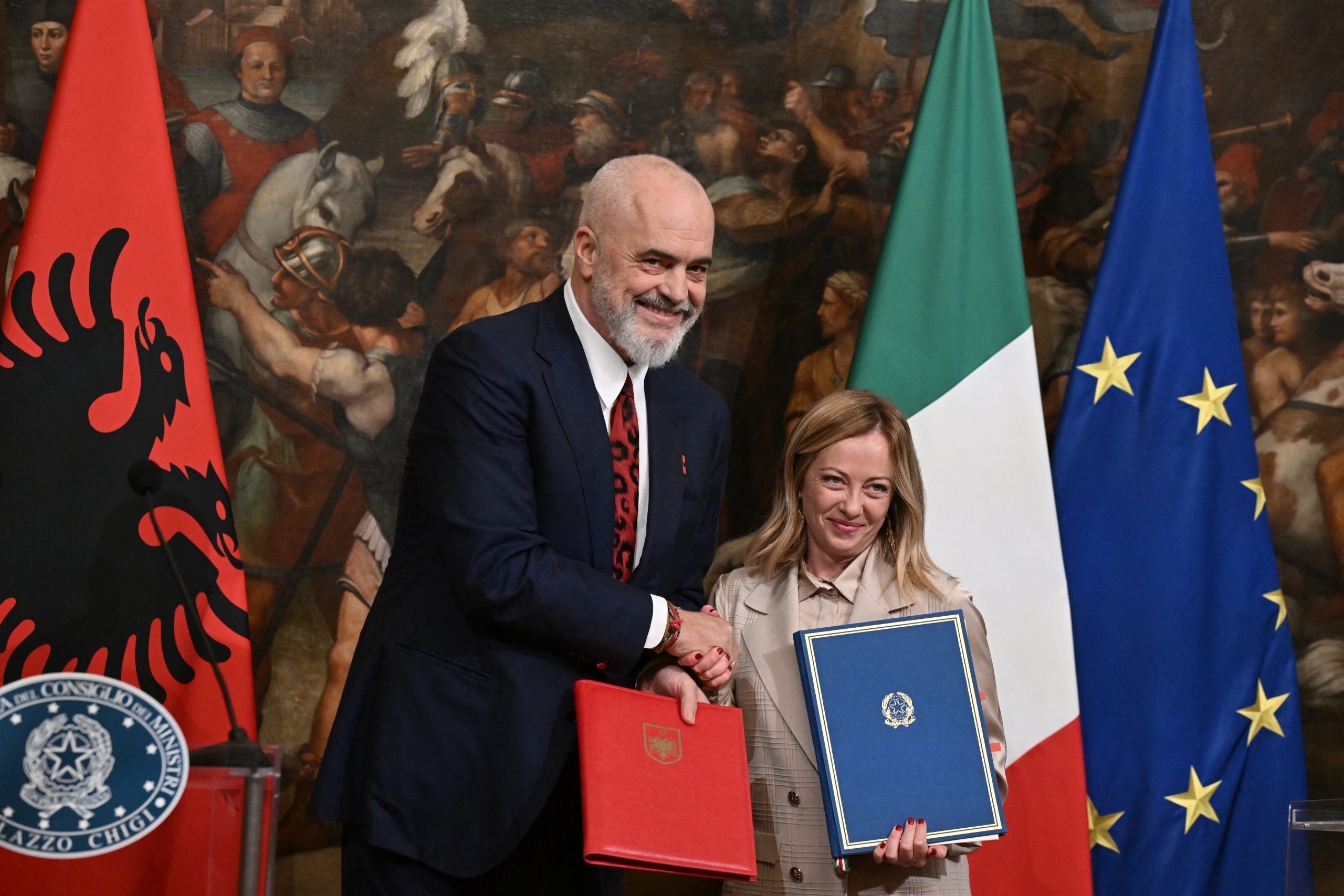
Given these numbers, the impression is that Rome is focusing less on the actual use of these centers and more on the protocol with Albania as a strategic move for the future – and for Europe. In Brussels, the European Commission and several member states are looking with growing interest at the experiment strongly desired by Meloni, the first example of the “innovative solutions” sponsored by Ursula von der Leyen. Still at the limit of what is allowed by European law, the Italy-Albania protocol paved the way for the proposals put on the table by the EU executive in recent months, enabling Member States to enter into agreements with third countries and create repatriation hubs outside European territory.
Repatriation proposals and the revision of the concept of a safe third country still need to be approved by the EU Council and the European Parliament and are therefore not yet law. So far, Brussels has explained that the validity of the Italy-Albania agreement is based on the fact that Italian jurisdiction applies in the two centers. However, Democratic Party MEP Sandro Ruotolo says, “The answer provided by the Commission is formally ambiguous and substantially contradictory“.
According to the Dem MEP, the centers in Albania are “the symbol of a failed policy from every point of view: humanitarian, legal, and economic.” A national policy implemented with the veiled support of Brussels: Ruotolo speaks of a “grey area built for political expediency,” in which “the Commission avoids taking a clear position, while Italy outsources administrative detention without having to answer for the rights of the people involved.”
English version by the Translation Service of Withub





![La video riunione dell'Eurogruppo [27 marzo 2026. Foto: European Council]](https://www.eunews.it/wp-content/uploads/2026/03/eurogruppo-260327-120x86.jpg)
