One hears echoing in the public debate that the EU is powerless in the face of a destiny of decline and humiliation. They say that the EU is merely a fragile clay pot among iron pots in an era that risks crushing it along with its treasure trove of social achievements, values, and rights.
Were we better off before? Was Europe better off in 1923, 1933, or 1943? The answer is evidently no. Economic crises, savage capitalism, prevailing colonialism, and then communist totalitarianism, fascist dictatorships, civil and racial oppression, as well as devastating wars.
What about in 1957? The EU, taking its first steps with only six countries, was a politically unfinished union, little more than a common market, the EEC. It was, however, a minor miracle in the global context at that time, where, despite the creation of the UN, only threat and force seemed to work: in the Middle East, Korea, Algeria, Hungary, and so on.
What about in 1973? Let’s imagine going back in time with the time machine to 1973 and look at this Europe of which we often speak ill. In 1973, there were still dictatorships in Spain and Portugal (and their colonies in Africa), and there was a military regime using an iron fist in Greece. Many Eastern European countries lived under communist regimes without freedom. In Western Europe, there was a group of countries that were formally free but under the military tutelage of the Americans, who were meanwhile engaged in a bloody war in Vietnam and whose uninhibited secret service actions kept Latin America in their zone of influence. In Italy, the “strategy of tension” was underway. In 1973, moreover, the entire Western world was caught in a spiral of soaring inflation and austerity due to tensions in the Middle East, while the US had decided two years earlier to detach the dollar from gold—a genuine financial revolution.
So, what about now? Are we better off in 2025? The answer is yes. Compared to 1973, the EU is in far better shape and, in addition, offers significant economic strength and equally great potential, both economically and politically.
Yes, also politically. But in which direction? If we do not want to follow the authoritarian and strong-handed system that seems to be gaining ground around the world, the EU needs to strengthen itself without betraying the path of (peaceful) cooperation between European states first undertaken with the Treaties of Rome.
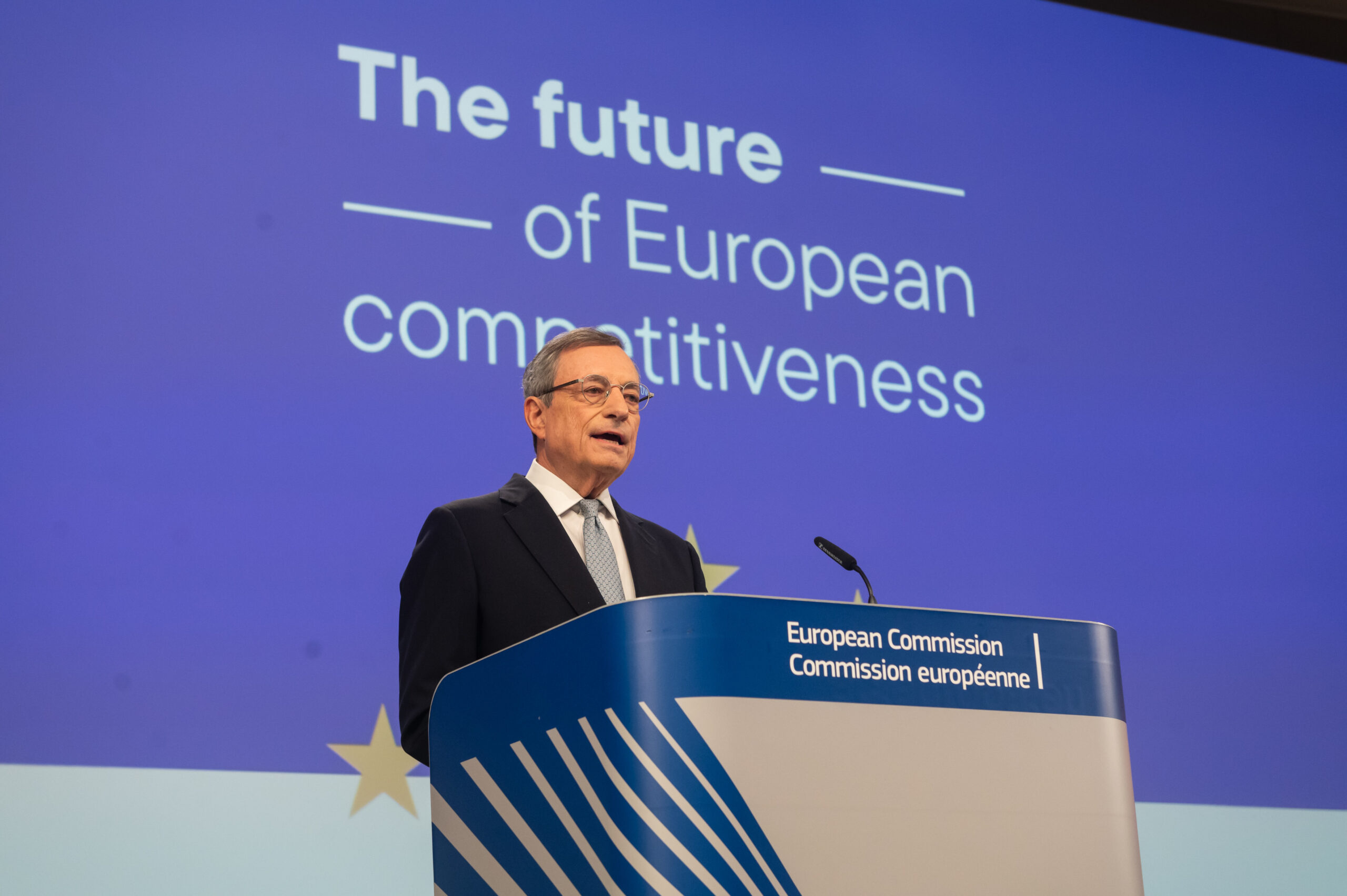
There is no need to invoke the distant past or recall Demosthenes. Today’s EU is perhaps one of the world’s last bastions of liberal democracies, an innovative and modern model that needs to be skillfully renewed and passionately protected. It is not trivial to mention that Mario Draghi always emphasizes this in his speeches, even in recent ones. It is a question of vision and wisdom, of trust and responsibility. In this stretch of the third millennium, the EU is heading for a hundred years of passion. If it follows its guiding star, all will be well.
English version by the Translation Service of Withub