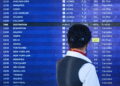
Brussels – Third day of disruption at Brussels Zaventem airport after Saturday’s cyberattack, which disrupted the check-in system. Today, 30 flights have already been cancelled, while 80 are scheduled to be delayed. The European capital was the hardest hit by the cyberattack on Collins Aerospace’s Multi-User System Environment (MUSE) system, used for pre-boarding checks.
A comment on the incident came from the institutions in the morning when European Commission spokesman Thomas Regnier emphasised the need to “quickly and efficiently transpose the NIS2 directive on cyber security. Aviation and transport in general are identified as one of the critical sectors.”
Today, the inconveniences continue. Many Italian passengers will pay the price: the 9:25 am flight to Linate and the 11:35 am flight to Fiumicino have been cancelled. The Brussels Airlines flight to Malpensa and the Easyjet flight to Rome will also be grounded this evening.
The US company that owns the software stated that it is in the final stages of completing the necessary updates to restore full functionality of MUSE. The problem is expected to be normalised tomorrow.
Monday, 22 September, was just the latest of three black days for European air traffic. The main airports affected were London Heathrow, Berlin, Brussels, and Dublin, but, in turn, many other airports experienced delays. The cyberattack on the night between Friday and Saturday on the ‘MUSE’ system of the American company Collins Aerospace crashed the platform used for document control, online check-in, and printing of baggage tags. The failure forced travellers to crowd the counters at the airports, forcing operators to perform procedures with “pen and paper”. Delays and cancellations were inevitable, especially at Zaventem, where 40 percent of departures were cancelled on Saturday.
The source of the hacker attack is still unclear. However, the airports involved specified that the problem concerned an external supplier, and not directly the airlines or the airports themselves.
The episode did highlight the vulnerability of European transport. The weakness of security systems in the world of mobility is not new: in 2023, Fiumicino airport suffered a partial computer blackout, while in 2022, there were several phishing attempts against operators in Amsterdam.
English version by the Translation Service of Withub