



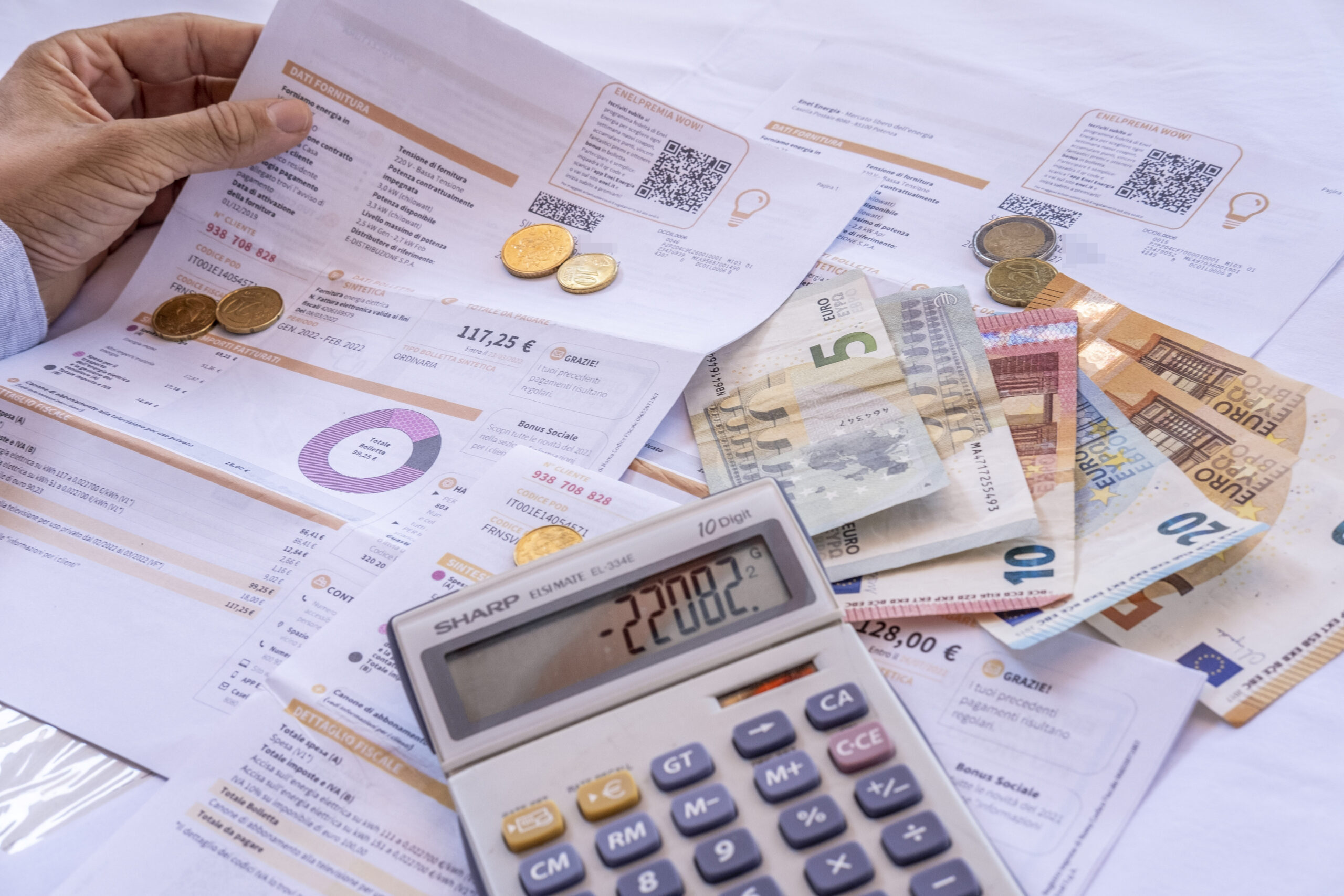
Brussels – In Italy, gas is expensive. Italian households face the fourth-highest gas bills in the European Union, above both the EU and the eurozone average. For the Meloni government, therefore, the latest Eurostat monitoring of energy prices, released today (29 October), brings no good news. In the first half of 2025, the cost of gas for households in Italy reached 0.088 euros per kilowatt hour, the highest after Sweden (0.137 euros per kWh), Ireland (0.097 euros per kWh), and France (0.092 euros per kWh). However, these are price lists net of taxes and excise duties and therefore not representative of the final cost; they are nevertheless helpful in understanding the cost of the raw material.

On average, in the EU, a household pays EUR 11.43 per 100 kilowatt-hours for gas-generated energy. This figure, however, includes taxes and excise duties. If we look at the data expressed in euros per 100 kilowatt hours with the tax levy, comparing it with the data available from Eurostat, we find that the bill for Italian households reaches 12.40 euros, still one of the highest in Europe, and with one third of the total represented by the levies imposed on consumers.
The good news, says Eurostat, is that in the first half of 2025, domestic gas prices in the EU fell 8.1 percent from 12.44 per 100 kWh in the second half of 2024. A saving of one euro due to “a return to the seasonal fluctuations of gas prices, characteristic of the period before the 2022 energy crisis,” the European Statistical Institute continues. In any case, Italy and its government stand out for high prices and high energy bills, an issue that will not be easy for the ruling majority to manage politically. The government can, however, point to a broader and widespread trend.
As Eurostat also notes, in the EU as well as the eurozone, the percentage of taxes and levies in the final gas prices has slightly increased from 30.0 percent in the second semester of 2024 to 31.1 percent in the first semester of 2025, indicating “a further scaling back of subsidies, mainly in the form of tax reductions, implemented during the previous semesters” and that
will remain until 2026.








![La video riunione dell'Eurogruppo [27 marzo 2026. Foto: European Council]](https://www.eunews.it/wp-content/uploads/2026/03/eurogruppo-260327-120x86.jpg)
