




Brussels – Danger averted for the European Union regarding the rare earths supply. China has suspended for 12 months the stringent new rules on the export of the precious minerals that would have disrupted EU production.
The desired political result in Brussels arrived, without much credit from the European institutions. What turned the tide was the meeting between US President Donald Trump and Chinese leader Xi Jinping. After a brief meeting in Busan (South Korea) on 30 November, the two leaders agreed to greater freedom for rare-earth exports for a period of one year. The European Union is also benefiting from the reconciliation of the two, although it has demonstrated great fragility in the face of the geopolitical dynamics of the major players.
Xi’s negotiating weapon
The Chinese tightening was announced in early October. On that date, Beijing introduced new rules on the special authorisation to export items containing even small traces of Chinese rare earths worldwide. The Chinese hard line, announced only three weeks before the meeting with Trump, then proved to be no more than a negotiating tactic. Beijing put it on the table to get more leverage at the moment of the handshake. China agreed to suspend new control measures, and the US halved duties on Chinese items related to fentanyl production.
The Brussels Addiction
In Brussels, the affair was followed with bated breath, aware that they could do little to avoid the disruption of Chinese duties: in Europe, about 90 per cent of rare earths are imported from China. The EU Commission’s negotiating efforts were tackled by sending the usual Trade Commissioner, Maroš Šefčovič, to the front line. Meetings with Chinese counterparts were held in several rounds. However, the last one, this Friday, 31 October, was a mere formality; in the aftermath of the handshake between Trump and Xi, there was really nothing more to discuss.
“China has confirmed that the October suspension of export controls applies to the EU,” Commissioner Šefčovič celebrated on X. However, the emergency is not completely over: in 12 months, the situation could be the same, and more dialogue is needed. From Brussels, European Commission spokesman Olof Gill says, “We want to reach an agreement on a reliable supply of rare earths and other critical materials.” The doubt remains, however, Gill continues, “as to how to achieve this. The means to move forward in the negotiations have yet to be discussed.”

The issues still to be addressed
China knows it has the upper hand and, in recent years, has made imports of its precious minerals more complex. The most impactful rule was introduced in April: Chinese exporters of seven precious materials must obtain an export licence from the Chinese government. This document, issued by the Beijing offices, grants broad discretion to approve or delay certain supplies. In addition, another legal battle is being fought between Europe and China, this time involving the Sino-Dutch company Nexperia. The chip company was placed under administration by the Dutch government over fears that its CEO, Zhang Xuezheng, was dismantling operations in Europe to relocate to China.
The European Union has many issues yet to be resolved. Its strategy is to continue the dialogue to obtain more concessions. The feeling, however, is that if only Brussels is at the table, Beijing is not that interested in negotiating.
English version by the Translation Service of Withub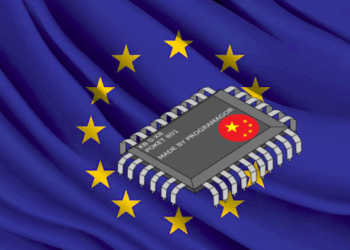







![La video riunione dell'Eurogruppo [27 marzo 2026. Foto: European Council]](https://www.eunews.it/wp-content/uploads/2026/03/eurogruppo-260327-120x86.jpg)
