Brussels – “European leaders risk becoming Tunisia’s accomplices. This is because every day they continue to support their dangerous attack on the rights of migrants.” Heba Morayef, Amnesty International director general for the Middle East and North Africa, does not mince her words, commenting on the report published today, 6 November, on Tunisia’s “dangerous shift in migration policy.” In the NGO’s crosshairs is the EU-Tunisia agreement, signed in 2023, which aims to reduce the number of migrants heading to Europe.
According to Amnesty, the agreement has in no way improved the situation. On the contrary, the document says, “the testimonies reveal a migration and asylum system designed to exclude and punish rather than protect.” Tunis’ approach is characterised by violence of all kinds: dangerous raids against boats heading north, systematic abandonment of migrants, asylum seekers, and refugees in remote and deserted areas. Another scourge, the organisation denounces, is the racial rhetoric towards black people. This is carried out by the authorities themselves, who foster a climate of discrimination and violence that worsens the plight of asylum seekers.
The Tunisia-Union Agreement
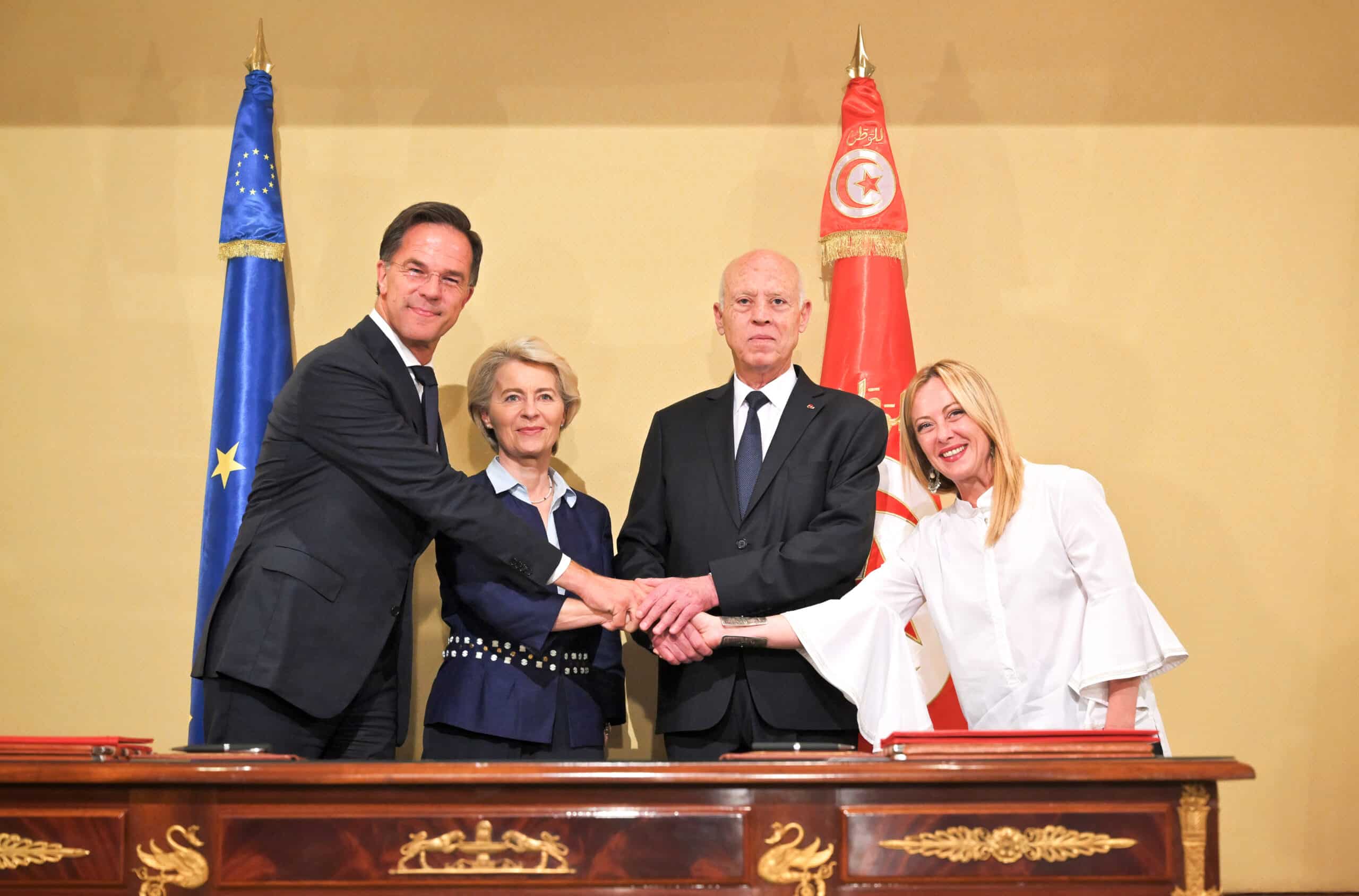
Despite this, Tunisia benefits from an advantageous agreement with the European Union. The memorandum dated July 2023 provides for extensive cooperation across several areas: migration is only one of five pillars, along with green transition, the economy, and macro-financial stability. However, the central theme remains the management of migration flows. To this end, Brussels has allocated about €105 million in EU funds to strengthen the Tunisian coastguard, finance repatriation programmes, and support technical training.
European Immigration Commissioner Magnus Brunner claimed the agreement’s success back in June, speaking of “tangible progress in all areas.” The Commissioner’s main satisfaction is that irregular arrivals from Tunisia have been reduced by 80 per cent. However, this took place in a context of severe human rights violations documented by Amnesty International.
@amnesty’s new report warns of the EU’s risk of complicity in refugee & migrant rights violations in Tunisia where the migration system is built on racist violence, reckless sea interceptions, arbitrary detention & unlawful collective expulsions.https://t.co/HfRLOnF8ZO
— Amnesty EU (@AmnestyEU) November 6, 2025
The violence
This violence is brought to light in the document published today. The NGO collected the testimonies of 120 refugees in the Tunisian cities of Sfax, Zarzis, and Tunis. Many accounts describe incidents of abuse and forced deportations. “Ezra”, an Ivorian citizen, told Amnesty: “We arrived at the border area with Libya around six in the morning. One agent told us: ‘Go to Libya, they will kill you.’ Another added: ‘Either swim or run to Libya.’ They gave us a bag full of our broken phones.” Amnesty estimates that between June 2023 and May 2025, some 11,500 people were forcibly deported to Libya or Algeria.
The report also emphasises how racist rhetoric is now an integral part of Tunisian public life. “Black refugees and migrants have been targeted by systematic racial profiling,” the text reads. A climate fuelled, Amnesty explains, by a “public propaganda of racial hatred,” sparked by “the declarations of President Kais Saied in February 2023.”
Despite the blatant human rights violations documented, the memorandum between Tunisia and Italy has neither formal termination clauses nor automatic validity limits. For this reason, the agreement will remain in force even after the publication of this report. Bringing more money to Tunis and fewer migrants to Europe.
English version by the Translation Service of Withub