Brussels – Tomorrow (20 November), the first meeting of the Donor Group for Palestine, an initiative announced by Ursula von der Leyen in September and which now, in the light of the UN Security Council’s resolution on the peace plan for Gaza, acquires new centrality, will take place. The conference will not collect new financial pledges, nor will it focus on the reconstruction of the Strip. Instead, European officials explain, it will be a “platform for the Palestinian Authority.”
Ramallah will be able to take stock of its reform path, a key element for a future handover in the Gaza government and the establishment of a Palestinian state. “So far, the Palestinian Authority (PA) has not had the opportunity to express itself,” officials in Brussels emphasise. The Trumpian plan was hatched without involving Ramallah, as was the UN resolution drafted by Washington and endorsed by the Arab countries.
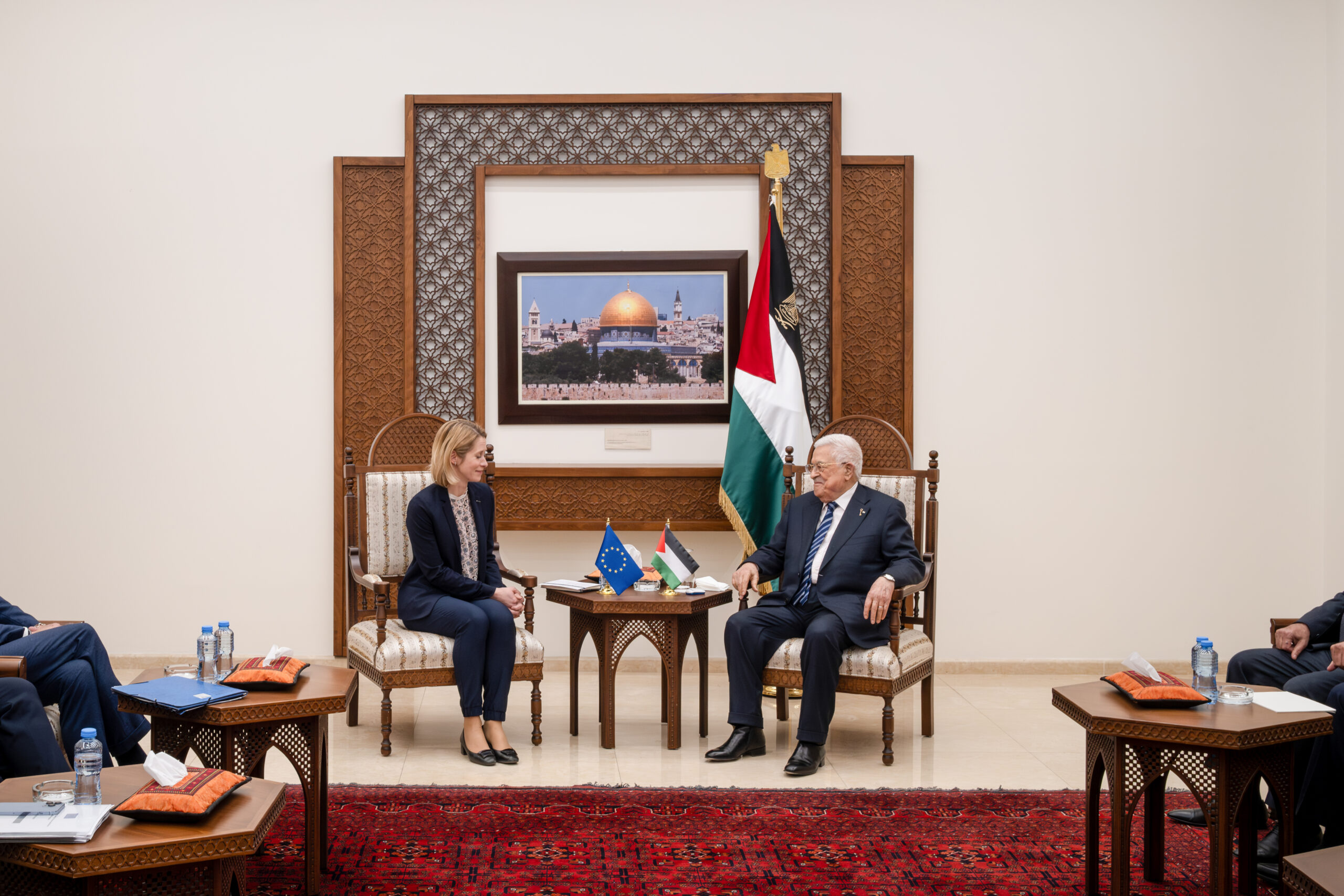
In this passage, foreseen in the penultimate of the 20 points of the peace plan, the European Union claims a central role, strong in a “unique partnership” with the PA, consolidated last April with a €1.6 billion package over three years tied to the implementation of a tight programme of institutional, administrative, and financial changes. The reform of the Palestinian Authority “is a co-ownership exercise,” EU sources claim, and Brussels is “the best actor to accompany the PA in this process.”
Palestinian Prime Minister Mohammad Mustafa will hold a joint press conference with the EU Commissioner for the Mediterranean, Dubravka Šuica. Some 60 delegations are expected in Brussels, “between 20 and 25” at the ministerial level. Israel is not among those invited, and “there are indications that they would not attend,” an EU official admits. On the other hand, despite Benjamin Netanyahu’s utmost support for the peace plan, Tel Aviv’s “reluctance” for the Palestinian Authority’s role persists. Nor has Francesca Albanese, the UN Special Rapporteur for the occupied Palestinian territories, who is in Brussels these days for a series of events, been invited. But Albanese will meet with the European Commission “at the level of DG Mena (the Directorate General for the Middle East, North Africa and the Gulf, ed),” an official announced.

At the same time, the European Union tries to develop its action on other tracks. It is present in the Civil-Military Coordination Centre (CMCC), established in Israel and led by the United States, which oversees the peace plan and its follow-up. The structure includes 200 officials—”almost all military,” the sources explain—including an EU team of 10, with a high-level diplomat, Christian Berger, from the European External Action Service.
Brussels is keeping alive the possibility of relaunching the two missions already deployed in the past in the region: EUBAM Rafah, which facilitates the transit of people and goods at the southern crossing point between the Gaza Strip and Egypt, and EUPOL COPPS, the Palestinian police training operation in the West Bank. The EU aims to broaden the mandate of the latter mission, in order to train “at least 3 thousand” policemen in the Strip: “It will be necessary to stabilise Gaza with a strong police force,” explained an official, “there are seven thousand policemen in Gaza, who are still paid by the Palestinian National Authority and, among them, about three thousand could be trained. The training would be carried out outside the Palestinian exclave: “We are discussing with some neighbouring countries,” the sources confirmed.
On two other crucial points of Trump’s plan, which are to take shape in this “phase two”, many details still remain unknown. The International Stabilisation Forces, the military contingent that will be responsible for maintaining the ceasefire and security in Gaza in the first instance, will not report to the United Nations. And of the Board of Peace, the body that will govern until the handover to the Palestinian Authority, the only name known is that of Trump, who will chair it. “For the time being, we are not part of it, but no one is,” the sources point out. And “obviously we think the EU should be part of it, given the contribution we can make to the plan.”
English version by the Translation Service of Withub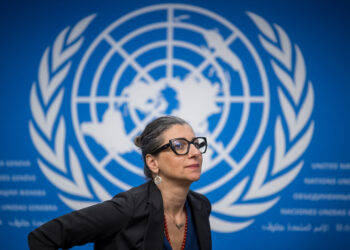



!['Alta rappresentante per la politica estera e di sicurezza dell'UE, Kaja Kallas [Bruxelles, 16 marzo 2026]](https://www.eunews.it/wp-content/uploads/2026/03/kallas-260316-120x86.png)