Brussels – There is “new momentum” in the peace negotiations for Ukraine. The European Union wants to see the glass half-full: the controversial 28-point peace plan presented by the White House has broken the stalemate, and the fear of Kyiv’s capitulation—after the restricted talks in Geneva between Washington and Kyiv—has been replaced by a breath of optimism. “Progress has been made on a number of issues, the direction is positive,” is the assessment of the President of the European Council, Antonio Costa, who brought together the heads of state and government of the 27 this morning to discuss the latest developments.
In recent days, Kyiv’s European and Western allies have met at every useful opportunity to take stock of the situation: first on the sidelines of the G20 in South Africa, this morning in Angola before the EU-African Union summit. In between, talks between the US and Ukrainian delegations in Switzerland, where US Secretary of State Marco Rubio and Kyiv’s emissary Andriy Yermak reportedly found common ground on an “updated and refined peace framework” to end Russia’s war of aggression.

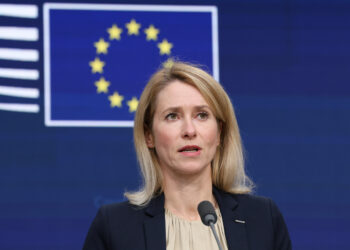
The starting point remains the 28 points outlined by Donald Trump (or rather, on the Washington-Moscow axis). Still, on some of them—those considered inadmissible by Kyiv and Brussels—negotiations will continue, so much so that the tycoon himself is reportedly open to postponing the 27 November deadline for approval of the plan by a week. The President of the European Commission, Ursula von der Leyen, indicated what needs to be worked on after the meeting with the leaders of the 27 in Luanda: “The territory and sovereignty of Ukraine must be respected“, she emphasised, and “only Ukraine can make decisions regarding its armed forces.” For von der Leyen, “efficient and coordinated European engagement and a strong presence in Geneva have allowed us to make good progress.” In addition to the US and Ukraine, the EU, France, Germany, Great Britain, Italy, and Canada were also present in Switzerland.
The most important issues to be resolved are the one on territories—for Brussels, negotiations with Moscow must start from the “line of contact”, the current front line, and not from the de facto recognition of some areas as Russian—and the one on the dimensions of the Ukrainian army and security guarantees for Kyiv. “It is also clear that issues that directly concern the EU, such as sanctions, enlargement or immobilised assets, require the full involvement and decision-making of the EU,” Costa, who spoke by phone with Volodymyr Zelensky before the summit, pointed out. Also, von der Leyen, in a note circulated yesterday, reaffirmed Ukraine’s chosen “European destiny”, which will begin “with the reconstruction of the country,” pass through “its integration into our single market and our defence industrial base” and, finally, end with “accession to our Union.”

Zelensky, in fact, faced with an ultimatum from Trump and squeezed on the home front between a major corruption scandal and the coming winter with devastated energy infrastructure, thanked Costa “for the support”, stressing in a post on X that “it is of great importance that Ukraine is participating in the development of the EU’s common position on an equal footing.”
Speaking via video conference at the opening session of the Crimea Platform parliamentary summit in Sweden, the Ukrainian premier said that Ukraine is working with the US to seek “compromises that will strengthen us, not weaken us.” The joint statement released by Kyiv and Washington on the sidelines of the Geneva talks stipulates that any final agreement ” must fully respect” Ukraine’s sovereignty.
Meanwhile, a meeting is scheduled for tomorrow between the leaders of the so-called “coalition of the willing”, the group of Kyiv-supporting countries formed last February, in response to Trump’s initiative to start negotiations with Putin to end the conflict. Even then, leaving aside the EU and Ukraine.
English version by the Translation Service of Withub