




Brussels – Work continues to refine the peace plan for Ukraine, drafted by Washington and Moscow. Yesterday (30 November), a delegation from Kyiv met with the US administration in Florida to follow up on last week’s talks in Geneva (and those with the Russians in Abu Dhabi): a “difficult but productive” negotiation, the Ukrainians reportedly said on the sidelines of the bilateral meeting with Secretary of State Marco Rubio and Special Envoy Steve Witkoff. Meanwhile, the European Union, again excluded from the negotiating table, will hold a meeting of its member states’ defense ministers today.
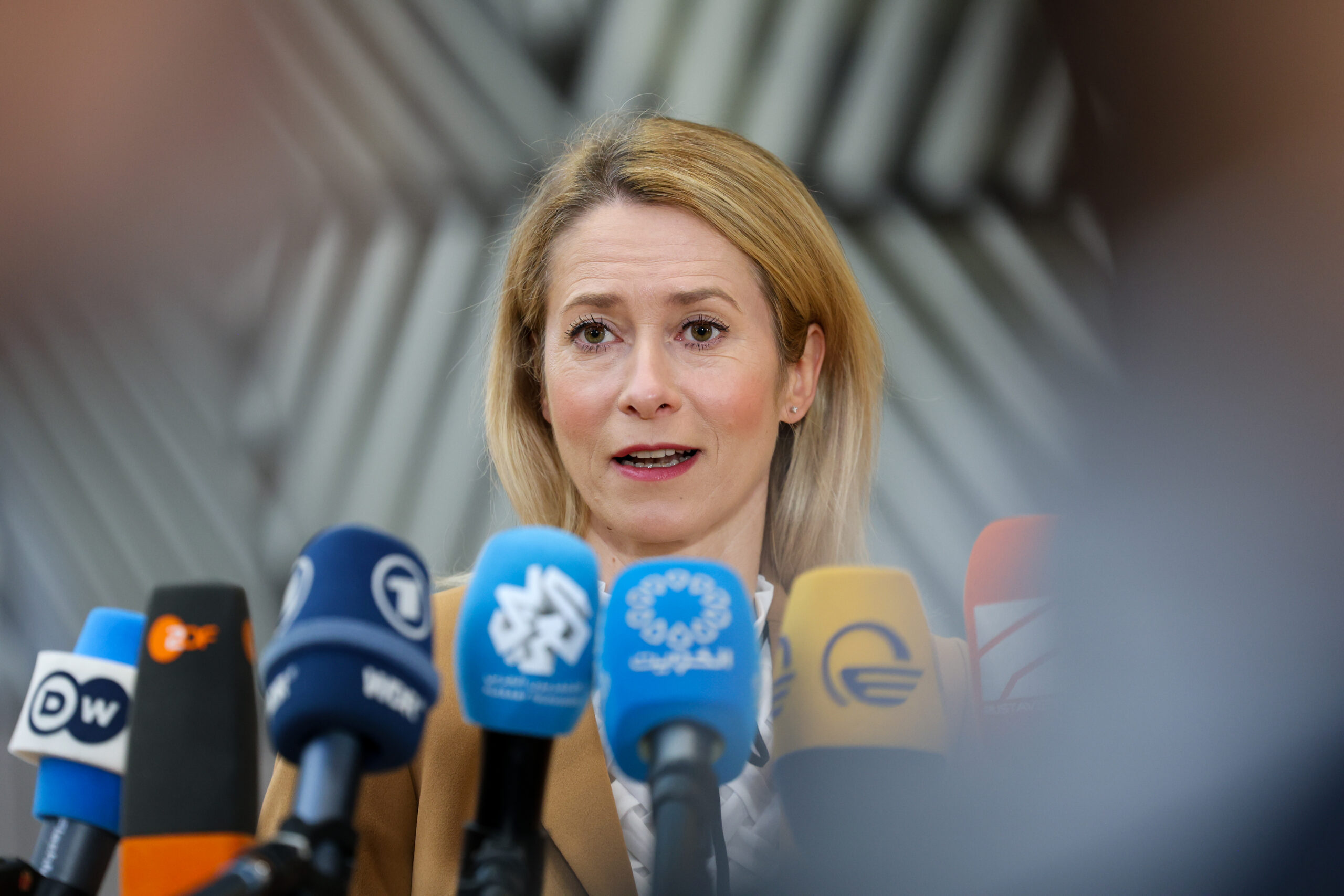
The High Representative for Foreign Affairs, Kaja Kallas, let a slight irritation show: “The Ukrainians are on their own; if they were together with the Europeans, they would certainly be much stronger, but I trust they will be able to defend themselves,” she said upon her arrival for the work of the EU Council. According to the EU diplomacy chief, the one that has just begun “could be a crucial week for diplomacy.” Today, Kallas will be briefed by her Ukrainian counterpart on the results of the Hallandale Beach talks.
Rustem Umerov, secretary of the National Security and Defense Council, led the Kyiv delegation and, in a post on X, described the meeting as focused on “steps towards achieving a just peace.” Umerov replaced Andriy Yermak, Volodymyr Zelensky’s former chief of staff, who resigned on Friday amid allegations of involvement in the corruption scandal engulfing Ukraine. Together with him, the head of the armed forces, Andrij Hhnatov, and the foreign minister, Andrij Sybiha, were present in Florida.
The two delegations focused on the critical aspects of the 28-point US plan, which, in the draft made public last on 20 November, was decidedly biased toward the Kremlin’s demands. After intense criticism – and a 19-point counterproposal – from Brussels and Kyiv, the US itself seems to have agreed to adjust its stance: “The ultimate goal, of course, is not only the end of the war. It is also about securing an end to the war that leaves Ukraine sovereign and independent, with the opportunity for real prosperity,” Rubio said before sitting down at the table with Ukrainian officials.
Initially, the plan would have entailed the withdrawal of the Ukrainian army from the cities it controls in the Donbas and Donetsk region, the imposition on Kyiv to limit its armed forces, and a ban on NATO membership. During the first round of negotiations in Switzerland – at which an EU delegation was also present – Brussels and Kyiv set some red lines: no recognition of territories militarily conquered by Russia, the front line as the basis for negotiations, and the European future of Ukraine.
On the sidelines of the Hallandale Beach meeting, Rubio spoke of a productive session, while stressing that much work remains to be done in the search for a peace agreement. “There are a lot of moving parts and, and obviously there’s another party involved here that will have to be a part of the equation, and that will continue later this week, when Mr. Witkoff travels to Moscow, although we’ve also been in touch in varying degrees with the Russian side, but we have a pretty good understanding of their views as well,” Rubio explained.
The special envoy for Ukraine, together with Trump’s son-in-law Jared Kushner, will fly to Russia today. The Kremlin has announced that Putin will receive Witkoff as early as tomorrow afternoon. Meanwhile, Zelensky is already at the Elysée Palace, welcomed by French President Emmanuel Macron, one of the EU leaders most determined not to leave Kyiv in the sole hands of Donald Trump, and at the mercy of a peace plan drafted in Moscow.
English version by the Translation Service of Withub




![[foto: Guillaume Baviere/WikimediaCommons]](https://www.eunews.it/wp-content/uploads/2026/01/Cuba_Che-120x86.jpg)
