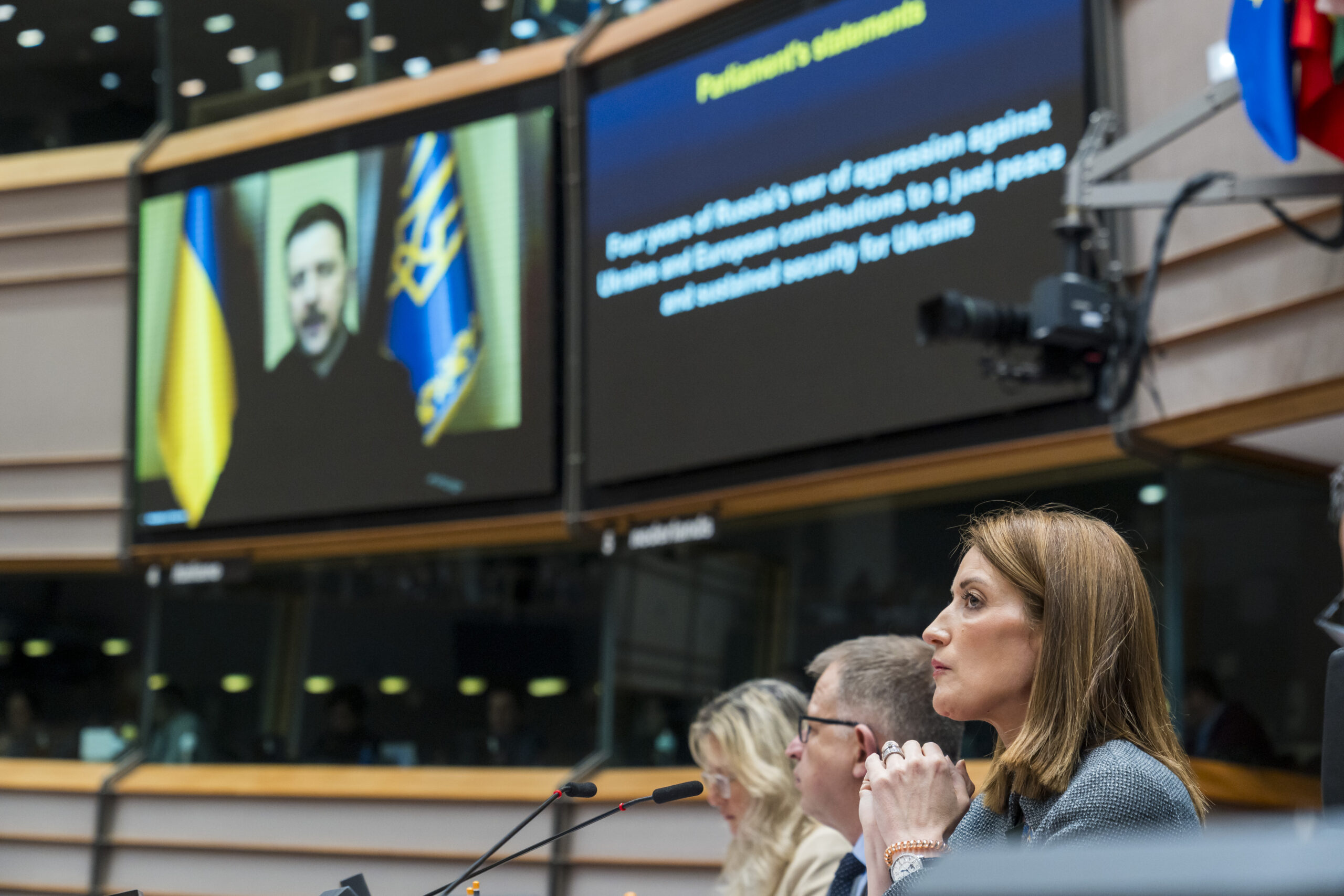
Brussels – While Ursula von der Leyen and Antonio Costa arrive in Kyiv empty-handed, the European Parliament holds Viktor Orbán accountable. The fourth anniversary of Russia’s aggression against Ukraine, marked by the Hungarian veto to the twentieth package of European sanctions against Moscow and the 90 billion euro loan to Kyiv, becomes a trial of the now established sovereignist fringe in Brussels and Vladimir Putin’s Trojan horse. “Anyone who supports Putin chooses war,” thundered Ukrainian President Volodymyr Zelensky, connected remotely to the chamber.
The wound is fresh and deep: with a sudden about-turn, Orbán’s Hungary has once again exposed the fragility of the Union, at a time when – compounded by the White House’s ambiguity – the 27 are being called upon to shoulder the burden of Kyiv’s resistance to the invader. So, instead of celebrating its renewed commitment to Ukraine, the EU now finds itself having to deal with those within its ranks who continue to throw obstacles in its path.
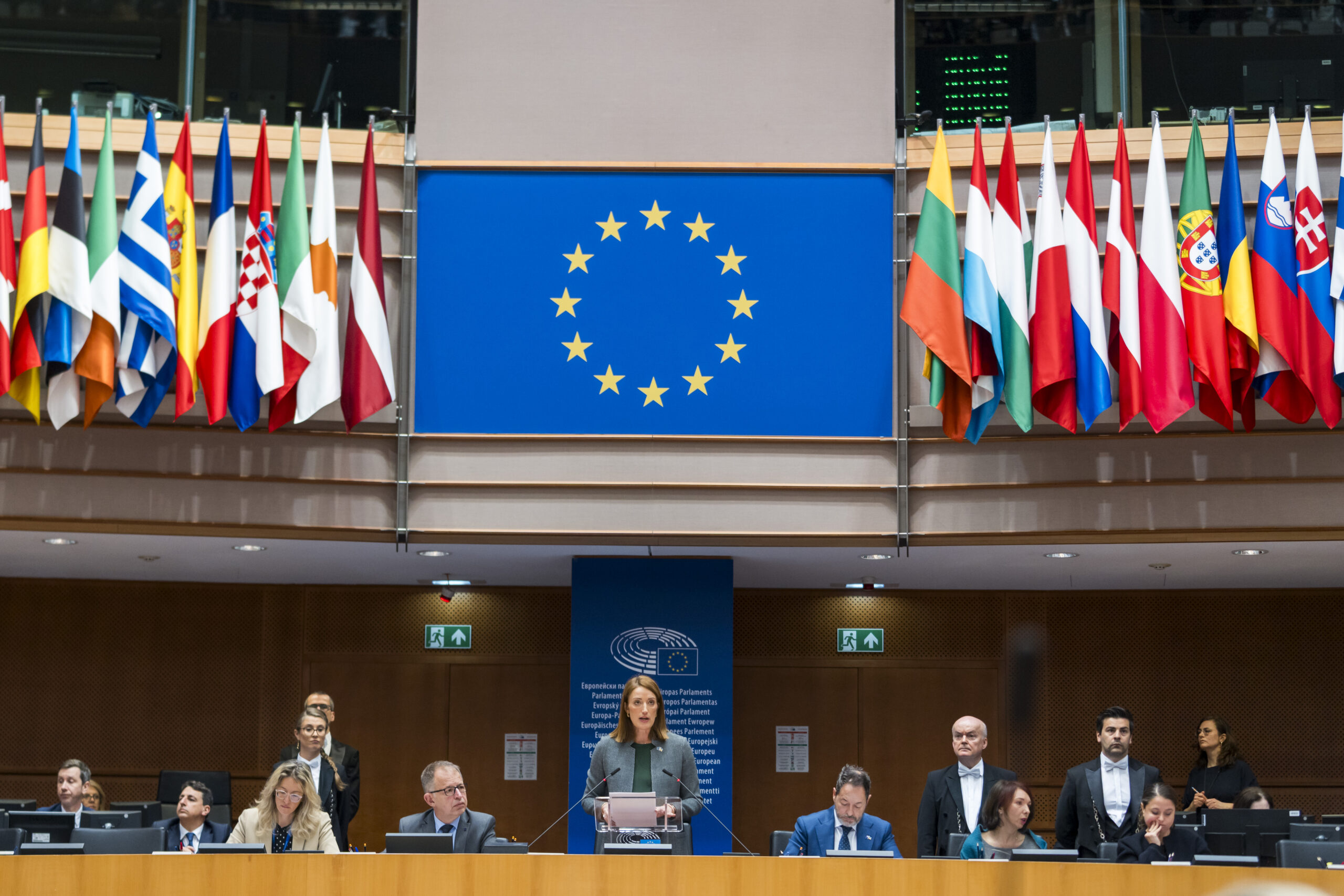
After Zelensky’s speech, in which he insisted that the EU should be “as strong as it was when the invasion began”, and that of the President of the European Parliament, Roberta Metsola, who recalled that “when we are united, Ukraine and Europe are strong,” it was the turn of the leaders of the political groups. And, starting with the pro-European coalition supporting Ursula von der Leyen, the House vented its anger against Orbán.
On behalf of the EPP, Germany’s Heinz Michael Gahler said: “Our anger is not only directed at Putin, but also at his admirers and those who profit from the war in the EU, such as Orbán and Fico (Robert Fico, Prime Minister of Slovakia, ed.). Your shameful attitude will be written in the history books.” The socialist leader, Iratxe Garcia Perez, said that “Orbán does not embody peace, but impunity.” Valerie Hayer, leader of the Renew liberals, pointed the finger at those “in this Chamber who are deliberately playing into Putin’s hands.” She named names: “Whether it’s the German AfD, Fico’s Smer party or the Rassemblement National, you are not patriots at all; you are not trying to defend Europe in any way.”
Even harsher was the co-leader of the Greens, Terry Reintke, who accused Orbán of “acting like a coward” and becoming “Putin’s slave.” The Hungarian prime minister “has not only betrayed Ukraine; he has betrayed us all, he has betrayed Europe,” Reintke said. Even Nicola Procaccini, leader of the European Conservatives and Reformists (ECR) group, which often acts as a bridge between the far right and the European People’s Party in the European Parliament, attacked the sovereignists: “I take issue with those who say they are on the right and are not impressed by the sacrifice of a people who are showing the whole world what love for one’s country really means,” he said, adding that history “will pay tribute to Ukrainian patriots” and “will look with contempt on those who today are turning their backs on Ukraine, on freedom, on the sense of honour.”
When Jordan Bardella, leader of the Patriots for Europe group founded by Orbán himself, took the floor, the chamber began to murmur. In a speech that was decidedly more cautious than usual, Marine Le Pen’s protégé paid tribute to Ukraine, which “opposed Putin with the awareness of being a free nation.” After admitting that “Ukraine must resist and negotiate from a position of strength” and that “Europe must contribute with logistical and humanitarian support,” Bardella stated, amid murmurs from the Parliament, that “our duty is twofold: to support Ukraine without weakening our own nations.”
After the debate, the European Parliament voted on yet another resolution condemning the Russian invasion. The resolution, which “recommends accelerating Ukraine’s integration into the single market” and “calls on the EU and its Member States to take greater responsibility for European security and to increase military, political, and diplomatic support for Ukraine,” was approved by 437 votes to 82, with 70 abstentions. Among those against and abstaining were almost all non-attached members, the far right of Europe of Sovereign Nations, Patriots for Europe, and the radical left of The Left.
English version by the Translation Service of Withub