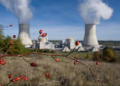
Brussels – Nuclear power: yes, but at all levels, not just small-scale projects. This was set out in writing by the member countries of the Nuclear Alliance in a joint statement issued following their meeting today (16 March) on the sidelines of the European Union Energy Council. “The European Union’s policy framework should not be limited to projects on small modular reactors (SMRs) and advanced modular reactors (AMRs), but should include all nuclear projects developed in Member States, including large-scale projects, nuclear fuel cycle facilities, and the extension of the operational life of existing nuclear units, which also face significant challenges,” the statement reads.
Today’s meeting was attended by ministers representing the Alliance’s member countries (Belgium, Bulgaria, Croatia, the Czech Republic, Estonia, Finland, France, Hungary, Italy, the Netherlands, Poland, Romania, Slovenia, Slovakia, and Sweden) whilst Greece and, for the first time, Latvia were present at the meeting as observers. On this occasion, the participants “discussed the Strategy for investing in clean energy, recently published, which refers to the necessary investments identified in the Nuclear Illustrative Programme (PINC)”, and agreed “that the European Commission should identify further concrete actions to ensure the required level of investment in nuclear energy, both in large reactors and in SMRs/AMRs, as well as in the further development of essential nuclear fuel cycle infrastructure.”
The meeting, chaired by the Polish Government’s Plenipotentiary for Strategic Energy Infrastructure and State Secretary at the Ministry of Energy, Wojciech Wrochna, and attended by Ditte Juul Jørgensen, Director-General of the European Commission’s Directorate General for Energy, provided an opportunity to exchange views on the latest developments in the Nuclear Alliance’s activities, as well as on recently published initiatives relevant to the nuclear sector. The participants “welcomed the recently published Strategy for the development and deployment of small modular reactors (SMR), which clarified the European Union’s political support for the development of SMRs and advanced modular reactors (AMRs).” However, they also noted that “the Strategy could be improved with regard to concrete measures aimed at facilitating the implementation of such projects.”
More generally, ministers and senior representatives “welcomed” the speech by the President of the European Commission, Ursula von der Leyen, at the Nuclear Summit on 10 March, where she reaffirmed the nuclear technology strategy, “so that Europe can participate in the global revival of nuclear energy, recognising that abandoning it was a mistake.” They also referred to the Alliance’s joint statement of 9 January 2026, which called on the European Commission to improve the criteria for activities in the nuclear energy sector as part of the review of the EU Taxonomy, “recognising nuclear energy as a fully sustainable activity and aligning the technical criteria with scientific data and the reality of the sector, whilst also taking into account the implementation plans for ongoing projects.” In this context, the European Commission provided an update on the progress of the EU Taxonomy, “emphasising the need for ongoing dialogue in light of the current legislative process.”
Italy was represented by the Minister for the Environment and Energy Security, Gilberto Pichetto Fratin, who emphasised that Italy supports the Nuclear Alliance’s initiative to “review the treatment of nuclear energy within the EU Taxonomy, recognising its structural role in achieving the objectives of decarbonisation, energy security and the stability of the European electricity system.” In this context, “we support the call to move beyond classifying nuclear energy as a ‘transitional activity’, promoting its full recognition as a ‘sustainable activity’, on a par with other low-emission technologies,” he added, specifying that “such a revision would ensure conditions for access to capital and EU financial instruments that are fully consistent with European objectives of climate neutrality and security of supply.” Finally, the minister noted that Italy “welcomes the SMR Strategy, which aims to strengthen cooperation between Member States, industry, and regulatory authorities to accelerate the commercialisation of these technologies” and that “the European initiative is consistent with the path undertaken at the national level, where attention is currently focused on SMRs as a potential reference technology.” In particular, the minister concluded, “Italy views with interest the prospects for the development of advanced nuclear technologies, in particular SMRs, advanced reactors and fusion, which could contribute to strengthening industrial competitiveness and European energy security in the long term.”
English version by the Translation Service of Withub


!['Alta rappresentante per la politica estera e di sicurezza dell'UE, Kaja Kallas [Bruxelles, 16 marzo 2026]](https://www.eunews.it/wp-content/uploads/2026/03/kallas-260316-120x86.png)