



![Il ministro dell'Ambiente e della transizione ecologica, Gilberto Pichetto Fratin [Bruxelles, 18 settembre 2025. Foto: European Council]](https://www.eunews.it/wp-content/uploads/2025/09/pichetto-250918.jpg)
Brussels – It has been two days of intense discussions for the Minister for the Environment and Energy Security, Gilberto Pichetto Fratin, who attended the European Union Energy Council yesterday (16 March) and the Environment Council today (17 March). At the closing press briefing, the minister confirmed that the main topic of discussion with his counterparts was the revision of the EU Emissions Trading Scheme (ETS). Following on from the request already put forward on 27 February by Adolfo Urso, Minister for Enterprise and Made in Italy, Pichetto Fratin reiterated Italy’s position in favour of a suspension of the ETS, which is held responsible for an excessive rise in energy prices in Italy. “We are calling for a correction of all this. Then it could be a suspension,” for thermal power, “it could also be a different kind of assessment,” he specified at the press briefing on the sidelines of the proceedings.
According to the minister, the problem is not the principle behind the system, but the way it affects the final price of electricity. In Europe, the price of energy is determined by the so-called “marginal price“, i.e. the most expensive source being used at that moment, often gas. This means that the rise in costs linked to the ETS not only affects energy produced from gas, but is reflected across the entire electricity market. The minister spoke of a genuine “distortion” in the price calculation system underpinning the scheme, emphasising that “it is leading us to become the European country with the highest electricity prices, despite the fact that gas accounts for just over 40 per cent of our electricity generation.” “The price-setting mechanism—this is the crux of the matter, according to Pichetto Fratin—counts gas twice, leading to extremely high prices that are unsustainable for businesses and households.”
Turning to the figures, the Forza Italia minister explained that “the ETS costs paid by the thermal power sector amount to around €2.5 billion,” but that “due to a pass-through mechanism, this ends up amounting to over 7 billion of the total energy consumed.” For this reason, Italy is pushing for immediate action at European level: “We are calling for a suspension of the ETS as regards thermal power generation,” he stated, “or, alternatively, a solution that prevents the ETS from tripling the price of energy”. Among the possible options, Pichetto Fratin opened up to various possibilities, such as the use of energy windfall profits, which the minister described as “one of the possible solutions,” “along with tax exemption or the non-application of VAT on the ETS, a tax on a tax.” In this regard, however, “there is a constraint imposed by European directives,” he noted.
To those who asked him to account for the letter sent yesterday by the President of the European Commission, Ursula von der Leyen, to EU heads of state and government ahead of the European Council on Thursday 19 March—a letter which identifies the main cause of the distortions produced by the ETS as the excessive number of gas hours in electricity price formation—Pichetto replied that “Italy is fully complying with the objectives of the Integrated National Energy and Climate Plan (PNIEC)” and that it has “already installed a significant number of renewable energy plants.” However, he clarified, “increasing renewables as a solution to the electricity price problem may be suitable as a long-term plan, whereas what is currently being discussed is an immediate intervention.”
The issue will certainly be at the heart of the EU-27 summit, which begins on Thursday, but Italy appears to be in the minority at the negotiating table. As a senior EU official explained in a private meeting with the press, “we expect some leaders to argue for a review of the ETS, but the majority of countries continue to regard the system as indispensable and want to keep the mechanism in place.” Greece, Croatia, Romania, the Czech Republic, Slovakia, Hungary, Austria, and Poland hold positions similar to Pichetto’s; during a coordination meeting on the sidelines of the Council meeting they highlighted “widespread concern, particularly regarding the impact of the ETS, both on thermoelectric power generation and on industry and the economies” of Europe.
Among the minority, therefore, is Hungary’s Environment Minister, Aniko Raisz, who, upon her arrival at the Environment Council, backed Rome’s position: “We are calling for gas used in power stations to be excluded from ETS 1 and for ETS 2 to be postponed until at least 2030,” she stated. In contrast, Carsten Schneider, the German Environment Minister, stated that “the ETS has proven to be an effective tool that requires only minor adjustments, but otherwise the direction must remain the same”. Finally, it was Woepke Hoekstra, Commissioner for Climate Action, who clarified the Berlaymont’s position regarding the heated discussions of recent hours. The Dutch politician confirmed what von der Leyen had written in yesterday’s letter, announcing that the review of the ETS will take place “between the end of the second and the start of the third quarter of the year.” He reiterated that “it is of fundamental importance to continue with the ETS because it is a crucial tool for the EU’s climate policy and for achieving greater energy independence.” The “suspension” option advocated by Pichetto Fratin, therefore, does not appear to be on the agenda.
In addition to the ETS issue, over the past two days of discussions on the environment and energy, Italy has once again taken a stand on sustainable mobility. Together with his counterparts from the Czech Republic, Hungary, Poland and Slovakia, Pichetto Fratin signed a non-paper (an informal document produced by countries to facilitate debate) on European policies for the decarbonisation of road transport. The five ministers argued for the need for a technologically neutral approach “that safeguards Europe’s industrial capacity, prevents new strategic dependencies on external supply chains and strengthens the Union’s resilience.” Arguing that current legislation—based solely on tailpipe emissions—favours electric vehicles and penalises alternative solutions such as e-fuels and biofuels, the document proposes a series of measures to review the transition towards sustainable mobility. These include the recognition of vehicles powered by CO2-neutral fuels as zero-emission vehicles, a review of assessment criteria to take into account overall emissions neutrality across the entire life cycle, a reduction of targets for light commercial vehicles “to more realistic levels”, and bringing forward the comprehensive review of the EU Regulation 851 of 2023 from 2035 to 2030.
English version by the Translation Service of Withub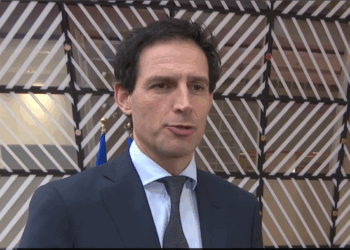




![Il ministro dell'Ambiente e della transizione ecologica, Gilberto Pichetto Fratin [Bruxelles, 18 settembre 2025. Foto: European Council]](https://www.eunews.it/wp-content/uploads/2025/09/pichetto-250918-120x86.jpg)


![[foto: European Council]](https://www.eunews.it/wp-content/uploads/2024/06/euco-strem-120x86.jpg)
