



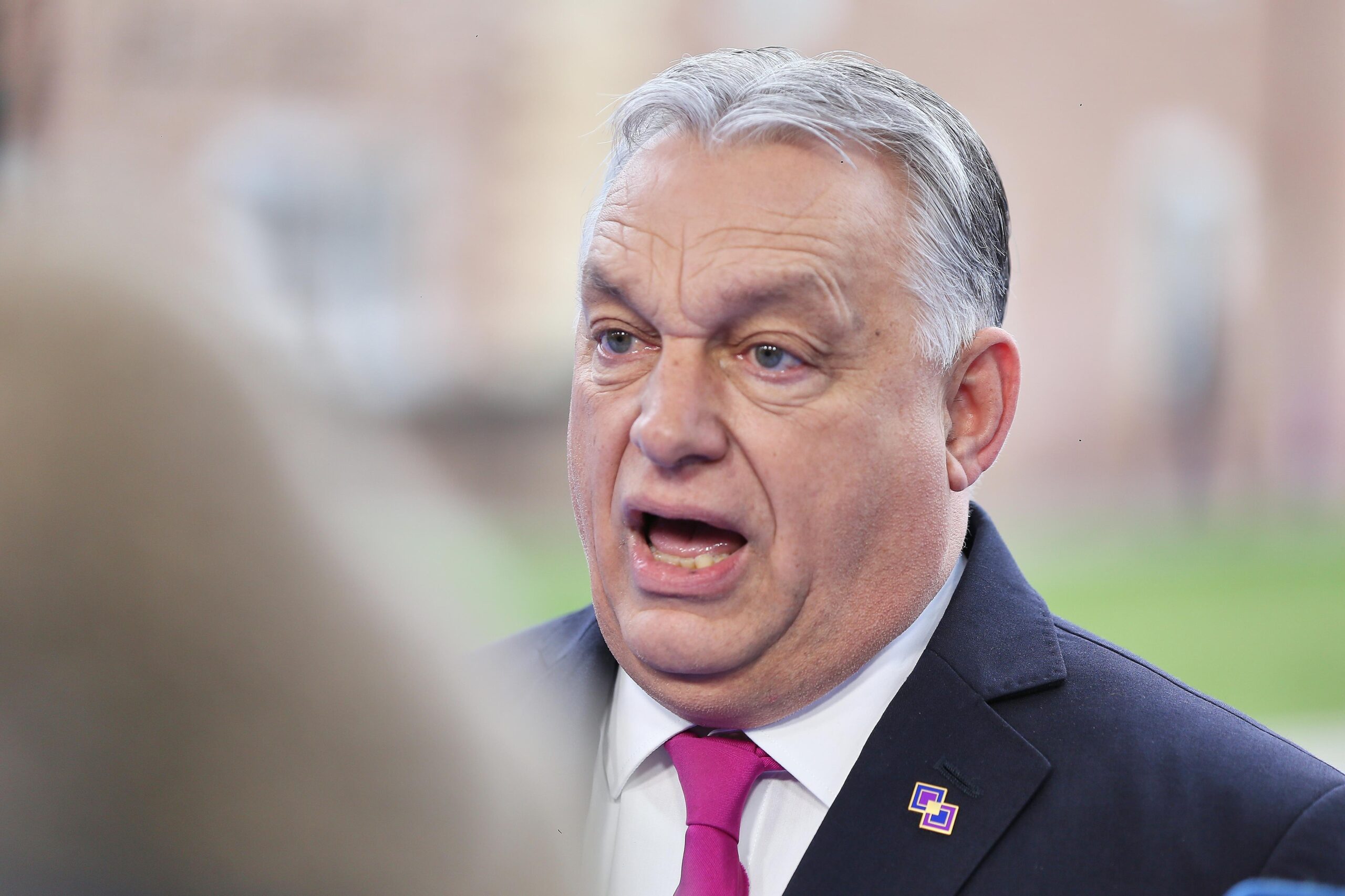
Brussels – The Hungarian government is attempting to contain the fallout from the case involving the Foreign Minister, Péter Szijjártó, who is alleged to have regularly shared confidential information from European Council meetings with Moscow. And it is doing so in its own way, by fighting back: Budapest has filed a complaint against a well-known investigative journalist in the country, accusing him of spying for Ukraine, after a pro-government newspaper identified him as the intermediary who enabled foreign intelligence agencies to intercept Szijjártó’s conversations.
The journalist in question is Szabolcs Panyi, who has previously been targeted by the authorities using Pegasus spyware, and is currently working on a book about Russian interference in Hungarian politics. Following the publication of the Washington Post article on 21 March, which implicated the Foreign Minister and staunch supporter of Viktor Orbán, the newspaper Mandiner reported that foreign intelligence services had intercepted Szijjártó with the help of Panyi, attaching an edited recording in which Panyi himself spoke to a source at an EU agency about a telephone number used by the minister. In a Facebook post, the journalist rejected the allegations, pointing out that the recording published by Mandiner had been heavily edited.
Orbán, in the midst of the campaign for the 12 April elections—in which he is trailing the main opposition candidate, Péter Magyar—is attempting to turn the narrative of the affair on its head. Szijjártó, having initially rejected the accusation, later admitted to having consulted with his Russian counterpart, Sergey Lavrov, before and after the meetings of EU foreign ministers, justifying his behaviour as “diplomacy”. At that point, the Hungarian Prime Minister ordered an investigation into how, and by whom, these conversations had been recorded.
Yesterday, Orbán’s chief of staff, Gergely Gulyás, claimed that Panyi had “spied against his own country in collusion with a foreign state.” He added: “More and more Ukrainian spies are being exposed in Hungary,” in line with Orbán’s election strategy, which seeks to convince voters that Kyiv poses the greatest threat to the country. EU sources have confirmed that the European Commission is monitoring the situation. A spokesperson stated a few days ago that High Representative Kaja Kallas would contact the Hungarian Minister for Foreign Affairs to seek clarification. However, with just two weeks to go before the highly sensitive national elections, Brussels prefers to wait and see.
English version by the Translation Service of Withub





![La video riunione dell'Eurogruppo [27 marzo 2026. Foto: European Council]](https://www.eunews.it/wp-content/uploads/2026/03/eurogruppo-260327-120x86.jpg)
