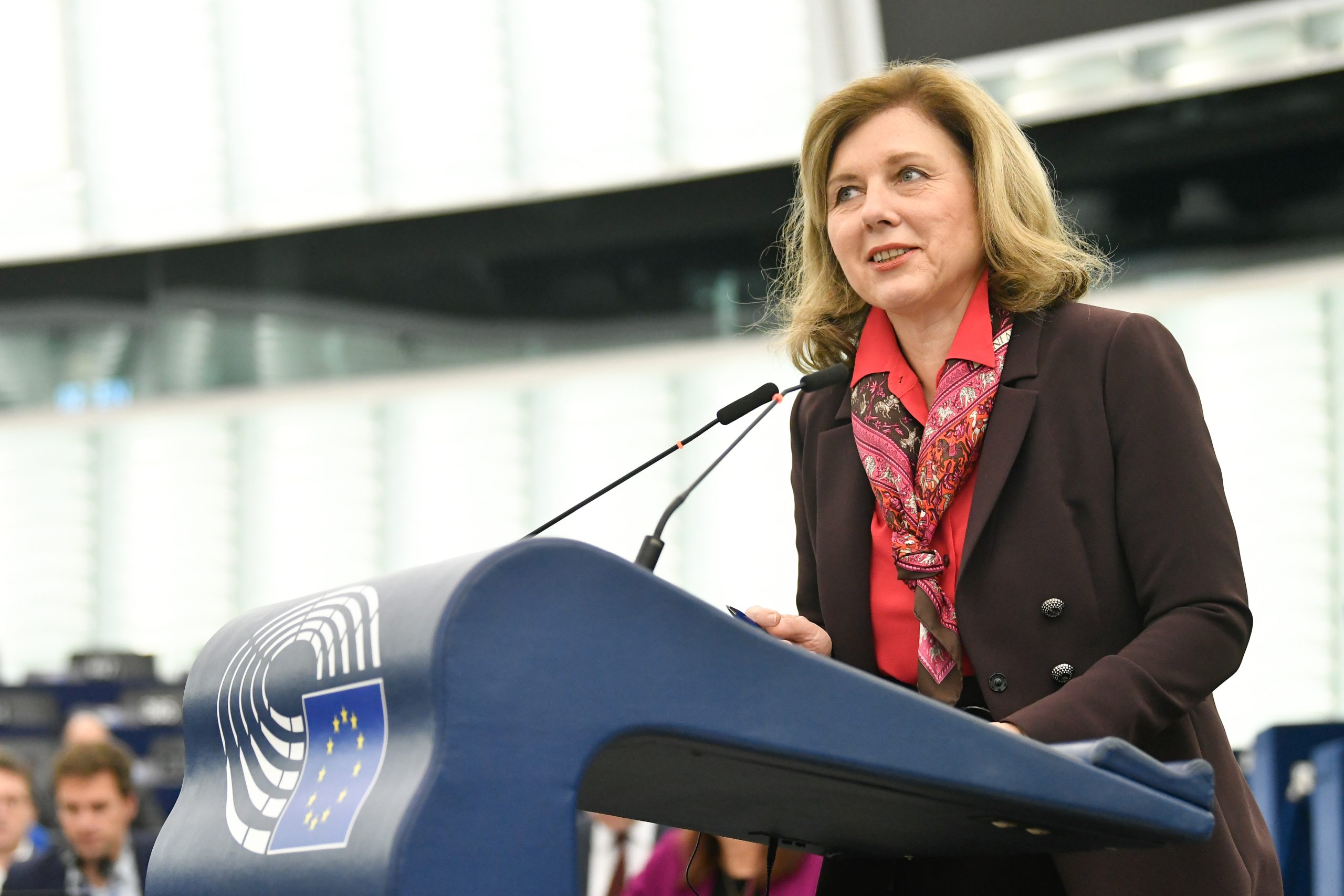
Brussels – Ahead of the June 2024 election, the European Commission is seeking shelter from undue foreign interference. Today (Dec. 12) Vice-President Vera Jourová ha presentato at the Euro Chamber in Strasbourg a legislative proposal to put lobbying on behalf of third countries in the public spotlight.
“The time has come to bring hidden foreign influence to light,” Jourová told the courtroom. Because, abetted by media coverage of the alleged corruption scandal called Qatargate and an increasingly polarized geopolitical situation, more than 80 percent of Europeans believe that foreign interference in our democratic systems is a serious problem that needs to be addressed.
The Commission’s proposed rules aim to give the public, media and civil society better access to information to understand who is trying to influence what they see or read. Through a series of obligations for nongovernmental organizations and agencies that carry out advocacy activities: registration in a transparency register, retention of records of information and materials related to lobbying activities for a period of four years after the end of that activity, the obligation to make key elements of their advocacy work accessible to the public. For example, the annual amounts received and the third countries involved.
An instrument that “in a nutshell proposes harmonized rules for the transparency of interest representation services financed by third countries with the aim of influencing our policies and decision-making processes and, in short, our democratic space,” the vice president of the European Commission explained. The threat has at least one name and one surname: “We must not allow Vladimir Putin or any other autocrat to secretly interfere in our democratic process, we cannot allow them to hide,” she added.
Although the proposal provides some safeguards to avoid conflicts with fundamental rights such as freedom of expression or association–such as the possibility to derogate from the publication of information in “duly justified” cases–there was no shortage of criticism in the Strasbourg hemicycle. For Dutch MEP Sophie in ‘t Veld, of the Renew Liberals, the Commission’s package “labels NGOs as potential foreign agents,” while failing to address attacks on democracy coming from EU territory.
The reference to the arm of iron between the EU and Viktor Orban’s Hungary over the conflict in Ukraine became more explicit in the intervention of Pentastar Fabio Massimo Castaldo, who warned the Commission to “beware of all risks, because often the most dangerous ones come from within,” from “ambiguous national leaders who continue to mystify reality by winking at authoritarian presidents.”
English version by the Translation Service of Withub