- Europe, like you've never read before -
Monday, 15 June 2026
No Result
View All Result
  • it ITA
  • en ENG
Eunews
  • Politics
  • World
  • Business
  • News
  • Defence
  • Health
  • Agrifood
  • Other sections
    • Culture
    • Diritti
    • Energy
    • Green Economy
    • Finance & Insurance
    • Industry & Markets
    • Media
    • Mobility & Logistics
    • Net & Tech
    • Sports
  • Newsletter
  • European 2024
    Eunews
    • Politics
    • World
    • Business
    • News
    • Defence
    • Health
    • Agrifood
    • Other sections
      • Culture
      • Diritti
      • Energy
      • Green Economy
      • Finance & Insurance
      • Industry & Markets
      • Media
      • Mobility & Logistics
      • Net & Tech
      • Sports
    No Result
    View All Result
    Eunews
    No Result
    View All Result

    Home » General News » Europol identifies the 821 most dangerous criminal organizations in the EU

    Europol identifies the 821 most dangerous criminal organizations in the EU

    Agility, borderlessness, control and destructive are the features of criminal networks according to a report by the European police

    Matteo Pedrazzoli</a> <a class="social twitter" href="https://twitter.com/Matteo__Pedra" target="_blank">Matteo__Pedra</a> by Matteo Pedrazzoli Matteo__Pedra
    5 April 2024
    in General News
    Europol

    Brussels – Making the invisible visible so we can know, fight, and defeat it. The report presented today (April 5) by Europol highlights the state of crime in Europe. It highlights the existence of 821 criminal networks within the EU territory, flagging them as the most dangerous. The combination of information from the police forces of the 27 Member Countries in addition to the participation of law enforcement agencies from 17 other States allowed to produce the report.

    Europol pointed out some key elements that distinguish the 821 most threatening criminal networks: they are Agile because they manage to adopt business processes, typical of economies of scale, in a short time, overcoming challenges, even those of law enforcement. Borderless​: criminal networks operate in multiple EU and non-EU states without particular difficulty, even if their activities remain concentrated in a single country. Controlling: they exercise strong surveillance over everything within the organization and generally specialize in a single criminal activity. Destructive: the 821 networks engage in corrupt activities that cause significant damage to internal security.

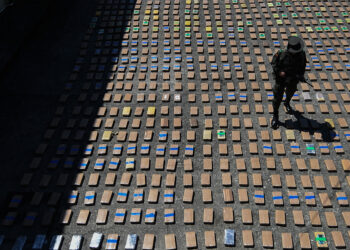
    According to the Europol report, 50 percent of the most dangerous criminal networks are involved in drug trafficking, and for 36 percent, this is the only sector in which they operate. Fifteen percent of the organizations deal exclusively in fraud and 6 percent operate in human trafficking. With regard to drugs, in addition to the trade in heroin, cannabis, and especially cocaine, the arrival on the European market of new substances such as Fentanyl, which has already caused tens of thousands of deaths in the United States, is a particular concern.

    To carry out their activities, in 86 percent of cases, criminal networks use legal business structures to launder money. The sectors most vulnerable to criminal infiltration are construction, hospitality, and logistics. The organizations are structured on a multinational basis, three-quarters of cases are present in at least two countries and have within them members of different nationalities. In total, there are at least 112 different nationalities in the 821 networks, according to Europol.

    The report shows that the organizations have specific characteristics based on the main country where they operate. In Belgium and the Netherlands, the networks are strongly linked to drug-trading infrastructure such as the port of Antwerp or Rotterdam, and are generally run by people from Morocco and Turkey. In Eastern European countries, networks are linked and often have Russian nationals in leading roles. In contrast, mafia organizations often have Italians at the top even though they have activities in 45 states (particularly present in Belgium, Germany, the Netherlands, Romania, Colombia, and the United States).

    The Europol report is the fruit of efforts to combat organized crime, the turnover of which in the EU, according to a 2019 study, amounted to 139 billion euros, equal to 1 percent of the Union’s GDP. It emerges that the threat posed by these networks is pervasive and complex, which is why cooperation between States must improve. The data collected will help national police in the fight against crime. This is a starting point for future analysis of criminal actors, and these data will be further elaborated in Europol’s upcoming analytical products, such as in the ‘EU Serious and Organized Crime Threat Assessment 2025’.

    English version by the Translation Service of Withub
    Tags: europolorganized crime

    Related Posts

    porti europei traffico droga
    Politics

    Alliance of European Ports against drug trafficking launched. 300 tons of cocaine seized in the EU each year

    24 January 2024
    map visualization
    La presidente della Commissione europea, Ursula Von der Leyen, e il presidente del Consiglio Europeo, Antonio Costa durante la conferenza stampa del G7 ad Evian, in Francia. Crediti: Commissione europea

    The trade deficit with China, the wars in Ukraine and the Middle East: the EU reiterates its priorities at the G7 summit in Evian

    by Iolanda Cuomo
    15 June 2026

    Von der Leyen: “Our main objective is to tackle the structural challenges facing the global economy, but also to focus...

    Source: Photo by Sergio Oliverio via Imagoeconomica

    Compensation for three-hour delays: Council and Parliament update rules on air passenger rights

    by Giulia Torbidoni
    15 June 2026

    Key features include a three-hour delay threshold for claiming a refund; clear instructions for passengers on how to claim from...

    Source: Imagoeconomica

    The review of tobacco products is mobilising the EU: over 80,000 responses sent to the European Commission

    by Annachiara Magenta annacmag
    15 June 2026

    The review of EU regulations has sparked a clash between industry, trade associations, and the public health sector, amid accusations...

    La sala riunioni del consiglio di associazione UE-Egitto [Lussemburgo, 15 giugno 2026. Foto: European Council]

    The EU is seeking Egypt’s cooperation against Russia, while Cairo is looking to attract investment

    by Emanuele Bonini emanuelebonini
    15 June 2026

    The 11th Association Council meeting between the two sides took place in Luxembourg. Kallas called for tougher measures against Moscow’s...

    • Director’s Point of View
    • Opinions
    • About us
    • Contacts
    • Privacy Policy
    • Cookie policy

    Eunews is a registered newspaper
    Press Register of the Court of Turin n° 27


    Copyright © 2025 - WITHUB S.p.a., Via Rubens 19 - 20148 Milan
    VAT number: 10067080969 - ROC registration number n.30628
    Fully paid-up share capital 50.000,00€


    No Result
    View All Result
    • it ITA
    • en ENG
    • Politics
    • Newsletter
    • World politics
    • Business
    • General News
    • Defence & Security
    • Health
    • Agrifood
    • Altre sezioni
      • Culture
      • Diritti
      • Energy
      • Green Economy
      • Gallery
      • Finance & Insurance
      • Industry & Markets
      • Media
      • Mobility & Logistics
      • Net & Tech
      • News
      • Opinions
      • Sports
    • Director’s Point of View
    • Draghi Report
    • Eunews Newsletter

    No Result
    View All Result
    • it ITA
    • en ENG
    • Politics
    • Newsletter
    • World politics
    • Business
    • General News
    • Defence & Security
    • Health
    • Agrifood
    • Altre sezioni
      • Culture
      • Diritti
      • Energy
      • Green Economy
      • Gallery
      • Finance & Insurance
      • Industry & Markets
      • Media
      • Mobility & Logistics
      • Net & Tech
      • News
      • Opinions
      • Sports
    • Director’s Point of View
    • Draghi Report
    • Eunews Newsletter

    Attention