Brussels – A landmark United States Court of International Trade ruling declared the generalized tariffs Donald Trump announced on ‘Liberation Day’ on April 2 illegitimate. A resounding twist stops the president’s aggressive line on trade policy and shuffles the cards in the complex game of negotiations that Washington’s trading partners – including the European Union – are conducting with the new American administration.
The decision, handed down last night (May 28) by a three-judge panel at the court’s New York headquarters, comes in the wake of numerous appeals filed by US companies and states, which accuse the tycoon of abusing his presidential powers. At the center of the dispute was the use of the International Emergency Economic Powers Act (IEEPA), a law created to deal with “unusual and extraordinary” threats in times of national emergency, which, according to the court, cannot be used to introduce tariffs on a global scale. The court stated that Trump’s tariff orders “exceed any authority granted to the President by IEEPA to regulate importation by means of tariffs.”
The ruling emphasizes that the judges did not judge the appropriateness or effectiveness of the tariff measures per se but noted their incompatibility with the current legal framework. “That use is impermissible not because it is unwise or ineffective, but because that federal law does not allow it,” according to the ruling.
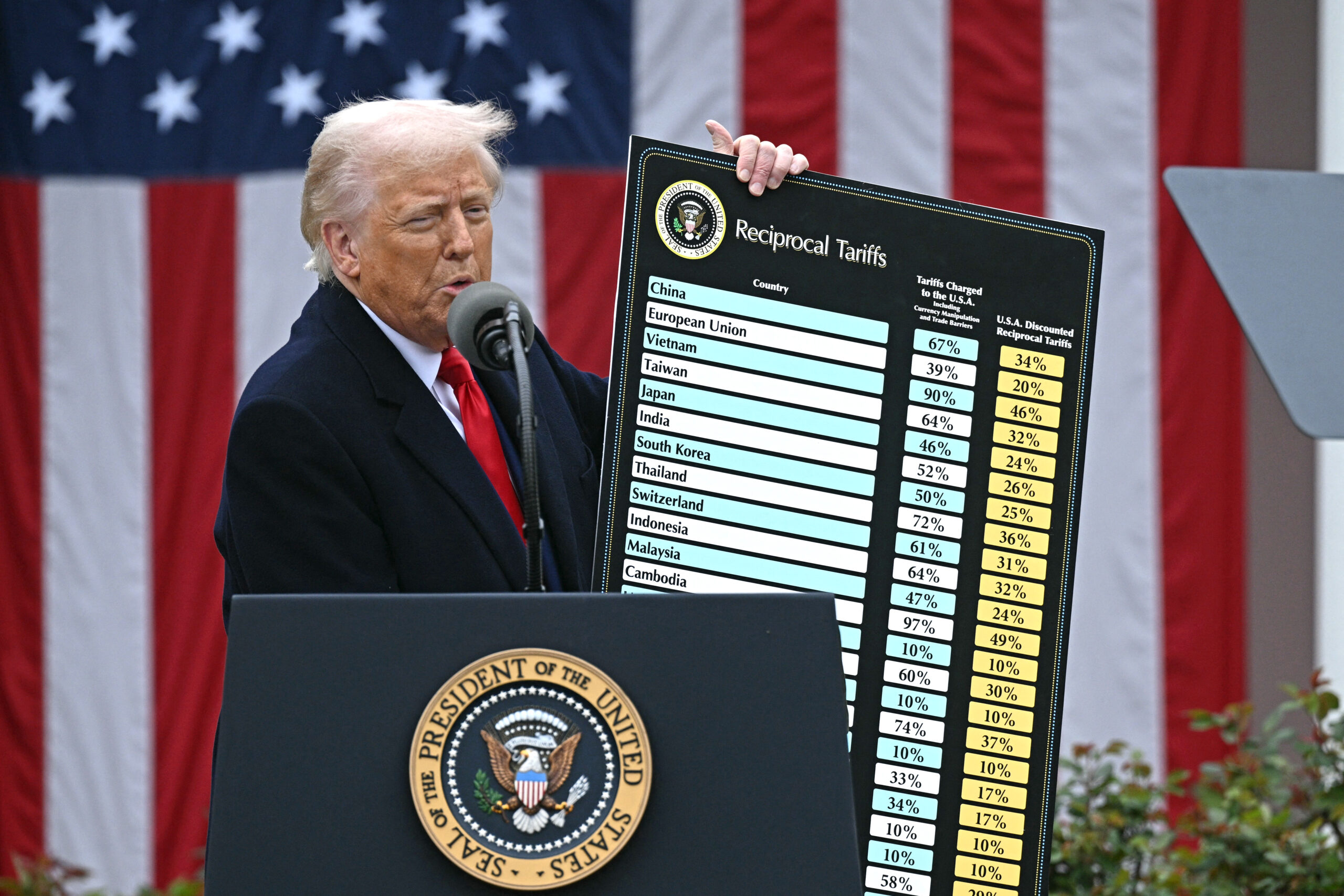
The ruling calls into question one of the key tools of Trump-era economic policy: using punitive tariffs to pressure trading partners, relocate production, and reduce the US trade deficit, which amounts to over $1.2 trillion. According to the Court, the president cannot circumvent Congress by justifying these measures with the mere existence of a trade deficit, which does not in itself constitute a national emergency. The judicial pronouncement immediately invalidates all tariff orders issued through the IEEPA. Trump, therefore, will be forced to revoke the orders and possibly issue new ones reflecting the permanent injunction within ten days. It should be noted that the decision does not apply to the 25 percent sectoral tariffs on cars, components, steel, and aluminium, that Trump previously imposed on the EU and that are already in force.
Financial markets enthusiastically welcomed the news. The dollar surged, gaining ground on the euro, yen, and Swiss franc. In Europe, the major stock exchanges closed higher, with Frankfurt’s Dax rising 0.9 percent, Paris’ Cac 40 up 1 percent, London’s Ftse 100 gained 0.1 percent, and Milan’s Ftse Mib up 0.3 percent. Asian markets shared the positive trend, while futures on Wall Street indicated a strong opening.
However, the White House reacted harshly to the decision. Kush Desai, an administration spokesman, vigorously challenged the judges’ authority. “It is not up to unelected judges to decide how to deal with a national emergency.” Stephen Miller, deputy chief of staff, has said, “The judicial coup is out of control’, while Donald Trump has not yet officially reacted to the matter. The decision will be appealed in federal court in Washington and potentially before the US Supreme Court. The verdict seriously undermines Trump’s strategy, which relies on extensive tariffs to renegotiate the global trade balance. Without recourse to the IEEPA, the administration would now have to follow slower and more complex paths based on formal trade investigations and the application of other specific customs laws.
The Court ruled on two main lawsuits. The first was filed by a group of American small businesses, which complained of substantial economic damage, while the second was filed by a dozen states, led by Oregon. The state’s attorney general, Dan Rayfield, commented: “This ruling reaffirms that our laws matter and that business decisions cannot depend on the whims of the president.” The plaintiffs’ lawyers argued that the trade deficit does not constitute an emergency within the meaning of the IEEPA, pointing out that the US has had a trade deficit for 49 consecutive years. The central argument was that using the emergency law to introduce tariffs was an abuse of power, and the Court agreed with them.
The case remains open to further judicial developments. However, in the meantime, with this ruling, the judges put a stop to the unilateral drift of US trade policy, reaffirming the centrality of the law — and Congress — in economic decisions of global significance and reminding Trump that holding cards in his hand often does not mean being able to play them at his will.
English version by the Translation Service of WithubThe judicial coup is out of control https://t.co/PRRZ1zU6lI
– Stephen Miller (@StephenM) May 28, 2025


![[foto: imagoeconomica]](https://www.eunews.it/wp-content/uploads/2023/09/Imagoeconomica_1917240-scaled.jpg)