Brussels – How to protect children online? Brussels has been wondering about this question for some time. The Digital Services Act, which came into force in February 2024, requires large platforms to assess the risks to youngsters and implement effective tools to prevent them. However, several capitals would like to take it one step further: to impose a legal digital minimum age at the European level. Yesterday (10 June), French President Emmanuel Macron issued an ultimatum to the EU. If no progress is made on the issue, Paris will unilaterally ban access to social media for those under 15. The European Commission’s response was immediate: “We are not working on it, it is a prerogative of the member states.”
The proposal for a European digital age was presented to the EU Council by seven member states a few days ago. The ministers of Greece, Denmark, France, Spain, Italy, Cyprus, and Slovenia urged the EU executive not only to find stricter age verification mechanisms for accessing harmful and pornographic websites, but also to reflect on the need to set the minimum digital age at 15. Paris is already proceeding on its own regarding the use of pornographic sites by minors: Aylo, the parent company of Pornhub, has blocked access to the site for French users in protest against the stricter age controls imposed by the government.
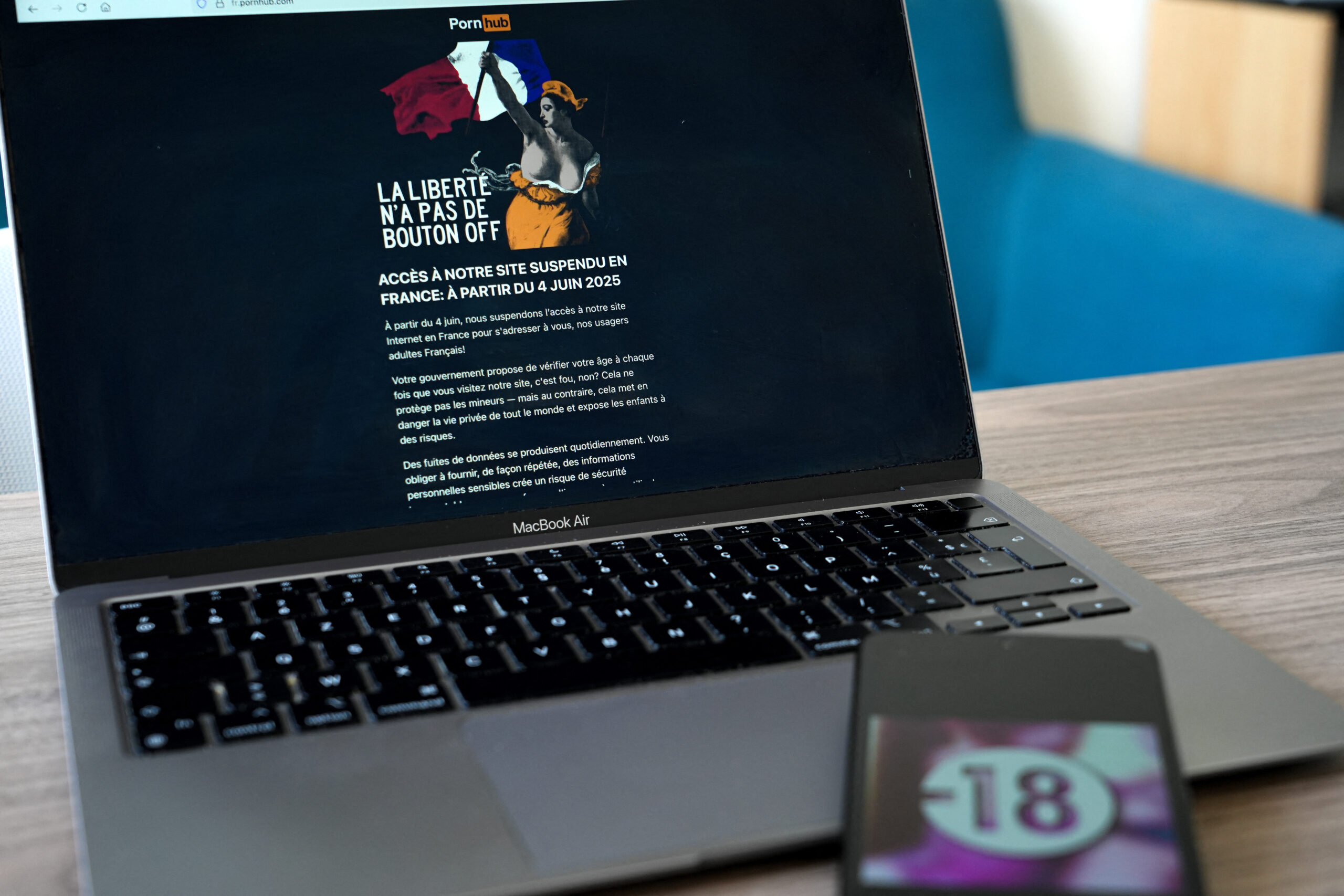
Paris, Rome, Madrid, Athens, and the others can count on Copenhagen, which will take over the rotating presidency of the EU Council from 1 July. The Danish Minister for Digital Affairs, Caroline Stage Olsen, promised that she will dedicate the informal meeting with the counterparts of the 27, scheduled for October, “exclusively on the digital future of children,” and acknowledged that “the current EU legislation is not sufficient.” Macron’s forging ahead was triggered by the murder of a school assistant by a 15-year-old student yesterday at a school in Nogent, Haute-Marne. “We cannot wait,” the president said, also announcing that age verification will soon be introduced in France on sites selling knives online. “A 15-year-old will no longer be able to buy a knife online. This means we will enforce massive financial penalties and bans,” he promised. Later, on his account X, he relaunched: ‘Let’s ban social media for under-15s. The platforms have the ability to verify age. Let’s do it.”

European Commission digital spokesman Thomas Regnier made it clear today: Brussels is not working on a Europe-wide ban on social media. “This is not what the Commission is doing, nor is it what we are heading towards,” he said during the daily press briefing. Regnier explained that this is “a national prerogative”: as stated in the Data Protection Regulation (GDPR), “it is up to the member states to establish and set the digital age of majority between 13 and 16.”
In addition to the provisions already outlined in the Digital Services Act, for which the EU executive is developing guidelines for online platforms, a more effective age verification tool has also been in development for some time. “We are currently working with the member states to present a Europe-wide age verification tool in the course of 2026,” said the spokesperson. The European Digital Identity Wallet
will allow “people to retain full control of their data, but authenticate and verify their age when using certain services.” Brussels announced that it will launch a pilot project together with five Member States as early as July.
English version by the Translation Service of Withub