Brussels – The financing gap for development has already reached $4 trillion a year, before the United States withdrew from the race— already compromised—towards the goals set out by the United Nations in the 2030 Agenda. The UN Conference, which opens today (30 June) in Seville, is a last call for the 70 or so leaders hosted by Pedro Sánchez. Responding, at the forefront, must be the European Union, from which 42 per cent of global aid comes: “Our commitment will endure,” guaranteed Ursula von der Leyen.
Twenty-three years after the first Financing for Development Conference in Monterrey, the optimism of the beginning of the millennium seems to have vanished. The architecture on which the global effort to mend the gap between the world’s powerful and the most disadvantaged countries rested has collapsed. As certified by the Trump administration’s cut to 83 per cent of the funding for the overseas programmes of USAID, the US development agency. In Seville, a new impetus is sought: in the final document, the ‘Compromiso de Sevilla’, the growing debt and declining investment, the financing crisis and the difficulties in achieving sustainable development goals are addressed. Agreement on the text was reached despite deep divisions on several issues, culminating in the US decision to withdraw completely from the process.
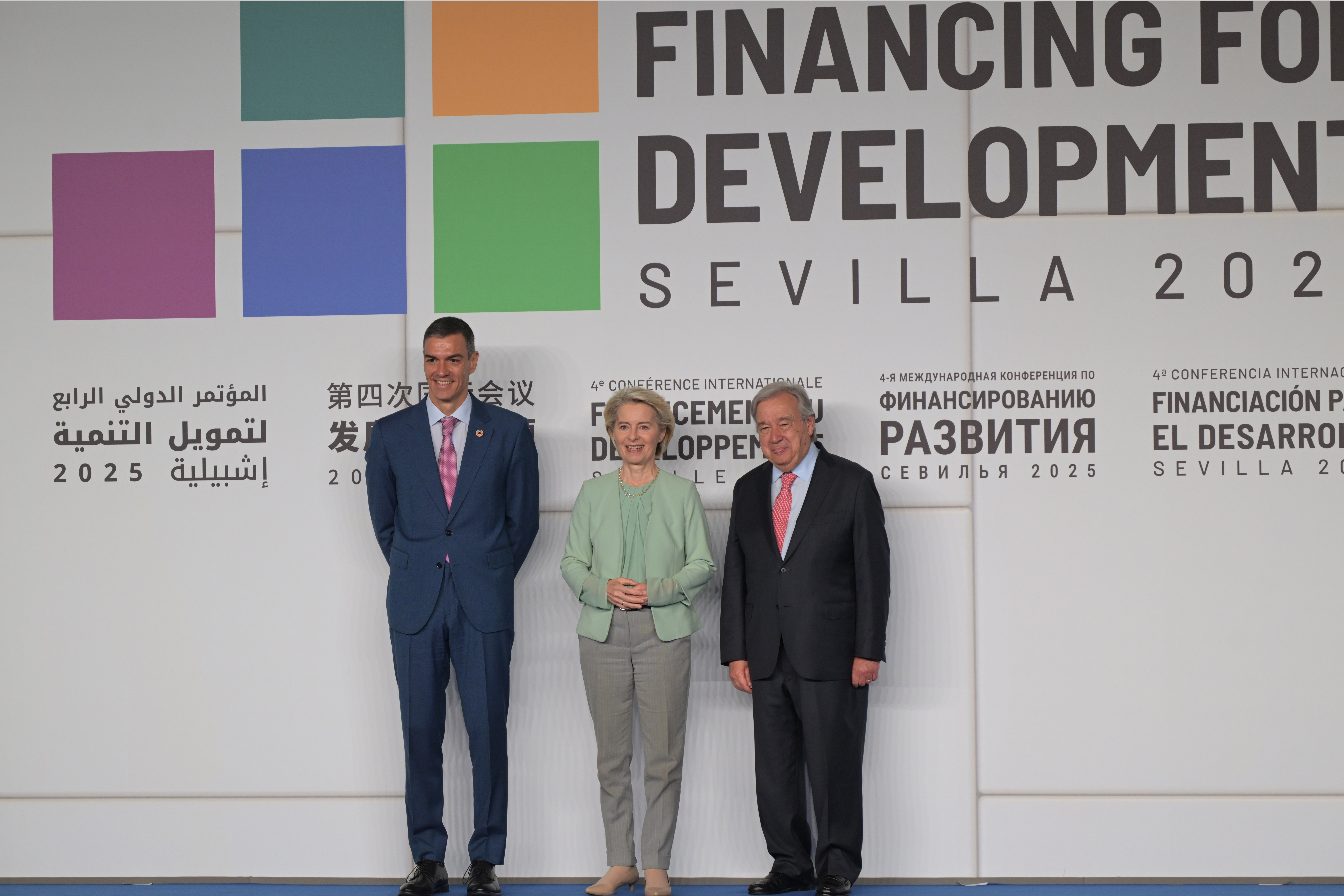
In 2024, global aid to development totalled just over $200 billion. “The annual investment gap compared to the Sustainable Development Goals is in the trillions of dollars,” noted the President of the European Commission, Ursula von der Leyen, in her speech at the conference. Almost half of this comes from the Old Continent, amounting to some 96 billion. “At the same time, it is good that new donors are now stepping up their commitment,” the EU leader continued. Brussels’ strategy to bring more countries on board is to “join forces and set up joint investment programmes,” as done recently with India.
Also on the table is the implementation of the agreement signed in October 2021, whereby 136 countries agreed to impose a minimum tax of 15 per cent on multinationals with a turnover of more than €750 million. The European Union has transposed the agreement into a directive, and Member States have been called upon to comply by 31 December 2023. Trump, again in this area, withdrew the United States from the negotiations in February 2025. China is implementing the terms of the agreement very slowly. “We must implement the agreement on international rules on corporate taxation,” von der Leyen insisted, not only because “this will strengthen the revenues of developing economies,” but also “as a matter of fairness.”
However, the European Union has also betrayed the agreement brokered in 2021 by the Organisation for Economic Co-operation and Development. Amid a trade war with Washington, faced with threats of retaliation from Trump, the G7 members agreed this weekend to exempt US multinationals from the tax. The statement released by the Canadian G7 presidency refers to the creation of a “parallel system” that excludes US companies from minimum tax rules and “facilitates further progress to stabilise the international tax system.”
The major theme, also highlighted by UN Secretary-General Antonio Guterres, is the urgent need to “reform the international financial system,” which some consider “obsolete” and “dysfunctional”. It must be “more inclusive, effective and representative”, echoed European Council President Antonio Costa. Speaking before other leaders and 4,000 representatives of civil society and international organisations, Costa concluded: “Multilateralism is not going through its best moment, it is true. But it is resilient and alive. Today, here, we are proving it.”
English version by the Translation Service of Withub