Brussels – The EU executive presented a mixed picture of the rule of law in the EU in its annual report published today. Alongside the improvements recorded in several Member States, there are also different delays and, in some cases, setbacks. Hungary remains the black sheep of the twelve-star club, while Italy has little in the way of particularly commendable progress to show.
The Commission published its sixth report on the health of the rule of law in the Union today (8 July), which was presented to journalists by Executive Vice-President in charge of Democracy Henna Virkkunen, and Justice Commissioner Michael McGrath. From Strasbourg, where the College was meeting in conjunction with the plenary session of the European Parliament, the two members of the second von der Leyen Commission presented the main results of the study, which for the second year in a row also includes some candidate countries: Albania, Northern Macedonia, Montenegro, and Serbia.
The annual report is the cornerstone of the so-called Rule of Law Cycle, a dialogue the Commission holds with chancelleries to monitor and encourage respect for democratic safeguards, civil liberties, and fundamental rights within the Union, aiming to prevent problems from arising or worsening.

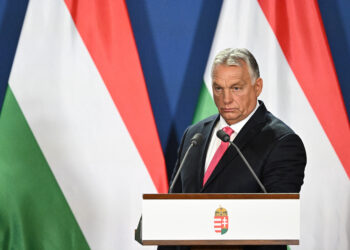
McGrath emphasized that this was “a preventive tool” to prevent the activation of other, harsher methods such as Article 7 sanctions (which can lead to the suspension of a member state’s voting rights in the Council) or the freezing of European funds under the conditionality mechanism. Both instruments are currently in use against Hungary, led by Viktor Orbán, with over EUR 18 billion allocated to Budapest blocked by the Berlaymont for violating a long series of EU rules.
“The promotion and protection of the rule of law is a top priority,” said Virkkunen, noting that “our democracies are under attack” and cautioning that “we cannot take it for granted that the rule of law is in good health” across the Twenty-Seven. Despite positive trends in many member states, the Vice-President warned, there is “strong polarization and pressure on democratic institutions” throughout the Union.
The EU executive analyzed four key areas: the judicial system, anti-corruption regulations, media freedom, and democratic checks and balances. In addition, in the 2025 edition, Brussels adopted a specific focus on the single market because, McGrath explains, “the EU stands for legal certainty, which brings with it economic stability and prosperity,” going so far as to define the rule of law as the Old Continent’s “competitive advantage.”
The Commission nevertheless tries to see the glass half full. “We see steady progress,” Virkkunen notes, pointing out that “more than half of the recommendations in the 2024 report have been fully or partially implemented”. However, problems remain, she admits, especially regarding the intrusion of political power into the justice sector, insufficient efforts to combat corruption, shortcomings in the protection of journalists, and pressures on civil society.

Particularly in some Member States, reforms are proceeding at too slow a pace, while in others, there has even been backtracking. The resources allocated to judicial systems are often undersized, with obvious repercussions on the quality and efficiency of proceedings. The independence of judges and undue influence from the political world, on the other hand, are problems, especially in the enlargement countries.
Regarding anti-corruption regulatory frameworks, seven Member States have implemented new strategies based on the findings of the 2024 report. However, Berlaymont sources said further action is still needed in various areas, including lobbying and the conflict of interest regulation.
The EU executive also wants to see progress, both in the Member States and in the candidate countries, in the area of media freedom and pluralism. Above all, the Commission officials note, for the protection of reporters and transparency in public financing, as well as the independence of the public service and certain regulatory authorities in the sector.
Different chancelleries among the 27 member states are aligning their legislation with the European standards outlined in the Media Freedom Act; however, this is not always enough. PD MEP Sandro Ruotolo denounces a worrying situation in several member states: “In Cyprus, the draft law under discussion facilitates espionage against journalists,” he argues.”In Slovakia, freedom of the press is under discussion.” In Hungary, “there is a complete lack of political will.”
The European Parliament is also discussing the draft law in the context of the Media Freedom Act.

Virkkunen expressed “serious concerns” regarding the health of Hungarian democracy, as there has been an improvement in only one area among those mentioned by the Commission. Budapest has several cases before the EU Court of Justice, the vice-president recalled (for example, the controversial law on the protection of minors). Meanwhile, McGrath, who
has long had his eye on the democratic backsliding taking place in the central European country, defined a year ago by his predecessor Didier Reynders, “as a systemic problem” – reiterates how the EU executive is “ready to take further action” should the situation deteriorate further.
And what about Italy? The Commission report highlights some weak progress, for example, in public procurement, but on the road to reform, Rome seems to be lagging. A “serious problem” remains, among other things, in the duration of trials and the technological backwardness of the entire judicial system. At the same time, there have been no substantial steps forward regarding the state broadcaster RAI. Moreover, Ruotolo said, Italy “has dropped to 49th place in press freedom, three places lower than last year, according to Reporters sans frontières.” Above all, he continues, “four Italian journalists were illegally spied on” through spyware from Paragon, the controversial Israeli company operating with US funds.
Overall, reforms are also progressing in the area of checks and balances, which are fundamental to the liberal-democratic constitutional framework, for example, through a greater openness of the legislative process to civil society stakeholders. However, there are still legal uncertainties due to, for instance, unstable regulatory frameworks as well as excessive restrictions (or inadequate protections) for civil society organizations.
Commission officials finally underline some developments concerning individual Member States. Although, for example, Slovakia still needs to make significant progress, the report assesses the dialogue with the authorities in Bratislava as “intense but positive.” In the case of Spain, the anti-corruption regime is central; however, an overall strategy is still lacking, and the revision of the legislative code is still ongoing. As for Warsaw, where the pro-European government of Donald Tusk has pledged to restore the rule of law after eight years of PiS eroding Polish democracy, the report notes positive efforts; however, in several cases, the measures implemented have not been sufficient or have not taken root.
English version by the Translation Service of Withub