Brussels – The trade ministers of the twenty-seven European Union Member States will meet in Brussels on Monday in an extraordinary session where the issue of US trade tariffs and negotiations with Washington will dominate.
Yesterday, a senior EU official explained that the course of the discussion will be influenced by whether or not an agreement is reached by Monday. “The Commission has informed us that a framework agreement could be reached within a few days. So there might be an agreement by Monday, just as there might not be: it is not known to us yet, but it is clear that the talks are in an intense and probably conclusive phase,” he detailed.
But today, the Berlaymont Palace revised expectations downwards with trade spokesman Olof Gill giving no update. “We remain fully ready to conclude an agreement in principle with the United States,” but “I have no updates indicating that this will happen any time soon,” he said in the daily press briefing.
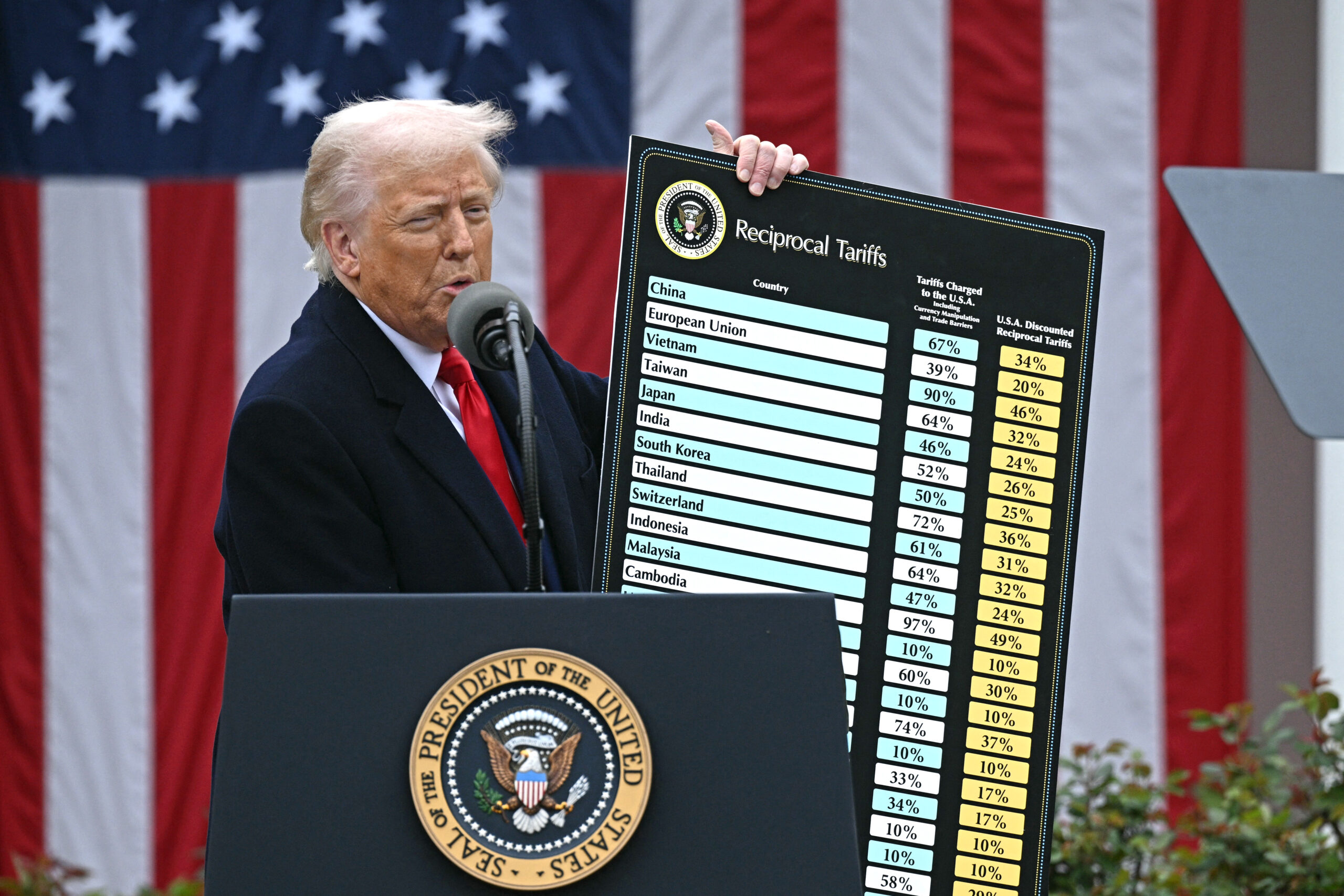
No decision has been made on the first list of EU countermeasures affecting approximately 21 billion US dollars’ worth of imported goods in response to Washington’s tariffs on steel and aluminium made in Europe. Brussels had decided to suspend them until midnight on Monday, July 14, after President Donald Trump’s decision to pause the implementation of the toughest duties for 90 days. On paper, therefore, they should be triggered from midnight on Tuesday, 15 July. However, in light of the new deadline set by the White House tenant on 1 August, the EU is trying to determine whether to put them on standby again to continue making room for negotiations with the US. With respect to the “first list of EU countermeasures currently on hold, due to expire on Monday, I would not want you to get too worked up. Essentially, if a political decision is made to extend the suspension, we will extend it accordingly. There is no difficulty in doing that,” Gill pointed out. “I would not focus too much on that for now: our priority, as I have repeated every day this week, is to reach an agreement in principle with the United States, and we are ready to do that. And we await some indication from our American counterparts that they are ready to do the same,” he stressed.
Meanwhile, stirring the pot is the world of steel production with the Eurofer (European Steel Association) denouncing the fact that “the US duties on steel at 50 per cent” are “fuelling an already explosive situation, putting the sector at risk of losing all its exports to the US and facing a wave of diverted trade flows from the US to the EU market.” But the association is not only pointing the finger at the ongoing trade tensions. According to Eurofer, the EU is “lagging behind” the other side of the Atlantic, and “the lack of bold and timely implementation” of the Steel and Metals Action Plan is “further accelerating the deterioration” of the sector.
On the one hand, therefore, President Henrik Adam warns that with the loss of the “main export market” due to tariffs, “the European market is being flooded by steel that the United States can no longer absorb.” This is in addition to the problem of “huge global overcapacity, now five times greater than the EU’s total steel production,” which “is destroying entire value chains.” But to the US Adam recognises that it has “consistently pursued—regardless of administration—a bold industrial strategy” while “the EU has lagged behind,” with “the implementation of the Steel and Metals Action Plan still failing to produce tangible results” while “any potential benefits from the latest review of the EU’s steel safeguards have been completely nullified due to its low level of ambition and the disastrous impact of US tariffs, which is only beginning to materialise.”
According to Eurofer, through lower energy costs, green subsidies, the “buy steel from the US” policy and strong trade protectionism with the reactivation of steel tariffs, “the US steel industry first regained price competitiveness against imports, and then invested in 8-9 million tonnes of new capacity.” And now “the 50 per cent increase in general duties is expected to further increase US domestic capacity utilisation, securing volumes for new production lines by reducing imports and increasing domestic production.” At the opposite pole is the EU, which “lost 10 million tonnes of production capacity in 2024 alone, the highest annual closure rate ever,” whereas “before the 50 per cent tariff increase, the EU was the third largest exporter to the US after Canada and Brazil, with around 4 million tonnes of steel exports.” Meanwhile, the EU’s policy responses are “insufficient”. The Affordable Energy Action Plan and the Clean Industry State Aid Framework “have not led to substantial energy price reductions” for energy-intensive industries due to the structure of the EU electricity market “which continues to generate high and uncompetitive prices.”
On Monday, therefore, the ministers will have much to discuss. Whether or not an agreement in principle is reached first. “In any case, the ministers will have a lot to discuss,” the EU official added. Both because the Commission will provide “an update of the situation” to the ministers in the meeting, and because “the ministers are expected to discuss the future trade relationship between the US and the EU because even if a trade agreement in principle could be reached in the coming days, it would probably not be the end” of the job and “there will be many uncertainties, twists and turns in the weeks and months ahead.” Therefore, “there is no doubt that trade relations will remain quite unpredictable and fragile,” he stressed.
English version by the Translation Service of Withub