Brussels – The European Commission has finally published the legal texts of the agreement between the EU and the Mercosur countries, a Latin American trading bloc comprising Argentina, Brazil, Paraguay, and Uruguay. After decades of negotiations, slowed down by numerous interruptions and political tug-of-war, the documents will now be submitted to the Council and the European Parliament for approval, after which the Member States will have to proceed with the final ratification. The update of the free trade agreement with Mexico was also presented and will follow the same process. It will now be submitted to the Council and the European Parliament for approval.
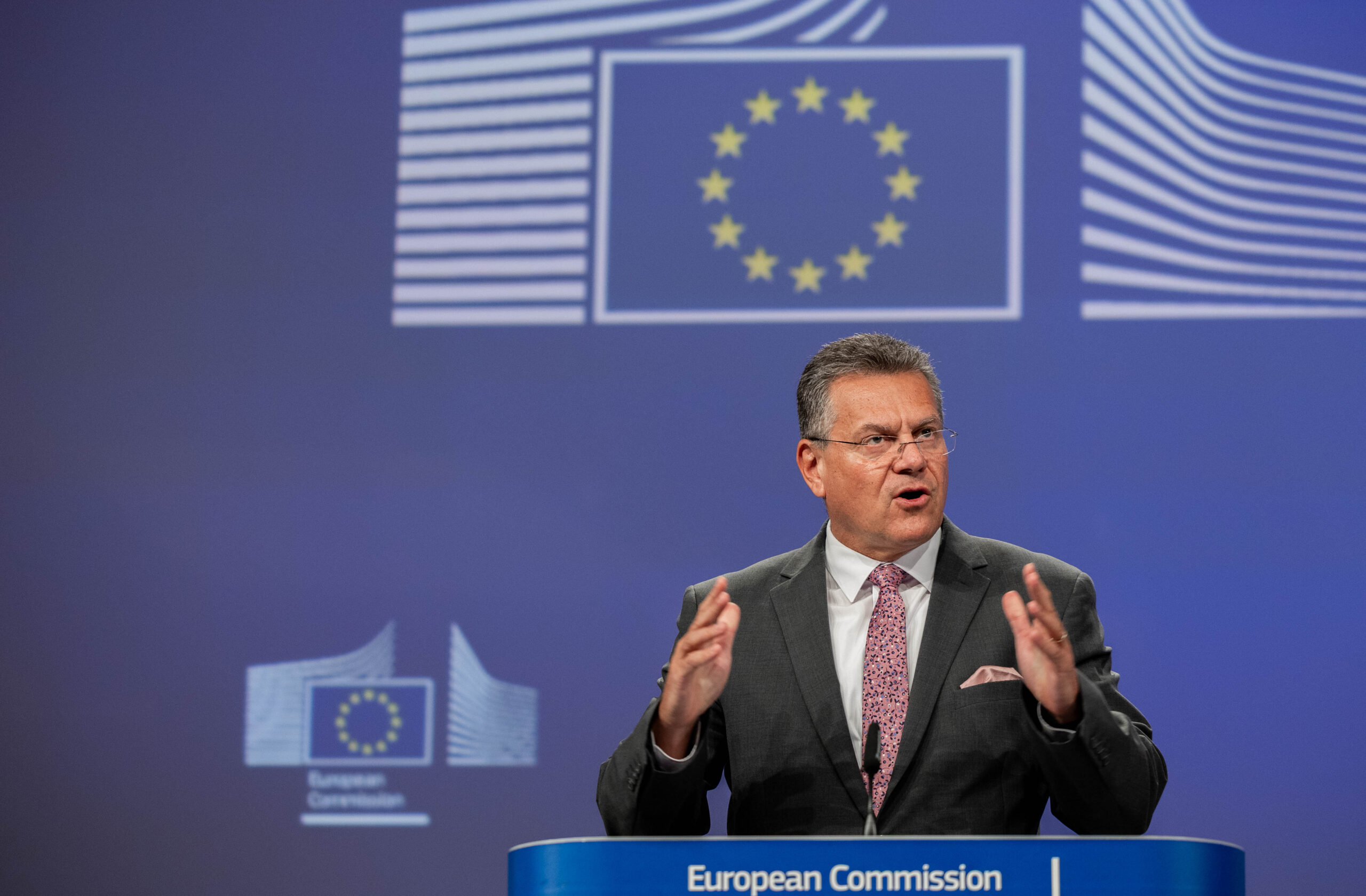
One could read a certain satisfaction on the faces of High Representative Kaja Kallas and Trade Commissioner Maroš Šefčovič when they presented the fruits of the College’s work on the Mercosur agreement to the press this morning (3 September). The twelve-star diplomacy chief emphasised the economic as well as the geopolitical relevance of the agreements: “Europe is strengthening its strategic alliances and forging new ones,” she said, arguing that it is about “strengthening the EU’s global partnerships.”
Along the same lines was Šefčovič, who spoke of “strategic tools that will help shape Europe’s role in the global economy in the coming decades” and emphasised in particular the importance of “diversifying supply chains,” a necessity in this era of international upheaval to create the basis for “a more stable and more predictable global trading environment.”
The Commission has good reasons to be satisfied. The step taken today is a crucial towards bringing a little closer the final entry into force of the historic association agreement between the Union and the four members of the Mercosur (an acronym for Mercado Común del Sur): Argentina, Brazil, Paraguay, and Uruguay (Bolivia, which is joining the bloc, will have to negotiate bilaterally a possible association with the EU).

The agreement (EMPA) represents the broadest partnership ever concluded by Brussels, which should give rise to the world’s largest free trade area with over 730 million citizens on both sides of the Atlantic. Negotiations had started in 1999 but were interrupted several times; between 2016 and 2019, the trade section of the partnership, the most important one, was drafted, and finally, last December, the global deal on the entire package was reached, personally signed by Ursula von der Leyen in Montevideo, the headquarters of the South American organisation.
EMPA sets in black and white a series of reciprocal commitments regarding trade between the two sides of the Atlantic, including the reduction of a wide range of tariffs that restricted the access of Made in EU goods to the region (mainly cars, machinery, distilled spirits, and pharmaceuticals) and cost European companies around EUR 400 billion a year. According to Brussels estimates, food exports to Mercosur are expected to increase by 50 percent, and the agreement will also have the effect of protecting over 300 geographical indication trademarks.
One of the central elements is the safeguard mechanism, which is supposed to protect the agricultural production in the 27 member states. The mechanism is outlined in a separate document that will be legally binding only for EU members, with which the EU executive aims to address the most urgent concerns of governments and mitigate the opposition of the most recalcitrant chancelleries. Countries such as France, Italy, and Poland have opposed the Mercosur dossier for years, fearing that their agricultural sectors would be penalised by the opening of European markets to (potentially unfair) Mercosur competition.

With these safeguards, the Commission intends to regulate the import volumes of several sensitive agri-food products such as beef, poultry, sugar, and rice, limiting them to a fraction of internal EU production (for example, 1.5% for beef and 1.3% for poultry). The deal also envisages several compensation measures for European farmers. To the 300 billion in income support provided for in the Common Agricultural Policy (CAP) post-2027, the EU executive adds a safety net, renamed Unity, with a budget of 6.3 billion. Farmers have repeatedly forcefully protested in recent months against the signing of the EMPA.
The Commission experts also stress that the existing sanitary and phytosanitary requirements will not change: the rules on food safety and animal health will continue to apply, and, indeed, both import controls and checks in third countries will increase. The focus on climate action and environmental sustainability will also remain high, they say at the Commission, pointing out that the EMPA includes binding rules to ensure compliance with commitments made, for example, with the 2015 Paris Agreements (thus, if Argentina were to exit the latter, the Buenos Aires partnership with the EU will also be suspended in whole or in part).
The ball now passes to the EU co-legislators. The Council will have to approve by a qualified majority the text of the interim trade agreement (covering those parts of the EMPA that fall within the exclusive competence of the EU), subject to the consent of the European Parliament. The interim agreement will remain in force until the ratification process in the individual member states is concluded. All eyes are on the capitals, starting with Paris and Warsaw. Emmanuel Macron has always been one of the fiercest critics of the agreement – in a few days, he should also be without a government, slowing down the whole process. Donald Tusk has reiterated his opposition to the Brussels plan in these very hours, while Palazzo Chigi “welcomes the additional safeguards” proposed by the Commission.

However, the green light of the MEPs should not be taken for granted. A group of MEPs from different political groups – from the Greens to the Patriots – has already questioned the compatibility of the von der Leyen agreement with the Treaties and is reportedly preparing an appeal to the EU Court of Justice, complaining about several problems, ranging from the lack of transparency in the negotiations to the risk that it will compromise the EU’s ability to legislate on environmental issues.
At the same time, the Commission today also presented the legal texts for the updated free trade agreement with Mexico, which will follow the same ratification process as the EMPA (provisional application and full ratification). Here too, prohibitive tariffs on many European goods — including cheese, poultry, pork, pasta, apples, jams, chocolate, and wine — are being eliminated. And, as with Mercosur, the EU is gaining broader access to a range of critical raw materials, from fluorite to bismuth and antimony. The original agreement with Latin America’s second-largest economy dates back to 2000, and a deal to “modernize” the pact was reached earlier this year.
English version by the Translation Service of Withub



![[Copyright: European Union]](https://www.eunews.it/wp-content/uploads/2026/10/euco-261015-120x86.png)