Brussels – The state of the environment in Europe is not good. This is what emerges from the European Environment Agency’s (EEA) five-year study, Europe’s Environment and Climate: Knowledge for Resilience, Prosperity and Sustainability. On the continent, biodiversity is shrinking, nature continues to be severely exploited, and climate change is endangering many ecosystems. Southern Europe is the hardest hit. According to EEA data, from 1980 to 2023, every Italian spent an average of about EUR 2,330 to cope with catastrophic climate change events.
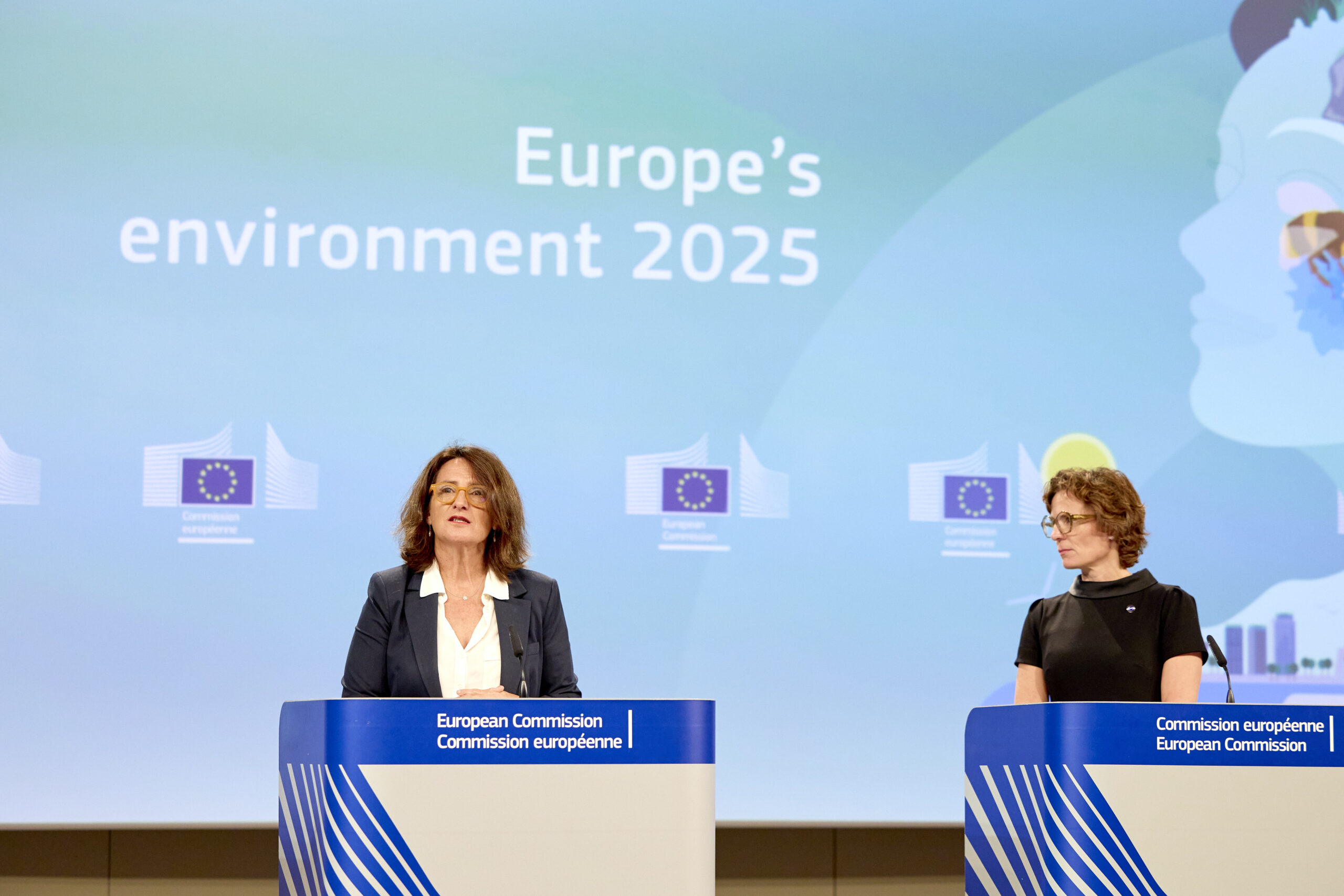
These are just some of the issues that emerged from the “most comprehensive research on the subject” funded by the European Union. EU efforts to mitigate the effects of climate change are beginning to show, but “progress shows we still have a lot to do,” European Commission Vice-President Teresa Ribera told a press conference.
NEW EU Report finds Europe’s environment is in poor shape:
Nature continues to degrade
Biodiversity is declining
️Europe is warming faster than any other regionFind out more with today’s #EuropesEnvironment2025 report by @EUEnvironment
https://t.co/psRsc8alOZ pic.twitter.com/jcdHeJOalx
— EU Environment (@EU_ENV) September 29, 2025
Increasingly warmer, always more damage
While going into the details of the report, almost exclusively bad news emerges. Europe is the fastest-warming continent in the world. Since 1980, rising temperatures have caused some 240,000 deaths and 738 billion euros in economic losses. Biodiversity is under serious threat: 81 percent of protected habitats are in poor condition, and 60-70 percent of the soil is degraded.
Problems that are also reflected in groundwater, where 62 percent of water bodies are not in good ecological status. The report states: “Past policy targets have not been met, and it is unlikely that
2030 targets will be achieved.” Food systems remain among the most polluting. Despite the growth in land dedicated to organic cultivation, there has been no significant reduction in emissions.
In agriculture, it is a vicious cycle: climate change worsens the conditions in which farmers work, and to address these challenges, they increase their use of chemicals to make crops more resilient.
“This is undoubtedly one of the most complex issues for the future,” added Vice-President Ribera at the press conference. “We have to think about what solutions can make agriculture sustainable and how to exploit the earth more sustainably, for example, by storing carbon dioxide underground. Environment Commissioner Jessika Roswall suggested one possible way to improve the food supply for Europe’s 450 million people: “We must diminish waste and change our food system, linking it to the idea of a circular economy.”
.

The European Commitment
The European Union, through the Green Deal, is seeking to implement policies that will make it “a world leader in the climate transition, reducing the impact of housing, fossil energy use, and doubling the share of renewables since 2005.” There is no denying the EU’s commitment, which is achieving partial results: improved air quality, with a 45 percent reduction in premature deaths related to particulate matter, and increased use of sustainable energy, now accounting for around 30 percent of total supply.
The reduction of fossil emissions, both for building needs and in industry, has been 35 percent over the last 20 years (2005-2023): a significant figure, but only partially able to change scenarios. Europe remains “fossilized,” with 70 percent of its energy coming from non-sustainable sources.
The Roads to Adaptation
In such a complex scenario, “adaptation” is increasingly being discussed more strongly among European officials. It is the new diktat for coping with the climate emergencies that hit the southern part of the continent every year.
Teresa Ribera, a Spaniard sensitive to the problems of this area, recalled the importance of “anticipating scenarios and preparing people for these catastrophic events. We must make the best use of our capacities, such as Copernicus (the European Earth observation program), and train citizens to make them ready to react.” The Mediterranean is the most fragile area, as EEA Director, Leena Ylä-Mononen, reiterated: “It is the hot spot of climate change. Extreme events lead to severe drought peaks.” A problem of water scarcity affects about one-third of the Union’s population.
The scenario worsens in Italy
Italy is at the centre of this extreme phenomenon. According to the document, “significant reductions in wheat yields due to drought are expected,” due to the average increase in temperatures of around +2 °C. Our country has highly polluted areas, such as the Po Valley, which are comparable to the most severely impaired regions of Eastern Europe. Additionally, the demand for energy required to cool buildings is increasing dramatically, resulting in a rise in energy consumption even during the summer months.
There are few reasons to celebrate: these include a significant reduction in fossil fuel use, with renewable sources set to replace 38 percent by 2030, and state-of-the-art organic agriculture. Nonetheless, droughts and floods caused by extreme weather events are reducing the amount of farmable land.
These episodes are the EU’s most significant concern, given the (no longer insignificant) economic losses associated with them. The Italian trend, since 2016, shows an increase in expenditure to deal with damage from extreme weather events at a higher rate than the European trend. In perspective, the report states, this will only get worse as temperatures rise. There are various reasons for this, but our country is undoubtedly weighed down by its orographic conformation and central position in the Mediterranean, making the Peninsula a fragile ecosystem that requires protection. Good news, in short, can wait. The EEA report leaves no room for misunderstanding.
English version by the Translation Service of Withub


![[Copyright: European Union]](https://www.eunews.it/wp-content/uploads/2026/10/euco-261015-120x86.png)