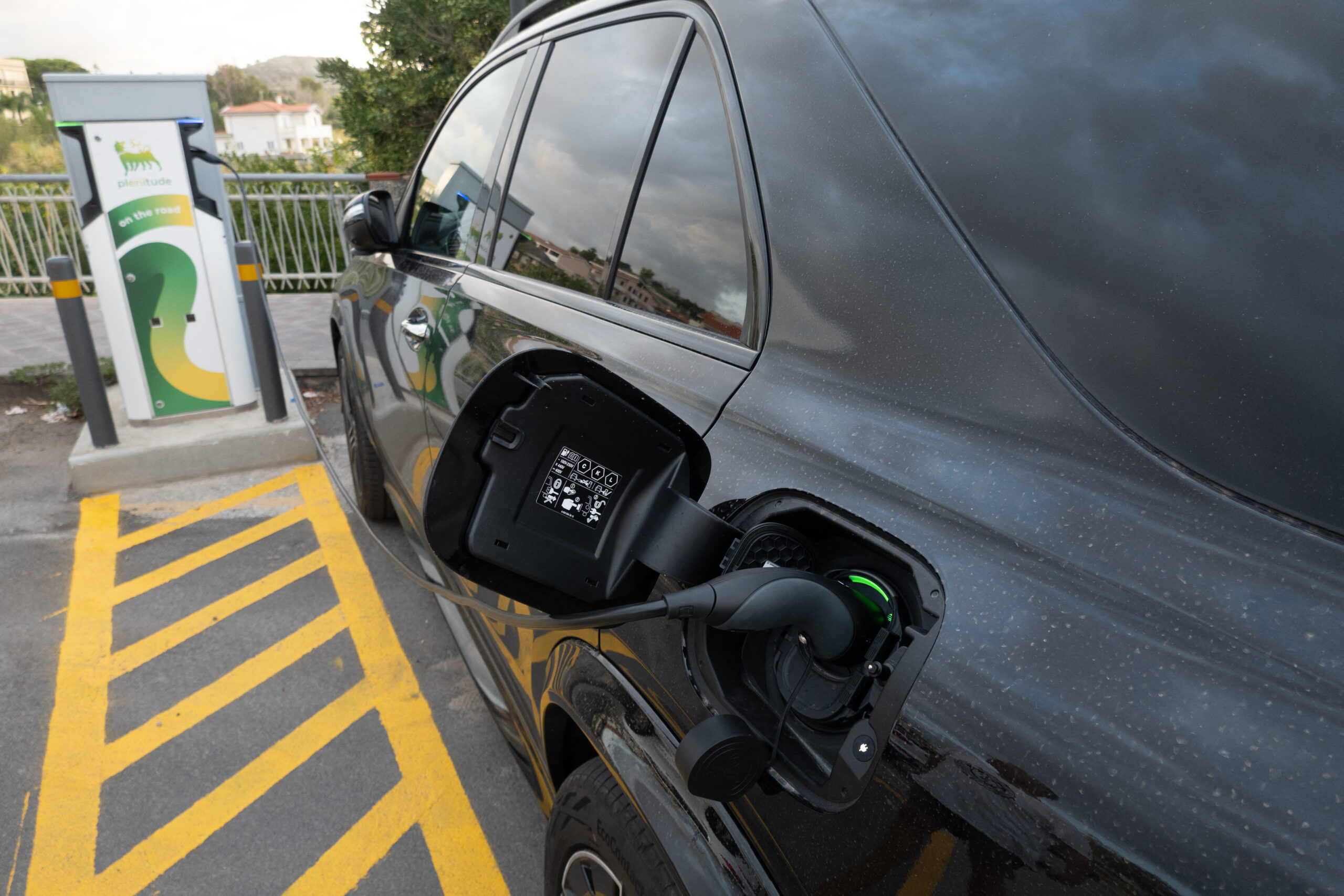
Brussels – Plug-in hybrid (PHEV) cars pollute far more than the industry claims—and certifies. A study conducted by Transport & Environment, one of Europe’s leading transport decarbonization organizations, disproves the assumption that plug-in hybrids are zero-emission vehicles. On the contrary, they apparently pollute almost as much as petrol cars. According to the analysis, the CO2 emissions of plug-in hybrids “are nearly five times as high as the official emissions.”
Data collected by T&E from 800,000 cars registered in the EU between 2021 and 2023 reveal that PHEV vehicles emit only 19 percent less CO2 than petrol and diesel cars, while laboratory tests indicated a 75 percent reduction in emissions. The study shakes things up at a key moment for the future of European mobility, which is moving toward electrification but where the principle of technological neutrality is increasingly being called for.
The difference is how plug-in hybrids are used in practice. In theory, they should reduce emissions and fuel consumption by alternating the use of a rechargeable battery with an internal combustion engine (petrol or diesel). However, the analysis reveals that in practice, the endothermic propulsion is used far more than the electric one, so that CO2 emissions are almost five times the value declared in official registration tests.
Andrea Boraschi, director of T&E Italy, called plug-in hybrids “one of the biggest bluffs in automotive history.” He pointed out that “even in electric mode, they correspond to eight times the values declared in official tests.” Data from the European Environment Agency indicates that thermal engines continue to run even when the car is in electric mode, consuming an average of 3 liters of petrol per 100 km. That translates precisely into emissions of 68 g CO2/km in electric mode, a value 8.5 times that stated in official tests.
The reason, the study explains, is that the electric motors of plug-in hybrid vehicles have insufficient power to maintain high speeds or handle steep inclines, forcing the conventional engine to kick in for support. On average, “the thermal engine contributes almost one-third of the distance traveled in electric mode.” There’s more: PHEV emissions are increasing as car manufacturers tend to market vehicles with greater electric range: larger batteries make the vehicles heavier and thus increase fuel consumption when the engine is running.
The 2023 figures single out Mercedes-Benz the most, as it recorded the widest gap between official and actual emissions of its plug-in hybrids. On average, the German manufacturer’s cars emitted 494 percent more, and its GLE-Class even 611 percent more. The other major European manufacturers emitted around 300 percent more than the official figures.
English version by the Translation Service of Withub




![Il ministro dei Trasporti, Matteo Salvini [Bruxelles, 5 dicembre 2024. Foto: Emanuele Bonini per Eunews]](https://www.eunews.it/wp-content/uploads/2024/12/salvini241205-120x86.jpeg)