Brussels – Two issues will be at the heart of the European Council on 18 December: “Ukraine and security on our continent; and the European Union’s multiannual financial framework for 2028-2034.” This was announced by President Antonio Costa in his invitation letter to the Heads of State and Government of the Union.
The meeting will actually start the day before, on the 17th, with the EU-Western Balkans summit in the evening at 1800.
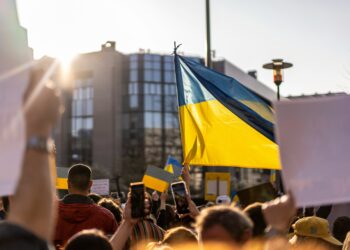
On Ukraine, Costa explains, “recent developments highlight the need for urgent EU action. At the October European Council, we committed to addressing Ukraine’s pressing financial needs for 2026-2027, including for its military and defence efforts. At our next meeting, we have to decide, based on the ongoing preparatory work, how to implement that commitment.”
The president calls on his colleagues to help “strengthen Ukraine’s negotiating position,” for which an important part of the equation will be “increased pressure on Russia.”
Work will then move on to financing the Union for the next Multiannual Financial Framework, starting in 2028. “Intense work will be necessary to reach an agreement, by the end of 2026,” Costa admits, “and on its financing. Keeping to this timetable is important.” It is important to respect the deadlines, Costa recommends, because this “demonstrates that, in a world marked by unpredictability, the European Union is able to decide in a timely and prudent way when defining the budgetary foundations for its action.”
The December European Council meeting will be “a timely occasion for us to hold a discussion on the way forward” in the complex process of Union enlargement.
Costa would also like “to exchange views on the geoeconomic situation and its implications for EU competitiveness. European competitiveness does not exist in a vacuum. It is important that we discuss the pressures, but also the opportunities, that arise in a world marked by rising geoeconomic competition and in which rules-based economic relations and traditional partnerships can no longer be taken for granted.”
Next on the agenda is the discussion of the situation in the Middle East, which “requires our continued attention. The adoption of UN Security Council Resolution 2803 offers an opportunity to advance towards peace. The European Union has a role to play in contributing to the full implementation of the ceasefire in Gaza, and in ensuring that this process remains on a path to a comprehensive, just and lasting peace based on the two-state solution.”
The leaders will then go on to “take stock of the implementation of our previous decisions on European Defence and Security, aimed at decisively ramping up Europe’s defence readiness by 2030. Recent events show that Russia and Belarus have intensified their hybrid campaign in Europe. This reminds us that we need to accelerate efforts on all strands towards our defence readiness.”
Commission President Ursula von der Leyen will then present the letter that will inform the leaders’ discussion on migration.
“As ever, I will endeavour to keep our meeting to one day. But my main priority is to deliver on the important decisions that must be taken, namely on Ukraine financing,” Costa said. The proceedings will begin on Thursday, 18 December at 10 a.m. with the traditional exchange of views with the President of the European Parliament. Afterwards, President Zelenskyy will give a speech.
English version by the Translation Service of Withub