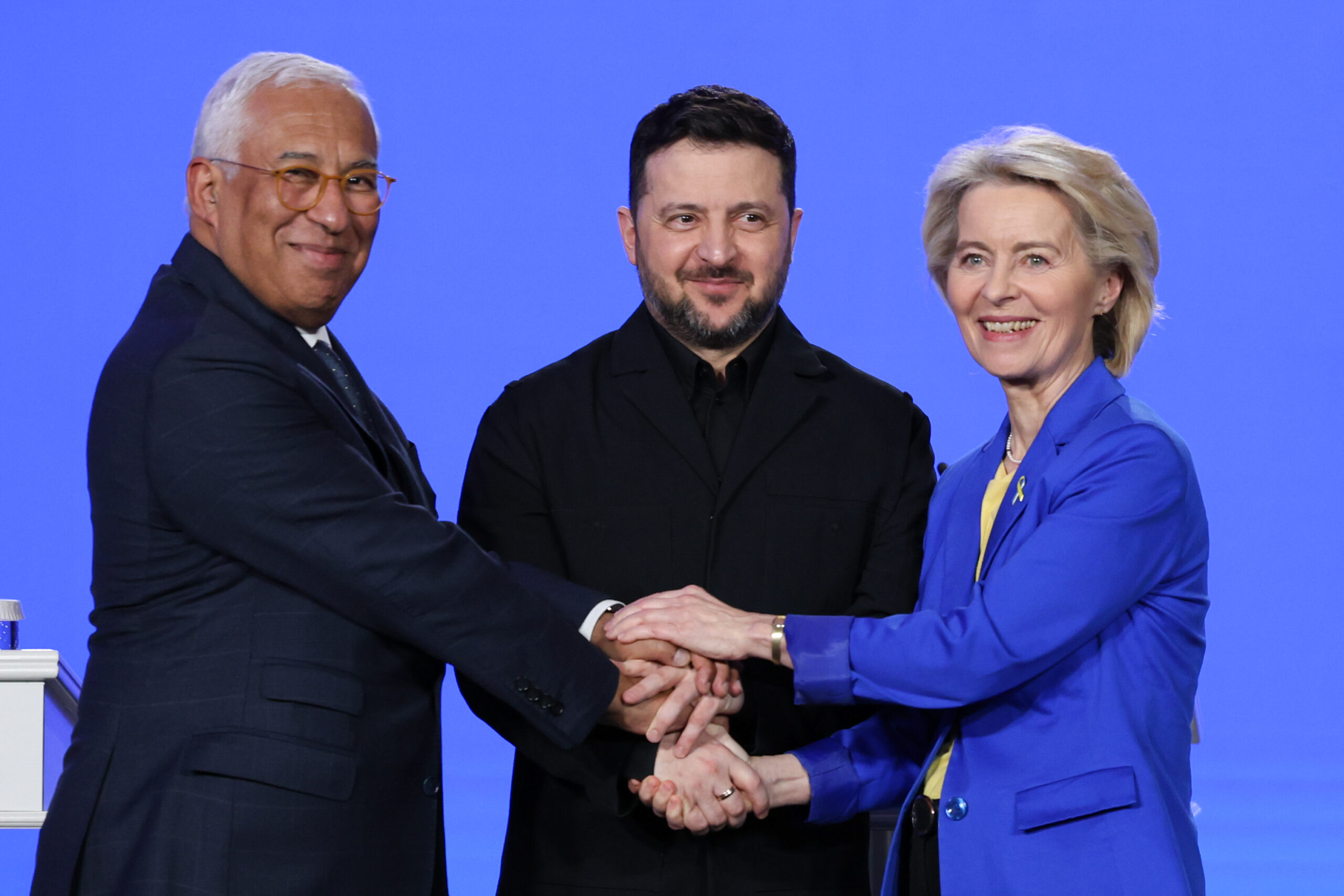
Brussels – The European Union, yesterday a sparring partner affected by the Hungarian veto over the loan to Ukraine, is back on its feet and, on the fourth anniversary (24 February) of the Russian invasion, reassures Volodymyr Zelensky: the 90 billion will arrive on time, “one way or another, we will keep our promise,” said Ursula von der Leyen from Kyiv. The EU is pressing ahead, even if it means overruling Viktor Orbán: meanwhile, in Brussels, the Council of the EU approves two of the three legislative acts necessary to disburse the loan.
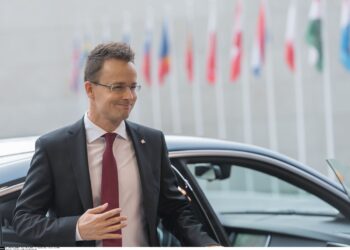
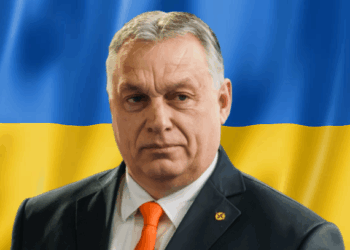
Von der Leyen and Antonio Costa arrived in the Ukrainian capital empty-handed. No agreement was reached on the twentieth package of sanctions against Russia, but above all, no green light was given for joint borrowing for a 90 billion loan over two years already agreed by heads of state and government before Christmas. Both were blocked by Budapest, which accused Kyiv of deliberately interrupting the Druzhba pipeline, which transports Russian crude oil to Hungary via Ukraine.
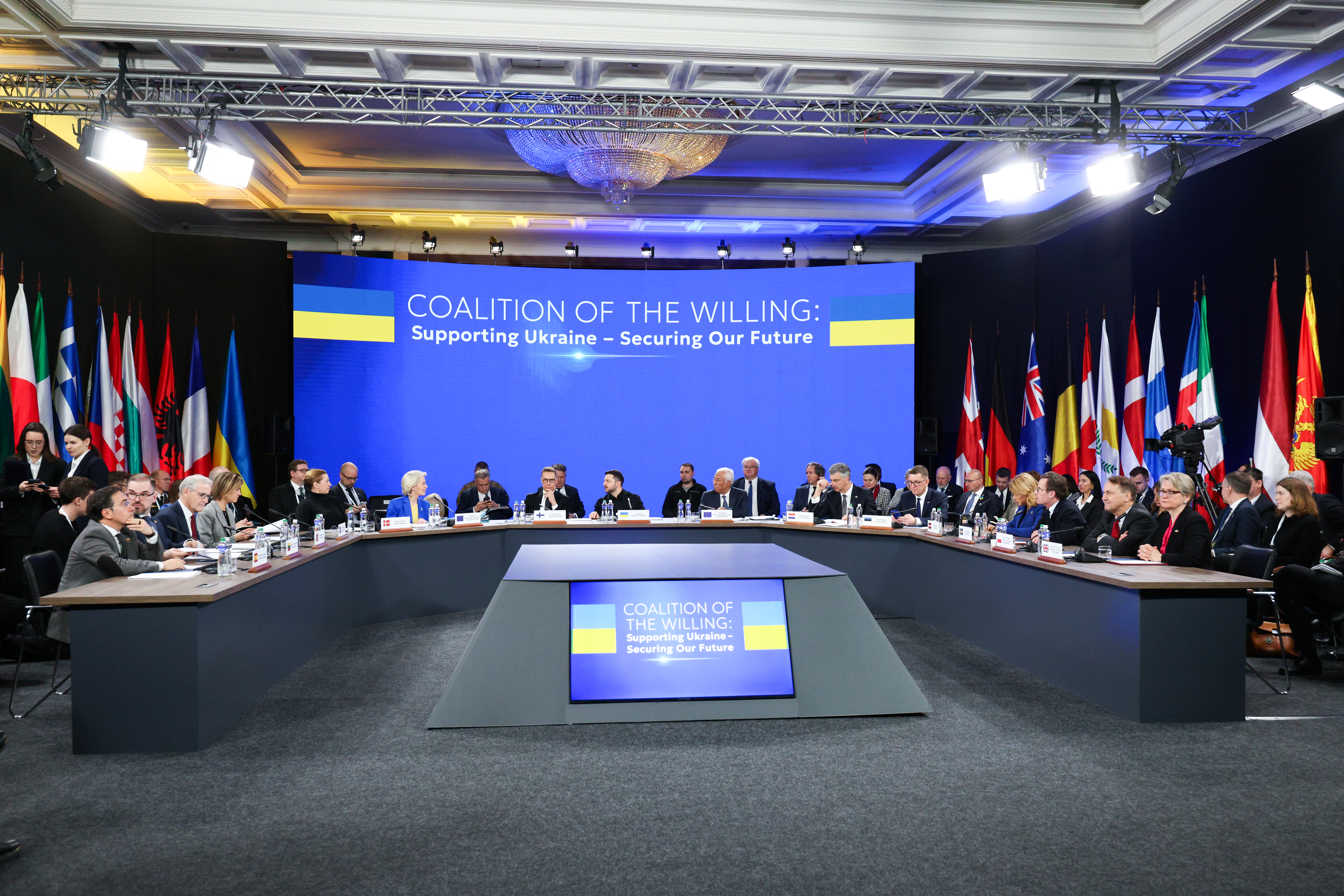
EU leaders attended the ceremony in Maidan Square, then joined Zelensky at the Coalition of the Willing meeting convened by Emmanuel Macron, Keir Starmer and Friedrich Merz. More than 30 leaders attended the meeting, according to the Élysée Palace. The “Willing” “offered their full and unwavering support to Ukraine in its fight for sovereignty and territorial integrity and in its defence of European freedom,” according to a joint statement released on the sidelines of the meeting, and “reaffirmed their unwavering commitment to work together to achieve a just and lasting peace, in accordance with the principles of the United Nations Charter.”
Beyond the formulas, skilfully dusted off by leaders at every anniversary, the EU was expected to respond to Orbán’s about-turn. Yesterday evening, Costa released a letter sent to the Hungarian Prime Minister, in which he urged him “strongly to comply with the decision taken at the European Council in December” on the £90 billion loan to Ukraine, stressing that “a decision taken by the European Council must be respected” and explaining that “violating this principle violates the principle of sincere cooperation” enshrined in the EU treaties.
Today (24 February), the President of the European Parliament, Roberta Metsola, signed the documents constituting the loan. The Cypriot Presidency of the Council of the EU succeeded in getting the ministers of the 27 Member States to approve two of the three measures: the one establishing enhanced cooperation between 24 Member States (without Hungary, Slovakia and the Czech Republic, as agreed in December) and the one amending the Ukraine Facility, the fund through which the loan will be disbursed. However, the proposed amendment to the multiannual budget, necessary to cover EU debt on the markets, has not been put on record. It requires unanimity, and Budapest is opposed.
“Although there is obviously frustration, it is important to note that these are significant steps that bring us closer to the goal of the first tranche of support to be disbursed to Ukraine by April,” commented Marilena Raouna, Cyprus’ Deputy Minister for European Affairs, promising that the EU Council Presidency “will continue to work on the third element, which would allow the funding to proceed in line with this timetable.”
At a press conference with Zelensky, von der Leyen was clear: “The loan was agreed by 27 heads of state and government in December. They gave their word, and that word cannot be broken. One way or another, we will keep our promise. We have several options, and we will use them.” There is leverage to put pressure on Budapest, and that is the procedure provided for in Article 7 of the TEU (the EU Treaty): already activated in 2018 by the European Parliament against Hungary, it can lead, in the event of violations of the EU’s founding values by a Member State, to the suspension of voting rights.
It is a last resort, so much so that the procedure has been stalled in the Council for years, where a four-fifths majority is required to activate the sanction mechanism. Von der Leyen has cornered Orbán, but at the same time has offered him a way out: “The Russian attacks on the Druzhba pipeline have had a direct impact on the EU’s energy security,” she said, thanking Croatian Prime Minister Andrej Plenković for “his efforts to secure and increase oil shipments to Hungary, Slovakia, and Serbia via the Adriatic pipeline.” In the meantime, “we call for the repair work to be accelerated,” the EU leader concluded.
English version by the Translation Service of Withub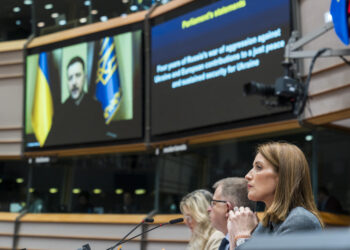

![Da sinistra: il presidente del Consiglio europeo, Antonio Costa; il presidente dell'Ucraina, Volodymir Zelensky: la presidente della Commissione europea, Ursula von der Leyen [Bruxelles, 18 giugno 2024. Foto: European Council]](https://www.eunews.it/wp-content/uploads/2026/06/euco_ua260618-120x86.jpg)
![[foto: Saverio De Giglio/imagoeconomica]](https://www.eunews.it/wp-content/uploads/2026/10/cpt-120x86.png)