Brussels – Faced with a war that is spreading and entering its sixth day of hostilities today (5 March), European countries are trying to coordinate their efforts to come to the aid of Cyprus, a member state bordering the Middle East, and then the Gulf partners targeted by Iran’s indiscriminate retaliation. Meanwhile, after Greece and France, Italy, Spain, and the Netherlands are also preparing naval assets to deploy in the area, the EU High Representative for Foreign Affairs, Kaja Kallas, is bringing together the ministers of the 27 and the Gulf Cooperation Council via videoconference. She suggests: “Ukraine can help with its anti-drone systems.”
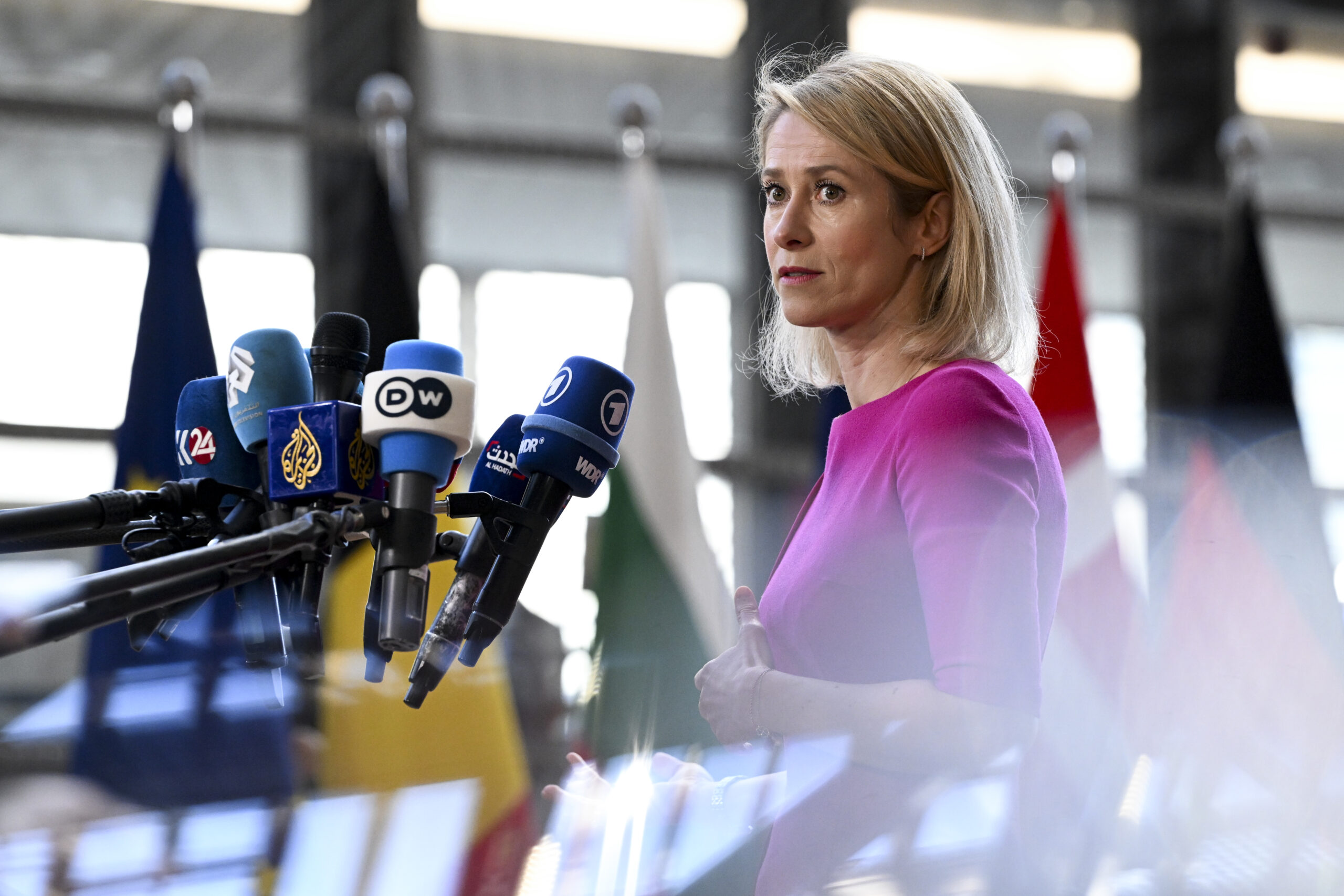
Upon her arrival at the Lanterna, home of the EU Council and the European Council, from where she will direct proceedings, Kallas stated: “Iran is exporting war, seeking to extend it to as many countries as possible in order to sow chaos.” The drones launched by Tehran and its allies in the region have targeted not only the Gulf monarchies, but also Turkey and the British base at Akrotiri in Cyprus. And in many cases, it is the same Iranian-made Shahed drones “that attack Kyiv every day,” the head of EU diplomacy accused. That is why, according to Kallas, “Ukraine can help the Gulf countries because it has developed drone interceptors and drone protection systems, bearing in mind that they are constantly under heavy attack.”
Ukrainian President Volodymyr Zelensky himself confirmed that Ukraine is ready to offer concrete support in the fight against Iranian Shahed drones. In a post on X, he stated that several partner countries, including the United Arab Emirates, Bahrain, Jordan, Kuwait, and Qatar, are “requesting our expertise.” Zelensky pointed out that the request also comes from European allies and the United States. As for weapons, “we ourselves are at war,” the Ukrainian president recalled, hypothesising an exchange of “technology or weapons.” This is because Kyiv “has a shortage of what they have,” namely Patriot missiles, which are too expensive to intercept “hundreds or thousands” of Shahed drones. “They need interceptor drones, which we have,” Zelensky insisted.
Meanwhile, Italy, Spain, and the Netherlands have also announced that they will send naval vessels to protect Cyprus. In addition, Prime Minister Giorgia Meloni stated in an interview with RTL 102.5 radio that Italy plans to send air defence aid to the Gulf countries. In a telephone conversation with Emmanuel Macron, who had promised to deliver anti-drone systems to Cyprus, the two leaders “reaffirmed their shared commitment to supporting the Gulf countries affected by Iran’s unjustifiable attacks and the security of Cyprus, and to avoiding military escalation in Lebanon.” Italy and France jointly produce the SAMP-T surface-to-air missile system, and the two capitals are now considering sending SAMP-T missiles to the Gulf.
Inevitably, reorienting the military arsenal towards the Gulf will have “a clear impact on the war in Ukraine,” Kallas admitted. But the idea that Kyiv itself will commit to supporting countries attacked by Iran opens up a potentially even more dangerous scenario. That of the crystallisation of a single large front, in which everyone is dragged along. On one side, Russia, Iran, North Korea, the “axis of evil,” as it has long been defined in Brussels; on the other, the United States, the EU, Ukraine, and Israel. Kallas insisted that “there must be room for diplomacy to break the cycle of escalation.” But on closer inspection, there are forces sowing chaos on both sides.
English version by the Translation Service of Withub

![Il presidente del Consiglio europeo, Antonio Costa [Lussemburgo, 4 marzo 2026]](https://www.eunews.it/wp-content/uploads/2026/03/costa-260304-350x250.png)