Brussels – The phased process towards a complete end to Russian gas imports into the European Union begins. From today, 18 March, the first ban comes into force: namely, a ban on contracts, both short-term and long-term, for the import of Russian gas concluded or amended after 17 June last year. Brussels has rejected US President Donald Trump’s appeal to suspend the oil embargo and is resolutely continuing on its chosen path.
The European Commission published today (18 March) updated guidance on the implementation of the RepowerEU Gas Regulation, clarifyingcertain procedural details regarding prior authorisation for imports of non-Russian gas. For the EU, “in the context of the conflict in the Middle East, it is essential to avoid unnecessary obstacles to imports of non-Russian gas into the EU“. In this scenario, “no temporary derogation from the ban on imports of Russian LNG and pipeline gas under short- or long-term gas supply contracts concluded or amended after 17 June 2025 will be granted. The ban on imports under such recently concluded contracts will apply from 18 March 2026”, Brussels specifies.
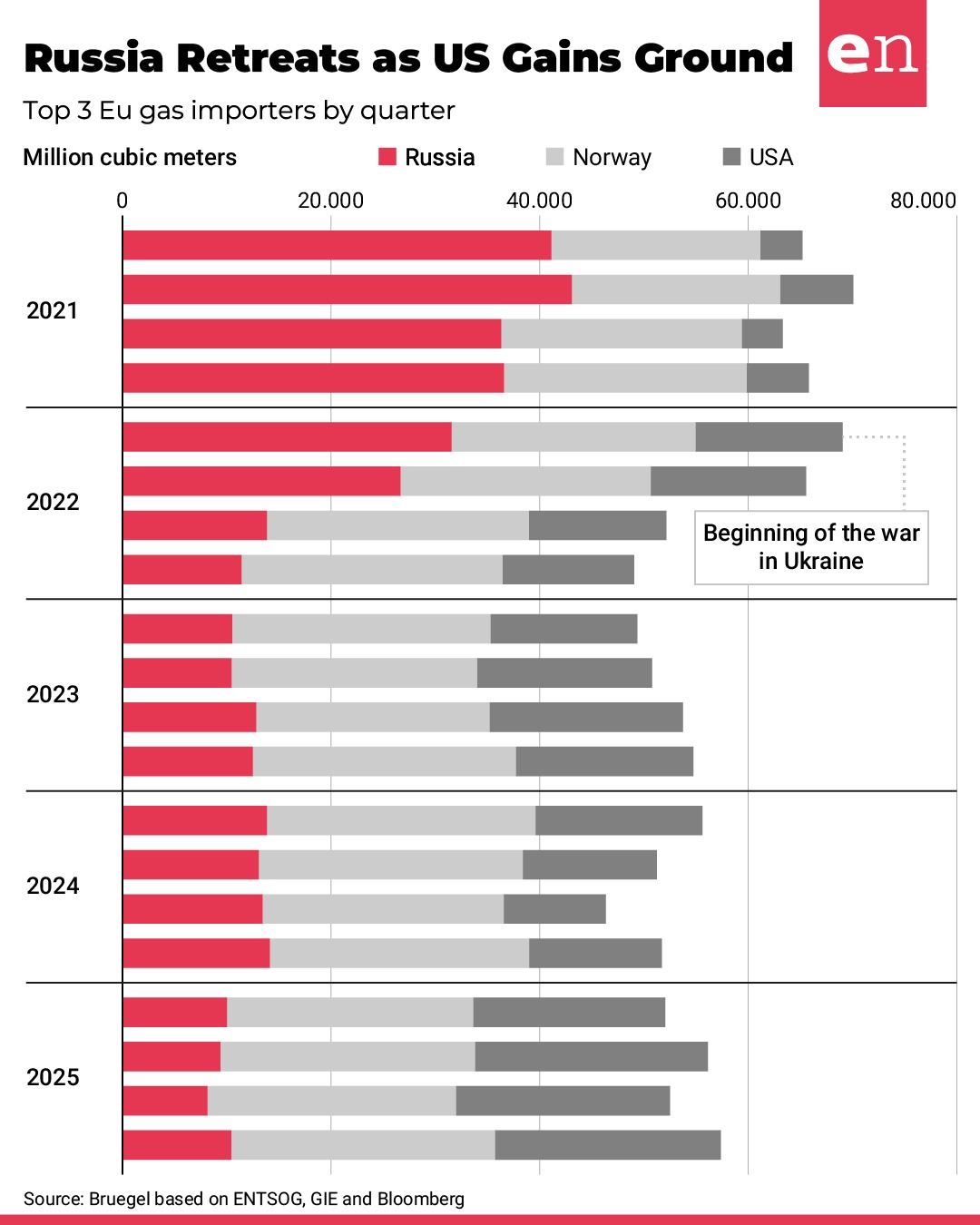
According to the timetable set out in Regulation RepowerEU on Gas—which came into force on 2 February and sets out the requirements for the phasing out of Russian gas—there are transition periods for all existing contracts. For short-term contracts, the ban will apply from 25 April 2026 for LNG and from 17 June 2026 for pipeline gas. For long-term contracts, all remaining imports of Russian LNG will be banned from 1 January 2027, and from 30 September 2027, all remaining imports of Russian gas via pipeline will be banned, unless “exceptional circumstances justify an extension” of the deadline to 1 November 2027 for individual Member States, i.e. in the event that winter storage targets have not been met. Furthermore, “given the very particular circumstances and in order to give them sufficient time to seek new suppliers, it is appropriate to apply a longer transition period also to short-term supply contracts with suppliers from the Russian Federation that are used to supply landlocked countries”, such as Hungary and Slovakia, “which are affected by changes in Russian gas supply routes”, the regulation states. From 1 November 2027, it will no longer be possible to import Russian gas.
Finally, according to reports from Brussels, most Member States submitted their national energy supply diversification plans by 1 March—as required by the regulation—setting out what their governments intend to do to replace Russian gas. The plans must include information on the volumes of Russian gas imported under existing contracts and on the measures planned or already implemented by Member States to diversify their gas supply. They must also indicate the obstacles Member States are encountering in this process and identify solutions to overcome them.
English version by the Translation Service of Withub