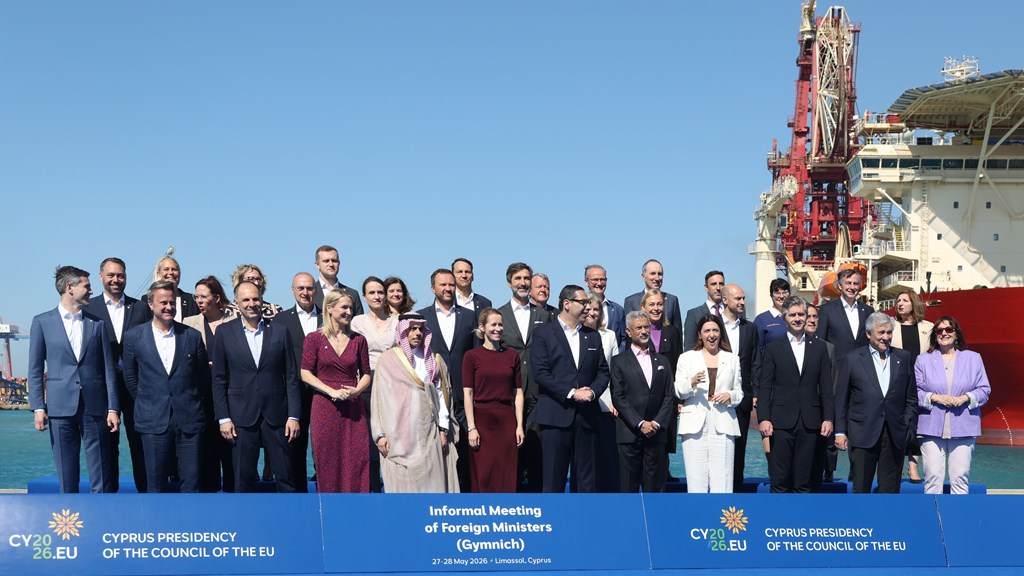

Brussels – The start of Ukraine’s accession negotiations in June is a distinct possibility. The appointment of an EU chief negotiator for the peace talks, however, is to be postponed until a later date. On the delicate Ukraine dossier, the European Union continues to reflect and buy time, which does not necessarily mean wasting it. Brussels sees a Russia that shows little genuine willingness to engage in dialogue, and this weighs on the EU‑27’s decision‑making process, leaving them genuinely uncertain about how to proceed.
The informal foreign ministers meeting (Gymnich) is an opportunity to highlight the limitations of an EU that is still debating who should represent it at future negotiating tables. No one is naming names, starting with the EU High Representative for Foreign Affairs and Security Policy, Kaja Kallas: “I think this is a trap Russia wants to lure us into: discussing who will talk to them, while they are already deciding who is suitable and who is not. Let’s not fall into this trap. Negotiations are always a team effort,” she said on the sidelines of the proceedings. “The substance is more important than the negotiator.” According to Latvia’s Foreign Minister, Artjoms Ursulskis, this means that “we must be ready to provide guidance” to whoever represents the EU. We must therefore first establish the mandate, and then the person to carry it out. For the Estonian Foreign Minister, Margus Tsahkna, the conditions to be imposed on the future EU negotiator are as follows: “Ukraine’s accession to NATO, because there can no longer be neutral or buffer zones between Europe and Russia in the future, and the territorial integrity” of Ukraine. All conditions that are difficult for Moscow to accept.
In any case, Estonia is not committing to any names, and Spain is following suit: “We must speak with one voice, rather than having just one person” at the table, Madrid’s Foreign Minister, José Manuel Albares, argues. Lithuania is closing every door: “This is not the time to discuss names, it is time to put more pressure on Russia,” says Lithuania’s Foreign Minister, Kestutis Budrys, who urges the finalisation of the 21st sanctions package against Moscow, including a ban on all maritime services and sanctions against Rosatom and Lukoil, Russia’s nuclear and oil giants.
Adding to this complex discussion is Xavier Bettel. According to Luxembourg’s Foreign Minister, one could also envisage “a trio” rather than a single name. He suggests “a former politician,, because in this way the person, or persons, would face “less political pressure” and have the chance to work more effectively without the burden of having to think about future votes, and so Jean-Claude Juncker, former Prime Minister and former President of the European Commission, enters the fray: “I think he’s a good choice, he has the connections…,” Bettel said.
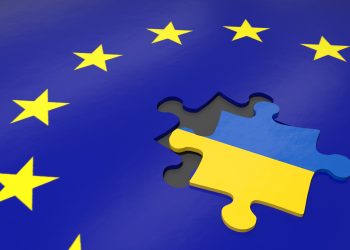
Given the complexity of the issue, it cannot be ruled out that the deadlock may be resolved at the level of heads of state and government at the European Council summit on 18 and 19 June. But June could instead prove more decisive for Ukraine’s path to EU membership. The number of Member States in favour of opening the negotiation chapters for Kyiv in June is growing: the Baltic states (Estonia, Latvia, and Lithuania) are calling for it, while Romania, Cyprus, Luxembourg, and even Italy support it: “The government is in favour of Ukraine’s accession; now we must examine at the European level what is the best way forward,” Foreign Minister Antonio Tajani said.
The key sticking point in the accession debate is the procedure: there is no agreement on how many negotiating chapters to open – whether just a few or all of them – or whether, instead, to envisage an association that in some way precedes full membership, a compromise solution proposed by Germany. This is a possibility that Latvia is open to, though Ursulskis makes it clear: “Alternative models must not call into question Ukraine’s EU membership.” Meanwhile, Tajani sets out Italy’s red lines: “We must continue to work for Kyiv without, however, forgetting the Balkans: the time is ripe for the accession of Montenegro and Albania, which is a priority for the stability of the region and the growth of the European Union.”
English version by the Translation Service of Withub