Brussels – The European Parliament’s plenary session sent an unexpectedly strong message to the European Commission. Not only did MEPs reject the EU executive’s proposal to increase excise duties on tobacco and alternative products, but they also formally called on the Commission to withdraw it in its entirety. This is what emerged from the text approved today (17 June) by the European Parliament.
The call to withdraw the proposal demonstrates broad, cross-party opposition to stricter measures to regulate tobacco and nicotine. A coalition that has not hesitated to openly challenge the European Commission’s approach. The Commission’s proposal was to set the minimum tax threshold on tobacco products at 63 per cent, while the ECON Committee had suggested reducing it to 60 per cent. And here, a further anomaly emerged: MEPs rejected the position previously approved by the parliamentary committee. Although the European Parliament’s opinion is not binding, since taxation remains a competence of the Member States, the political message carries significant weight as EU governments continue to negotiate the reform’s text.
The rift between Parliament and the Commission became clear during the vote on the revision of the Tobacco Excise Duty Directive (TED). By 439 votes to 181, MEPs rejected the proposal. The reform aimed to increase taxation on both traditional cigarettes and new products, including e-cigarettes. According to the deputy head of the Forza Italia delegation in the EPP Group and the EPP’s rapporteur on excise duty reform, Marco Falcone, in the plenary session “a certain degree of fragmentation prevailed between and within the political groups, partly because the issue of tobacco excise duties lends itself easily to ideological interpretations and to the influence of differing national interests and sensitivities.”
However, the alternative proposal put forward by the Patriots for Europe group, which provided for more favourable tax treatment for new tobacco products, was rejected by a margin of just twelve votes. The main factor behind its rejection was internal divisions within the group itself: MEPs from France’s Rassemblement National voted against it to reaffirm their opposition to any form of taxation on vaping products, a political move by Bardella, who does not wish to alienate French consumers of alternative products.
Following the failure to reach an agreement among the governments under the Cypriot Presidency, which was unable to secure the necessary unanimity, the dossier will pass into Irish hands in July. It will now be up to the Irish Presidency to decide whether to keep the excise duty reform among its political priorities or to reopen the dossier from scratch, while discussions continue among Member States to identify a possible way forward.
The divisions that have emerged in the Chamber mirror those that have been paralysing the Council for months. France continues to maintain relatively low taxation on vaping products despite the high tax on traditional tobacco; Sweden has vetoed an increase in excise duty on nicotine pouches; finally, Italy considers the EU Commission’s plan to be counterproductive and believes that a generalised increase in taxation would risk penalising the domestic sector.
English version by the Translation Service of Withub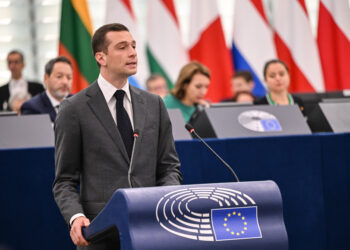

![Parlamento europeo di Strasburgo, lavori in corso [Foto: Imagoeconomica]](https://www.eunews.it/wp-content/uploads/2026/06/Imagoeconomica_1277744-350x250.jpg)



![Da sinistra: il presidente del Consiglio europeo, Antonio Costa; il presidente dell'Ucraina, Volodymir Zelensky: la presidente della Commissione europea, Ursula von der Leyen [Bruxelles, 18 giugno 2024. Foto: European Council]](https://www.eunews.it/wp-content/uploads/2026/06/euco_ua260618-120x86.jpg)
![[foto: Saverio De Giglio/imagoeconomica]](https://www.eunews.it/wp-content/uploads/2026/10/cpt-120x86.png)