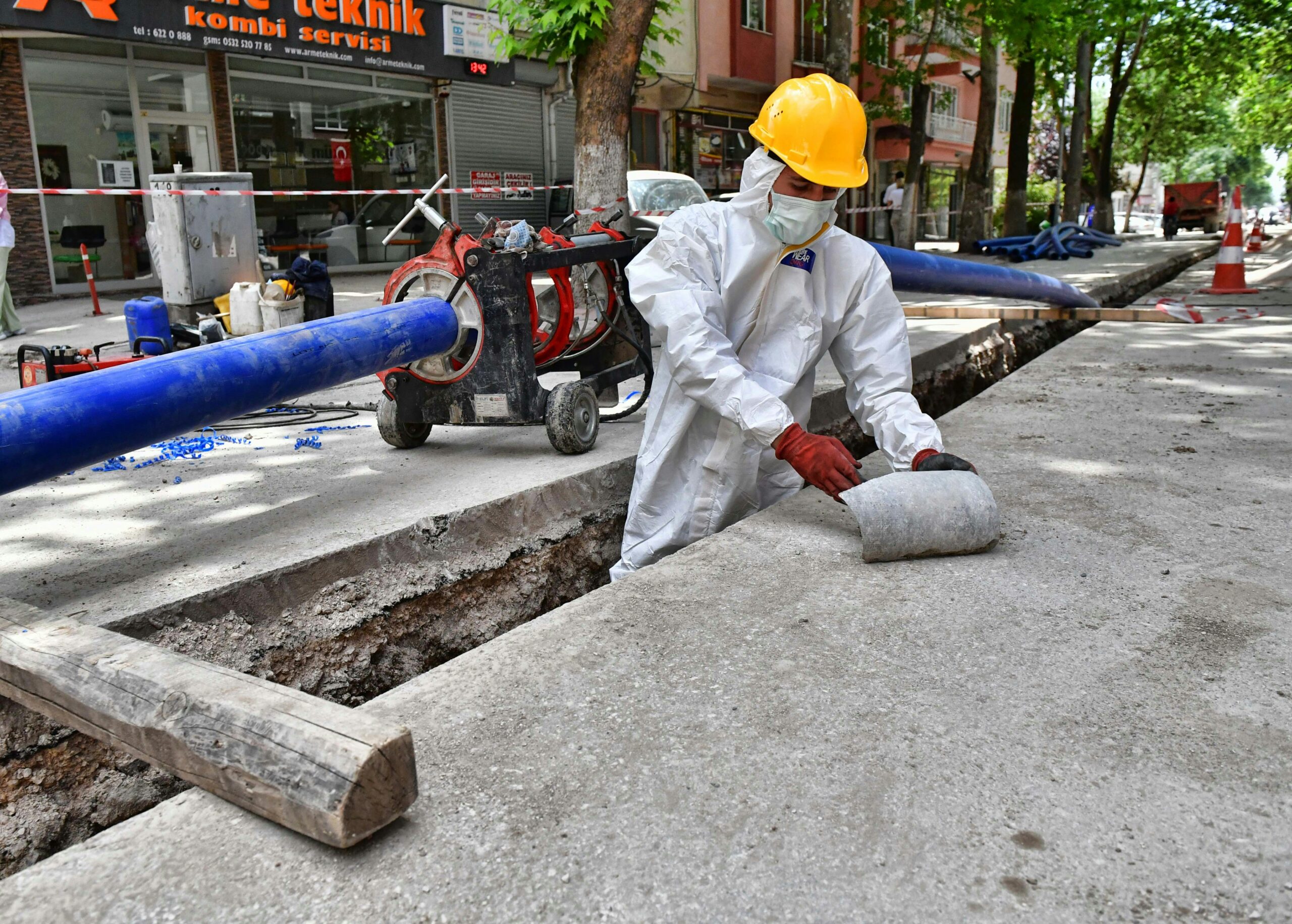
Brussels – An agreement has been reached between the Cypriot Presidency of the Council of the European Union and the European Parliament on measures to protect workers from exposure to hazardous substances that could cause diseases such as cancer or asthma. This is the sixth revision of the Carcinogens, Mutagens and Reprotoxic Substances Directive (CMRD), which updates EU health and safety legislation to strengthen protection against exposure to hazardous substances in the workplace. According to estimates, the revision is expected to prevent around 1,700 cases of lung cancer and 19,000 other illnesses over the next 40 years, resulting in savings for the EU’s healthcare system of up to €1.16 billion.
According to Marinos Moushouttas, Minister of Labour and Social Security of Cyprus—the country holding the rotating presidency of the Council of the EU until the end of June—this agreement “reflects our shared commitment to ensuring a high level of protection for workers against serious occupational health risks” because “by introducing new occupational exposure limit values, we are ensuring that the EU’s legislative framework keeps pace with the latest scientific evidence and technological developments.” The aim is to contribute “to creating safer workplaces for millions of workers across Europe and to further strengthen the prevention of occupational diseases.”
The Commission’s proposed revision of the Directive on Hazardous Substances at Work (CMRD) aims to ensure that EU legislation is fully in line with the latest scientific developments. Specifically, the proposed revision sets occupational exposure limit values (OELs) for cobalt and its inorganic compounds, polycyclic aromatic hydrocarbons and 1,4-dioxane, and adds welding fumes to the list of substances, mixtures, and processes set out in Annex I to the Directive.
Cobalt and inorganic cobalt compounds are used in the manufacture of batteries (for example, for electric vehicles), as well as in the production of magnets and hard metals. Polycyclic aromatic hydrocarbons (PAHs) are found in the production of steel, iron, and aluminium, as well as in welding fumes. They are essential in the production of batteries for storing energy generated by wind turbines, as well as semiconductors and electric vehicles. Isoprene is used in the chemical and rubber industries, and 1,4-dioxane is used in the chemical and textile industries and is present in some household detergents.
Parliament and the Council have worked on this Commission proposal, first individually and then jointly, to arrive at a shared version. In their agreement, the Council and Parliament retain the main objectives of the Commission’s proposal. Furthermore, they have provisionally agreed to extend the scope of the directive to include an occupational exposure limit (OEL) for isoprene and to extend to seven years the transitional period for the application of the new OEL for polycyclic aromatic hydrocarbons (PAHs) and to extend the scope to the sectors that benefit from it, including all producers of carbon and graphite. Furthermore, they planned to introduce a requirement for regular breaks for workers wearing personal protective equipment (PPE) and to clarify the applicable rules on the use of PPE in relation to existing legislation, to include the definitions of “carcinogen”, “mutagen” and “reprotoxic substance” to reflect the inclusion of an entry (welding fumes) with potential reprotoxic effects. They agreed to emphasise the importance of developing further guidelines on welding fumes and to include a new recital highlighting that the definition of LEP does not completely eliminate risks to workers’ health and safety.
The provisional agreement must now be approved by the Council and the Parliament, and will then be formally adopted by both institutions following a legal and linguistic review.
English version by the Translation Service of Withub



![Il ministro dei Trasporti, Matteo Salvini [Bruxelles, 5 dicembre 2024. Foto: Emanuele Bonini per Eunews]](https://www.eunews.it/wp-content/uploads/2024/12/salvini241205-120x86.jpeg)