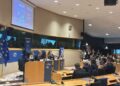

Brussels – An agreement on the package on financial market integration and supervision by October: the economy and finance ministers of the 27 Member States have given themselves the political mandate to try to achieve this, accepting the deadline proposed by the EU Council Irish Presidency. These are measures to overcome the fragmentation of financial markets, better known by the acronym “MISP“, a central component of the Savings and Investment Union strategy.
The first Ecofin Council chaired by Ireland has therefore reached a political agreement on the timetable, which will facilitate more effective work across all technical and negotiating forums. No objections were raised in this regard. On the contrary, there was widespread appreciation for the initiative and the display of leadership, to the extent that the current Ecofin President, the Irish Minister for Finance, Simon Harris, at the conclusion of the proceedings was able to claim “unanimous support” for the idea of finalising the dossier in time for the meeting of economic ministers on 9 October, so that the agreement can be taken to the leaders’ table at the European Council summit on 15 October.
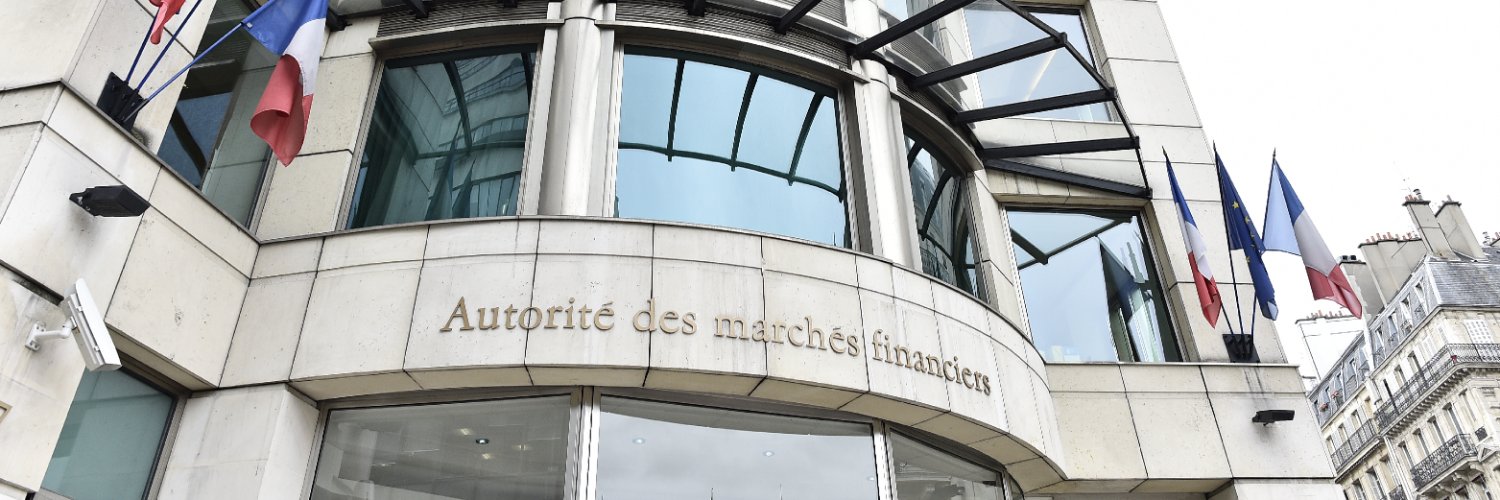
Over that timeframe, the issues that still characterise the debate will need to be resolved. Belgium and the Netherlands want to ensure there is no “unnecessary duplication” in supervisory processes. The European Commission proposal provides for the transfer to the European Securities and Markets Authority (ESMA) of powers of direct supervision over key market infrastructures, such as certain trading venues, central counterparties (intermediaries), central securities depositories (banks and central banks), and all cryptocurrency service providers. This raises concerns about potential overlap with national supervisory authorities.
De Guindos: “Unpredictability will last for years, financial integration urgent”
Germany is calling for ESMA to “be subject to oversight,” emphasises Jeanette Schwamberger, State Secretary for Finance, but the idea of a regulator being regulated does not sit well with the Dutch, who, through their Finance Minister Eelco Heinen, are instead calling for guarantees of “decision-making autonomy” for the body supervising ESMA from ESMA itself. Berlin is also effectively calling for the European Authority to have reduced powers, limited to a few entities to be identified through clearly defined “requirements and thresholds.” This view is shared by Italy. “Precise criteria and a gradual approach to ESMA supervision” is what the government in Rome wants, explains Permanent Representative Vincenzo Celeste, speaking on behalf of the Minister for the Economy, Giancarlo Giorgetti, who was unable to attend the debate. Italy also wants national experts to be involved, because “they know the national markets,” and so, alongside “balanced” governance, the Meloni government is calling for “full use of national expertise.”
Luxembourg, however, is pulling out: “Centralisation runs counter to the single market,” thunders the Grand Duchy’s Finance Minister, Gilles Roth, who is also demanding “reassurances on how ESMA operates.” The Irish Presidency, Harris assures us, has no intention of proceeding without taking Luxembourg’s position into account. “We are working to achieve the broadest possible consensus.” The aim is to achieve this by early October.
English version by the Translation Service of Withub![La riunione dell'Ecofin [Bruxelles, 5 maggio 2026. Foto: European Council]](https://www.eunews.it/wp-content/uploads/2026/05/ecofin-260505-350x250.jpg)
![Maria Luís Albuquerque, commissaria per i Servizi Finanziari e l'Unione del Risparmio e degli Investimenti [Bruxelles, 4 dicembre 2025]](https://www.eunews.it/wp-content/uploads/2025/12/albuquerque-350x250.png)
![[foto: imagoeconomica]](https://www.eunews.it/wp-content/uploads/2025/06/commerzbank-350x250.png)