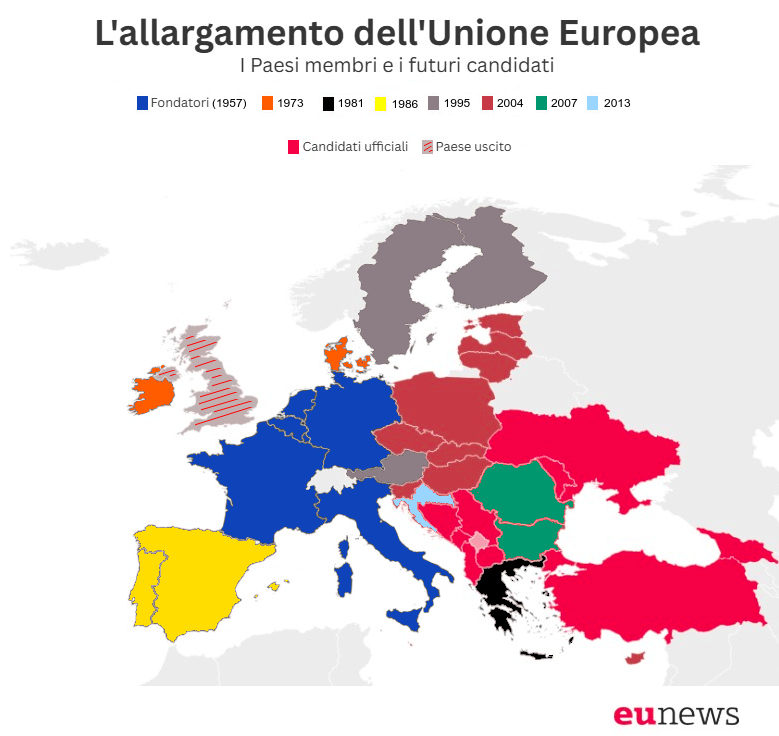

Brussels – Montenegro has closed two negotiation chapters, Albania three, while Moldova has opened the two chapters relating to external relations. On the day Ukraine records a new acceleration in its EU accession process, the “Super Tuesday” on enlargement underscores the European Union pressing ahead with its expansion ever further east, starting with Montenegro.
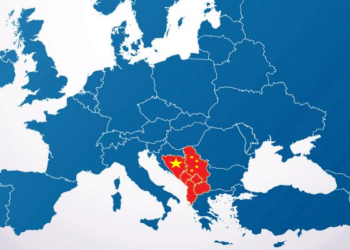
The government in Podgorica has been granted closure of the competition (8) and customs (29) accession chapters. That result makes Thomas Byrne, Ireland’s Minister for European Affairs and the country holding the rotating presidency of the EU Council, “proud”: “With 18 chapters now provisionally closed – more than half-way to the end – Montenegro remains the frontrunner in the EU’s accession process.”
 The closure of these chapters is temporary, as they are two specific chapters within the so-called “clusters” – a group of several articles on the same topic. Specifically, Chapter 8 concerns the “internal market” package, while Chapter 29 concerns the “competitiveness and inclusive growth” cluster. Only when all the individual negotiating chapters within each cluster have been closed can the conclusion be considered final. Nevertheless, Montenegro is continuing full steam ahead with its rapprochement with the EU, in accordance with a timetable under which the country hopes to complete accession this year.
Albania, whose accession negotiations are due to conclude in 2027, has been granted the provisional closure of three negotiation chapters in one go: science and research (25), education and culture (26), and external relations (30). These are the first three negotiation chapters to be closed since the announcement that the candidate country was ready to begin doing so, less than two months ago. Byrne stressed that the government in Tirana made “significant progress” and urged the country “to stay the course on core reforms to move forward in the process in the coming months.”
On this day dedicated to enlargement, Moldova – which is lagging far behind Montenegro and Albania – is also making progress. While these two candidate countries are closing negotiation chapters, the government in Chișinău is grappling with the opening of negotiations; to this end, the go-ahead has been given to discuss the entire cluster relating to external relations (Chapters 30 and 31). This comes just one month after the opening of the five chapters relating to the “foundations” cluster, and it is only the beginning, Byrne promised: “Over the coming months, we will continue to work on Moldova’s candidacy and bring Moldova and their citizens closer to our Union.”