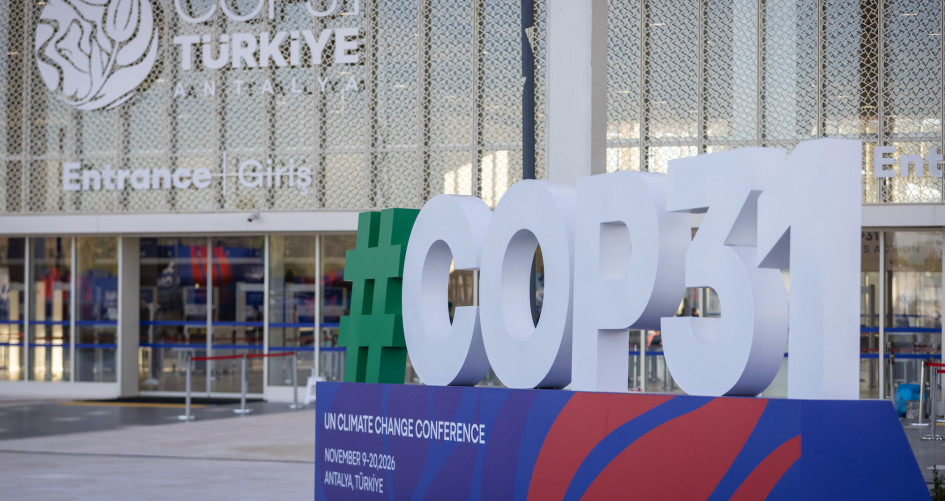
Brussels – Accelerating the phase-out of fossil fuels, tripling renewable energy capacity and strengthening adaptation to climate change. This is the approach that, according to European sources, the European Union will take to COP31, the United Nations Climate Change Conference scheduled for 9–20 November in Antalya, Turkey. For Brussels, the aim is to move from political commitments to their concrete implementation, without calling into question the deals already reached.
The COP (Conference of the Parties) is the annual summit of the countries that are parties to the United Nations Framework Convention on Climate Change (UNFCCC). Almost 200 states take part, called upon to negotiate global strategies to limit global warming, reduce emissions and support the most vulnerable countries. Following the 2015 Paris Agreement and the first global climate review in 2023, COP31 will focus primarily on implementing the objectives already agreed upon. The first week will be dedicated mainly to side events and discussions with international partners, while the second week will see the negotiations get into full swing.
“This is not the COP of revolution, it is the COP of implementation,” European sources explained during a press briefing. The negotiating position approved by the twenty-seven on 12 October sets out, as a priority, the fulfilment of the commitments made in Dubai in 2023: to triple global renewable energy capacity, double the rate of improvement in energy efficiency, and begin the transition away from fossil fuels. Brussels also wishes to support greater electrification of the economy, ideally powered by clean sources, and will work to ensure that this issue is included in the summit’s political conclusions.
Other key issues include reducing methane emissions and combating deforestation to halt and reverse these trends by 2030. The EU also intends to participate in negotiations on the Belém adaptation indicators, which aim to provide a shared framework for measuring individual countries’ progress, and to present its own framework for climate resilience to its international partners.
The funding issue is more sensitive. In 2025, the EU and its 27 Member States provided 32.3 billion euros in public climate finance and mobilised a further 9.3 billion euros in private funding to support developing countries. Brussels supports the commitment to triple funding for adaptation by 2035, but does not intend to make any new financial commitments beyond the framework agreed in Baku, which provides for at least 300 billion dollars a year by 2035. The priority, European sources have made clear, will be to improve access to existing resources and channel them to the most vulnerable countries.
Regarding climate targets, the 27 Member States recognise that the 1.5-degree threshold above pre-industrial levels is now likely to be temporarily exceeded. The EU is, however, calling for the duration and extent of this overshoot to be limited, with a trajectory that brings global warming back within that limit by the end of the century. In Antalya, the challenge will be to turn these commitments into concrete results, while upholding multilateral cooperation in an increasingly fragmented geopolitical context.
English version by the Translation Service of Withub