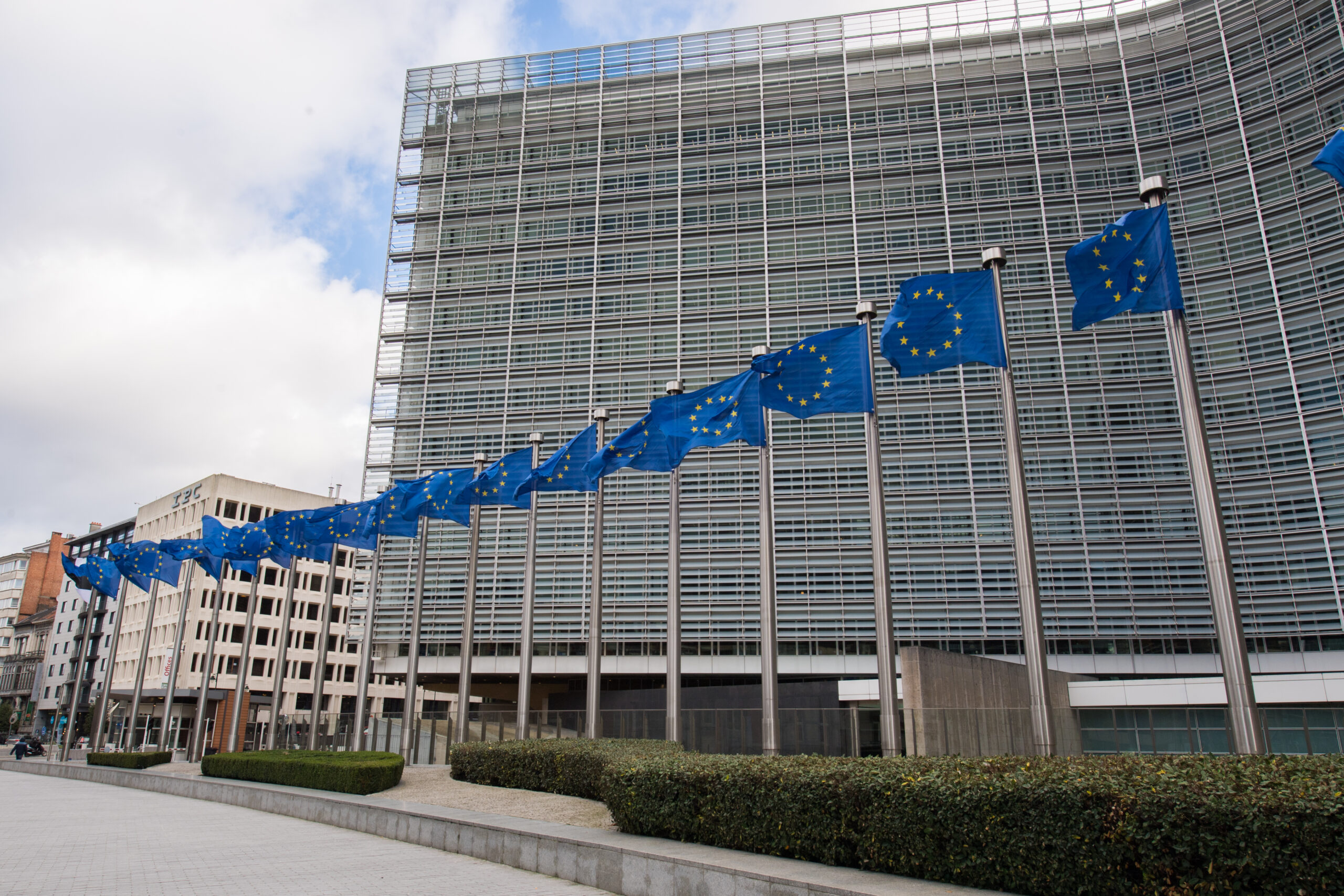
Brussels – It will cover the entire “life cycle of sanctions.” From their definition through to implementation, including awareness-raising activities, measures to combat circumvention and dialogue with third countries. Today (18 November), the European Commission established the EU Sanctions Office, to bring together expertise from the Berlaymont Building and work on all aspects of restrictive measures. The new approach aims to ensure the coordination of EU sanctions vis-à-vis Member States and third countries and covers all sanction regimes. These include Russia and Belarus, as well as Iran, North Korea, Syria, organised crime and hybrid threats. According to a press release, the Office will provide support to Member States through faster guidance “on compliance, data sharing, and economic and technical analysis, with a view to ensuring the harmonised implementation and enforcement of sanctions within the Union.” The European Commissioner for Financial Services and the Savings and Investment Union, Maria Luís Albuquerque, welcomed the establishment of the Office, announcing that “the Office will strengthen coordination within the Commission, bringing together expertise from different policy areas to ensure a more coherent approach to sanctions, wherever and whenever the need arises.”
For Brussels, the role of sanctions has been redefined by Russia’s invasion of Ukraine and the EU’s subsequent response. Specifically, sanctions have become “a foreign policy tool and a key means of addressing major international challenges.” Since the start of Russia’s war of aggression against Ukraine, the EU has adopted 21 rounds of sanctions; however, for the measures “to be effective, they must be fully implemented, rigorously enforced and protected against any attempts to circumvent them,” stated the President of the European Commission, Ursula von der Leyen.
The new unit will be established within the General Secretariat at the Berlaymont Building and will operate under the political responsibility of Albuquerque. A central aspect of its work will be “to support the EU Sanctions Envoy, a key figure in the Union’s efforts to prevent the circumvention of restrictive measures and to cooperate with partner countries.” This role involves liaising with third countries to reduce the risk of EU sanctions being circumvented, for example through alternative trade routes, financial channels, or supply chains. For this role, the European Commission today appointed the Swedish diplomat, Lars Danielsson, who will take up the post on 6 February 2027, following the end of the current Envoy’s term of office, David O’Sullivan. In the past, Danielsson held senior positions in the Swedish Prime Minister’s Office, including that of State Secretary for International and EU Affairs, while from 2016 to 2023, he also served as Sweden’s Ambassador and Permanent Representative to the EU. All the changes announced today will come into effect on 16 January 2027.
European sources who have worked on the initiative have explained that, since “Russia is one of the countries most heavily affected by sanctions in the world, and the sanctions regime against Iran (which has been fully reinstated) is also one of the most extensive, it was necessary to develop a completely new working system to prepare, define, monitor, and implement the packages.” An EU official pointed out that in the current geopolitical landscape, “for sanctions to be effective, a strategic approach is first and foremost required which, by drawing on intelligence, enables an adversary’s weaknesses to be identified”. Secondly, “analytical capacity is required to understand supply chains and the various economic sectors.” Thirdly, “access to intelligence and consistency across different policies are necessary.” Finally, “the capacity to manage the implementation and enforcement of the measures is required.” He noted that “at present, this task is entrusted to individual Member States, with highly inconsistent results that create conditions of inequality, gaps and loopholes in the system”. The official pointed out that “at present, activities relating to sanctions are divided between the Directorate-General for Financial Stability, Financial Services and the Capital Markets Union (DG FISMA), the Directorate-General for Trade and Economic Security (DG TRADE), the Office of the Special Envoy and the General Secretariat.” The optimal solution “is to bring all these functions together within a single office,” which will become “solely responsible for drafting new measures,” following the College of Commissioners’ decision to “establish this office as a body with a high degree of autonomy,” he concluded.
English version by the Translation Service of Withub