
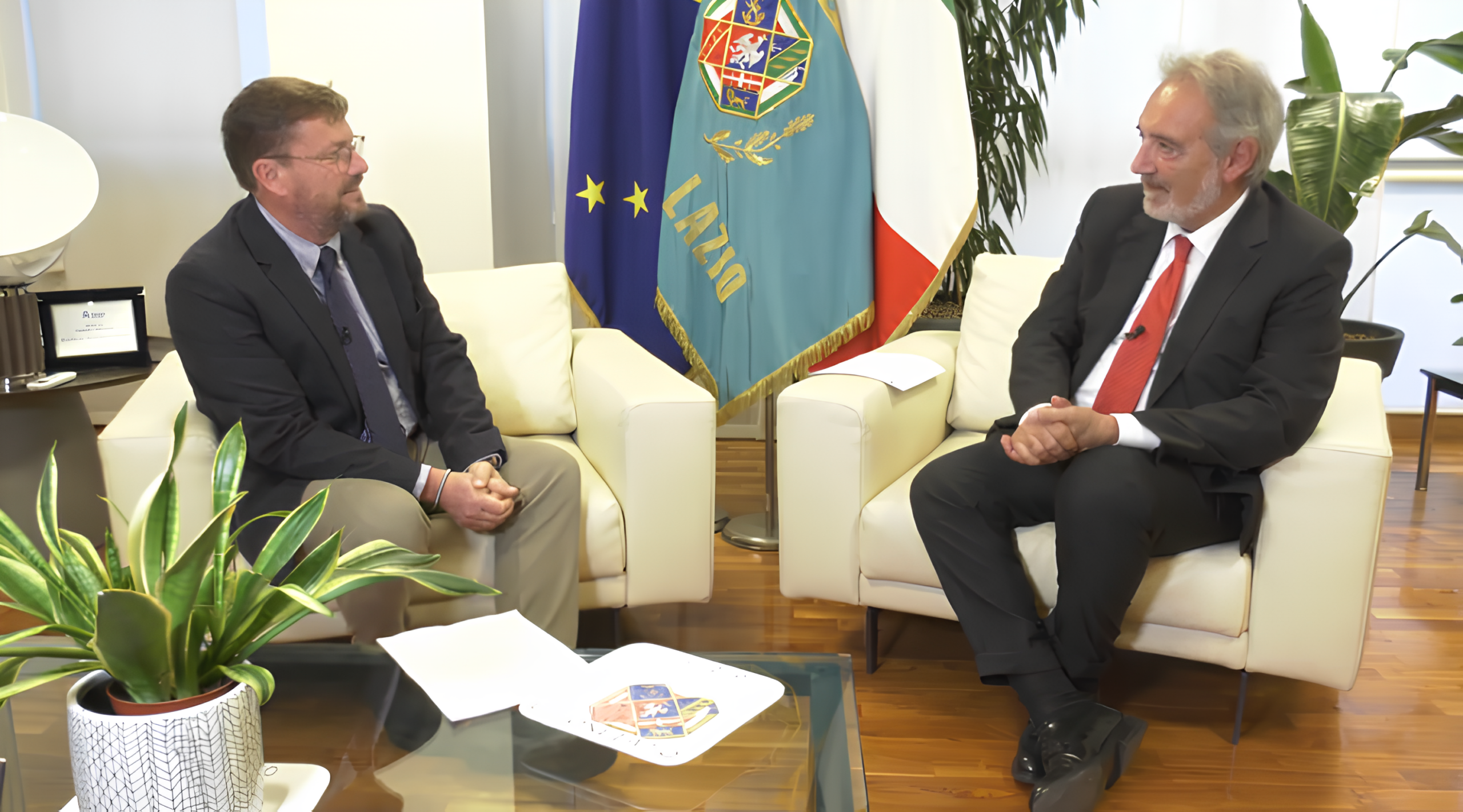
Rome – The studio is large, but not too big after all. What really catches the eye are two large saltwater aquariums, containing fish of a myriad of colours and of considerable size, swimming – and this is the striking part – against a backdrop of real seaweed and corals: green, purple, red, orange, hard corals and soft corals as fine as hair. These, in particular, are the pride and joy of Francesco Rocca, President of the Lazio Region, who has brought his personal passion (at his own expense) into his office so that he can always have it before his eyes. Above the aquariums hangs a still from the film “In the Name of the Italian People” by Dino Risi, featuring Vittorio Gassman and Ugo Tognazzi, another of a sporting champion, followed by many mementoes from his long years with the Red Cross, and modern paintings – some of them very large – which go some way towards making one forget just how unattractive the building housing the regional presidency actually is.
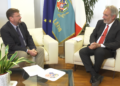
“I am convinced that Europe can truly bring added value to our regions and to our citizens,” Rocca tells Eunews, a Brussels-based European business newspaper. He is not saying this merely to curry favour, because he also points the finger at the EU and urges it to be “less bureaucratic – this is important,” asking it to “listen to our needs and our demands”.
https://youtu.be/W6QYCVIqZDE
Rocca travels to Brussels quite often – “I share this responsibility with Vice-President Roberta Angelini” – but he goes “whenever there are matters that warrant my presence. I go because it is an important forum, where decisions are taken that subsequently have an impact on our lives.”
Eunews: Unfortunately, it seems that this European financial plan for the next seven years is set to shake things up a bit; it appears to aim to reduce – or rather, cut back – the role of the regions and local authorities, and to centralise power. What is your view on this? Are you concerned?
Rocca: Well, I’m certainly not enthusiastic about it, and I’m definitely putting it in diplomatic terms. I’m concerned because the voice of the regions is crucial: the very stability of the European Union depends on listening to diversity, and every Region represents a wealth of different values, including from an economic perspective. For me, this remains a fundamental issue, but I’m sure that in the end we’ll manage… I’m an optimist by nature – I worked as a humanitarian aid worker for many years, so I’ve never lacked optimism. Even now, I still want to believe that this aspect of localisation won’t be lost, because, in my view, this is the way to bring Europe together and bring it closer to its citizens.
It goes without saying that there are priorities which I, too, share; there are fundamental issues such as security, competitiveness, and energy. We have issues that are of vital importance to our continent which we need to address.
E.: You mentioned competitiveness, which is an issue that closely concerns the Lazio Region, which is seen from the outside as the “region of ministries”. But that is not the case; it is Italy’s second-largest Region in terms of GDP, there are industries and companies producing physical goods, and there is a very high level of exports.
A.: Yes, indeed, it’s not just the service sector that’s driving growth; the export figures speak for themselves: we’re seeing growth every year. We’re one of the leading regions in Italy, if not the leading one, which is a source of satisfaction. And it is also the result of the painstaking work carried out by the regional executive and me, specifically to support the industrial clusters and ensure that the supply chains are respected and their views are taken on board; because, after all, if you focus on the clusters and supply chains, you can also attract further investment.
E.: In terms of initiatives, what is the Region doing with regard to infrastructure and services?
A.: On the one hand, we are working very hard to cut red tape. We are strengthening the entire logistics infrastructure network, because this is a region with enormous potential, and we are complementing this industrial wealth with research centres linked to the 13 universities. In terms of logistics, we have two international airports; we’re already in a good position, but the main focus had to be on logistics, and we’re taking significant steps in this area.
E.: You’ve just presented “Longevity Valley” in the United States. Could you explain exactly what it is, where it starts and where it aims to go?
A.: Today, Europe risks bearing the brunt of decisions it did not make, yet I have not yet seen any significant stances taken to defend it. President Donald Trump’s “most-favoured-nation” pricing policy has stipulated that pharmaceutical companies must sell medicines to the United States at the price at which they sell them to the country that buys them at the best price. This is certainly creating advantages in the United States, but it is obvious that this policy risks destabilising the market. We must protect vast industrial supply chains. Trump has forced pharmaceutical companies to invest heavily – 700 billion dollars in the United States – so there is a risk of divestment in a region such as mine, where there is a significant presence of multinationals as well as domestic industries, and we must pay close attention to protecting these sectors too – not only in Lazio, not only in Italy, but at the European level. This is one of the priorities which, in my view, ranks on a par with energy and security, and which should also be assessed in the same way as debt deviations.
Longevity Valley forms part of the strategy to promote supply chains. We have done an extraordinary job in terms of internationalisation; this year alone we have approved another plan and will be taking part in over 39 events, and we organise sector-wide missions specifically to support our businesses abroad. We have an “Invest in Lazio” platform that also works in close collaboration with the “Invest in Italy” platform. On this basis I have met with several entrepreneurs, including those behind these biotech “unicorns”, which means they’ve already reached a valuation of one billion dollars and want to create an international centre of excellence here for research and development, working in synergy not only with our entire private life sciences sector but also with our scientific faculties. It is a project with the potential for enormous impact, so much so that we are even discussing whether to accompany it with a data centre. In short, for us it is a huge opportunity, a great asset.
English version by the Translation Service of Withub