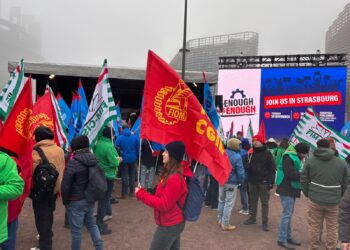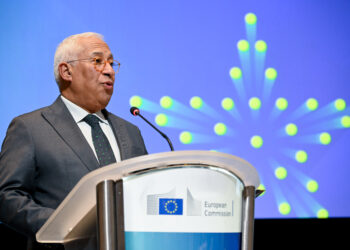

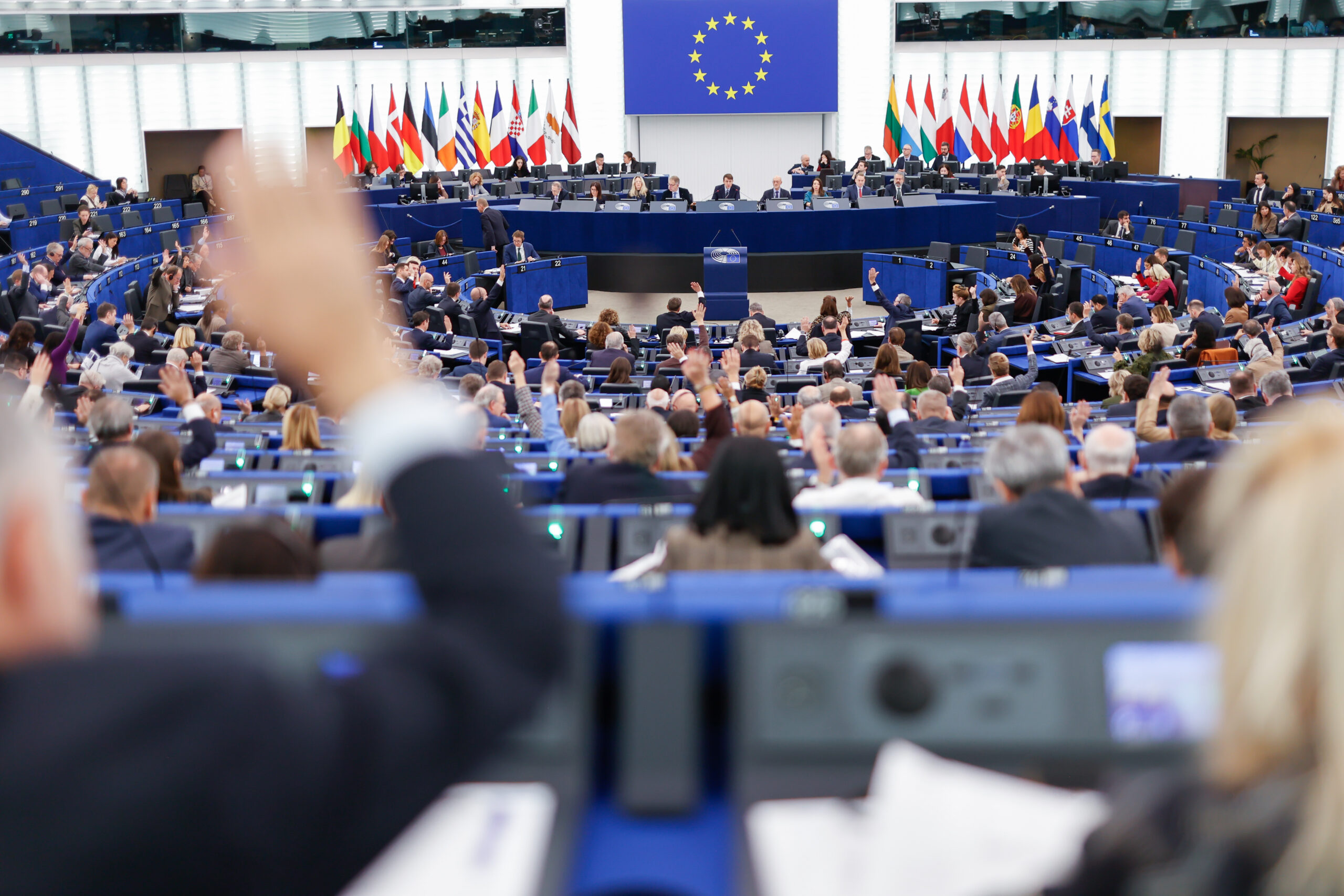
From our correspondent in Strasbourg – A European budget that does not merely cut funding, support for Ukraine that is not compromised in negotiations with Moscow, and climate policies capable of reconciling ambition with economic reality. These are some of the priorities that the political groups of the European Parliament bring to the plenary session in Strasbourg. The debate on the compromise proposal put forward by the President of the European Council, António Costa, for the next Multiannual Financial Framework (MFF) is set to be the most heated.
For the European People’s Party (EPP), led by Manfred Weber, the starting point is the need for an ambitious budget that does not compromise competitiveness, research, and security. “The discussion on the next Multiannual Financial Framework is heading in the wrong direction: the debate cannot be based solely on cuts,” Weber warned at a press conference, pointing to the reductions set out in Costa’s proposal: a 30 per cent cut to Frontex, 22 per cent for competitiveness and 10 per cent for Horizon Europe. “This is not just about figures, but about the very idea of Europe,” he added, highlighting the risk that by 2034 the EU could find itself facing a better-armed Russia, China dominating industry and the United States leading in artificial intelligence.
The Socialists and Democrats (S&D), led by Iratxe García Pérez, also consider the budget proposal to be insufficient, but above all because of the lack of guarantees on the social front. “We cannot give our approval to a proposal as it stands simply because there will be an agreement at the European Council,” said the group leader, criticising the cut of €204 billion and the absence of a separate European Social Fund. The Socialist leader then reignited the fight against the high cost of living, calling for “the debate on citizens’ concerns and the mobilisation of young people” to become a parliamentary priority. The cost of living, she emphasised, is “a genuine social emergency.”
As for the European Conservatives and Reformists (ECR), co-chair Nicola Procaccini has criticised the very structure of the forthcoming budget. “We are opposed to this massive budget because we are opposed to the so-called European superstate,” he stated, calling for “a lean budget for a lean EU” and criticising, in particular, the new own resources, which he regards as new taxes on European businesses. On the green transition, Procaccini described the COP31 as a “reality check” and a “failure”, arguing that the Union must rethink its environmental policies in light of the reluctance of other major emitters to reduce their emissions.
Renew Europe’s demands point in a different direction. The chairwoman Valerie Hayer regards the new own resources as an essential condition for approving the European budget: “They are a conditio sine qua non for our approval.” On the international front, the Liberal politician emphasised the need for the EU to play a role in the peace negotiations in Ukraine. “The full coordination and involvement of Kaja Kallas in her capacity as the EU’s chief diplomat is essential,” she stated, calling for predictable financial and military guarantees for Kyiv and reiterating that “abandoning sanctions would be madness.”
The European Greens, led by co-president Terry Reintke, have turned the spotlight on the outcomes of COP31. “We are extremely disappointed with the results,” she said, criticising the lack of an agreement on the phasing out of fossil fuels. According to Reintke, Europe must be better prepared for the next conference in Ethiopia and, above all, demonstrate that it is willing to invest in the transition: “The European Union still lacks the will to commit the necessary funds.”
Dissatisfied with the current state of environmental legislation, the co-chairs of The European Left, Manon Aubry and Martin Schirdewan, have spoken out. “The European Commission’s omnibus bills are undoing the environmental progress that has been made,” said Aubry. For this very reason, The Left group – together with the Greens/EFA – has tabled an amendment calling for the complete rejection of the EU Commission’s proposed regulation on speeding up environmental assessments. For the European Left, a key issue is the high cost of living, a topic they sought to raise in the European Parliament because “40 million Europeans cannot afford to heat their homes” and “the difference in life expectancy between the wealthy and the rest is ten years.” The hot-button issue of the budget is addressed by Schirdewan, who argues that the cuts are “unacceptable” and that “the emphasis is being placed in the wrong areas.” The Left is calling for an “independent social fund that can help people at a regional level.”
For the Patriots for Europe, the next budget should instead “include expenditure relating to European citizens” rather than being devoted to the Russian-Ukrainian conflict. This was stated by the vice-president of the political group in the European Parliament, Kinga Gál, at a press conference. Gál specified that the group had “opposed a fast-track procedure” because it considers that speeding up the process for adopting the next MFF “would undermine democratic accountability and deprive future governments of their legitimate role in shaping the next long-term budget.”
English version by the Translation Service of Withub