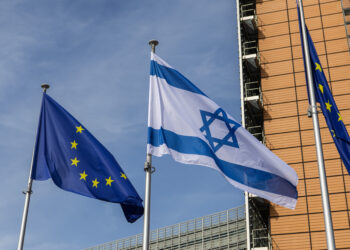


From our correspondent in Strasbourg – After several plenary sessions in which it had been left off the agenda, Gaza returns to the European Parliament. However, it is doing so without a resolution being put to the vote, with a non-legislative debate that soon turns into an indictment of the European Commission and the Council of the EU. At the heart of the matter is the failure to suspend the Association Agreement with Israel and the Horizon Europe programme, while the Palestinian population continues to grapple with the consequences of the war, the floods, and the blockade on humanitarian aid. In a chamber dominated largely by the voices of progressive and liberal forces, there was no shortage of harsh rhetoric and moments of tension with the more conservative members.
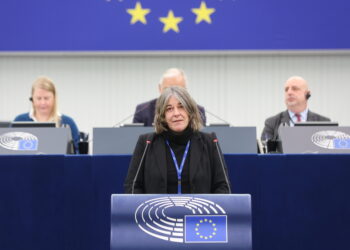
“Rather than a debate, it’s an obituary,” began the PD Socialist MEP, Cecilia Strada, pointing the finger at the inaction of the European institutions. Addressing the Commissioner for Crisis Management, Hadja Lahbib, she challenged her remarks: “It is not so much that Gaza is the most dangerous place, but that Israel is the most oppressive.” She then launched a broadside at the Council: the suspension of the Association Agreement, she pointed out, has been on hold for 14 months, while that of Horizon Europe has been in place for ten. “Europeans know which side to take, but what about the Council?”
The call to move from declarations to concrete action was a recurring theme in numerous speeches. The German Socialist MEP, Udo Bullmann, reiterated that he did not question “for a single second” Israel’s right to exist, but added that this “is no reason to let Palestinian children die.” For the Greens’ MEP, Mounir Satouri, on the other hand, the EU continues to fail to respond, even shying away from using words such as apartheid, genocide, and ethnic cleansing. “Who can still believe in our principles?” he pressed, denouncing Europe’s double standards compared with the support given to Ukraine.
The most heated moment came during the clash between the patriot Sebastian Kruis and MEPs Abir Al-Sahlani (Renew) and Evin Incir (S&D). Kruis challenged the statements made by the High Representative Kaja Kallas regarding weather conditions in Gaza, accusing her of lying about the hardships faced by the population during the winter. Al-Sahlani responded by drawing attention to the lack of drinking water, shelter, and humanitarian aid: “Mothers cannot even keep their children safe from the floods.” The debate also descended into personal attacks, to the extent that the Chair of the Chamber had to intervene, urging MEPs to respect Parliament’s rules.
Lahbib attempted to bridge the divide. “The debate remains polarised; we are deadlocked in our positions,” admitted the Commissioner, acknowledging the frustration shared even by those who, like her, within the institutions, bring the issue before the Foreign Affairs Council without managing to secure an agreement amongst the Twenty-Seven. “We cannot look the other way,” she added, “Israel must respect international law.”
Speaking on behalf of the Irish Presidency of the Council, Charlie McConalogue gave assurances that the Union “will continue to support humanitarian aid for the Palestinians and UNRWA,” calling for a lasting peace and a frank dialogue with the Israeli government. However, once again, there was no announcement regarding the measures called for by a significant proportion of the European Parliament. And the debate concluded leaving the gap between MEPs’ demands and the European institutions’ ability to translate them into decisions unchanged.
English version by the Translation Service of Withub