Brussels – Perhaps it is the effect of the victory of the ultra-right in the eastern Länder, which has hardened the rhetoric of the other political forces on immigration and is impacting party placements ahead of next year’s legislative elections. Perhaps it is an attempt to distract public opinion from the economic difficulties. The fact is that, in Germany, even the centre-left government is closing its land borders in an attempt to limit irregular immigration from other EU member states.
Berlin’s Interior Minister Nancy Faeser announced Monday (Sept. 9) that starting next Sept. 16, controls along all country land borders will be put in place for six months. The stated goal of the government, which relies on the “semaphore” coalition between Social Democrats (SPD), Greens and Liberals (FDP), is to control irregular migration flows more effectively and protect the population from a wave of “Islamic extremism” believed to be behind a series of attacks.
“Until we achieve a strong protection of the EU’s external borders with the new Common European Asylum System, we need to strengthen controls at our national borders,” Faeser said, stressing that “these controls will also allow effective refoulement” of migrants to the countries from which they have crossed (or attempted to cross) German borders. The Interior Minister added that the Commission and the European partners were informed before the decision. Predictably, however, these European partners did not take it too well. On Monday, Austria’s Interior Minister Gerhard Karner said that Vienna does not intend to take in migrants rejected by Berlin, echoing similar protests raised by Brussels, Luxembourg, Prague and Warsaw.
Actually, it is the nationwide extension of a series of controls already in place on some borders: Austria (in effect until next November), Czechia, Poland and Switzerland (until December). The measures already in effect will thus be extended, even after their original expiration, and coordinated to end up simultaneously with those imposed on the remaining five states bordering Germany: Belgium, Denmark, France, Luxembourg and the Netherlands. This is yet another unilateral suspension of the rules of the Schengen space, which is provided for in the treaties in cases of threat to the public order or internal security of member states. According to Faeser, since Berlin introduced partial controls at its borders in October 2023, about 30 thousand migrants have been turned back, and she predicted an increase in the number of rejections after implementing the new measures.
More importantly, it is a political game of enormous significance in Germany, where next year, citizens will go back to the polls to elect the parliament and, thus, the government. The overwhelming success, however widely heralded, of the xenophobic far-right Alternative für Deutschland (AfD) in the recent regional elections in Thuringia and Saxony—as well as the excellent placing that polls attribute to it not only for the vote in Brandenburg in two weeks’ time but also for the legislative elections scheduled for September 2025 (around 28 and 17 per cent, respectively)—is, in fact, pushing all the mainstream parties to progressively stricter positions on migration, the timeless workhorse of hard-line conservatives.
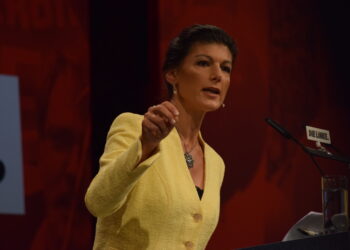
Therefore, from the Christian Democrats of the CDU/CSU to the new phenomenon of the red-brown left, the BSW of Sahra Wagenknecht, all are calling for a new crackdown on migration management, especially in the aftermath of the Solingen attack last August (claimed by the Islamic State), which along with other recent bloody events (for which the Islamic State matrix is only suspected for now) has deeply shaken public opinion. After all, the total closure of borders and measures for the complete refoulement of migrants is a demand that the leader of the CDU himself, Friedrich Merz, has been making for some time.
In short, a political earthquake from which not even the SPD, the Social Democratic party of Chancellor Olaf Scholz (and of which Faeser is also a member), has not been immune, having gone so far as to propose the total—albeit temporary—closure of borders. Something that, until not too long ago, was normal to hear from conservative and ultranationalist leaders like Hungary’s Viktor Orbán. Not even all the members of the governing coalition in Berlin agree on the point: back in August, a group of Greens exponents publicly requested the EU Commission to suspend the controls already in place, bringing the cracks within the German executive into the open.
English version by the Translation Service of Withub


![Da sinistra: il presidente del Consiglio europeo, Antonio Costa; il presidente dell'Ucraina, Volodymir Zelensky: la presidente della Commissione europea, Ursula von der Leyen [Bruxelles, 18 giugno 2024. Foto: European Council]](https://www.eunews.it/wp-content/uploads/2026/06/euco_ua260618-120x86.jpg)
![[foto: Saverio De Giglio/imagoeconomica]](https://www.eunews.it/wp-content/uploads/2026/10/cpt-120x86.png)