- Europe, like you've never read before -
Sunday, 18 January 2026
No Result
View All Result
  • it ITA
  • en ENG
Eunews
  • Politics
  • World
  • Business
  • News
  • Defence
  • Net & Tech
  • Agrifood
  • Other sections
    • Culture
    • Diritti
    • Energy
    • Green Economy
    • Finance & Insurance
    • Industry & Markets
    • Media
    • Mobility & Logistics
    • Sports
  • Newsletter
  • European 2024
    Eunews
    • Politics
    • World
    • Business
    • News
    • Defence
    • Net & Tech
    • Agrifood
    • Other sections
      • Culture
      • Diritti
      • Energy
      • Green Economy
      • Finance & Insurance
      • Industry & Markets
      • Media
      • Mobility & Logistics
      • Sports
    No Result
    View All Result
    Eunews
    No Result
    View All Result

    Home » Politics » Germany’s idea for new EU cohesion: money to regions in exchange for reforms

    Germany’s idea for new EU cohesion: money to regions in exchange for reforms

    A study conducted on behalf of the Federal Ministry of Economic Affairs sets the new govenance rules of the post-2027 cycle

    Emanuele Bonini</a> <a class="social twitter" href="https://twitter.com/emanuelebonini" target="_blank">emanuelebonini</a> by Emanuele Bonini emanuelebonini
    13 February 2025
    in Politics, In the spotlight

    Brussels – A new way of using cohesion funds, so they are more “European” in the rules of use and less local. Tying the use of European money to the reform agenda is being explored for the next cycle of cohesion policies. A model based on the model of the European Semester, the cycle for coordinating the economic and budgetary policies of member states. The proposal comes from a study carried out on behalf of the German government’s Ministry of Economic Affairs and Climate Action and presented to the European Committee of the Regions (COR). 

    For post-2027 cohesion, there is no talk of reform, even in light of an EU enlargement process that mandates it, rather of governance. The study brought to Brussels focuses on resource management in terms of general, accounting, and merit principles. It assumes that reforms could help improve the rate of resource use and absorption and overcome that structural problem that affects some more than others, with Italy among those struggling to build upon the resources made available.
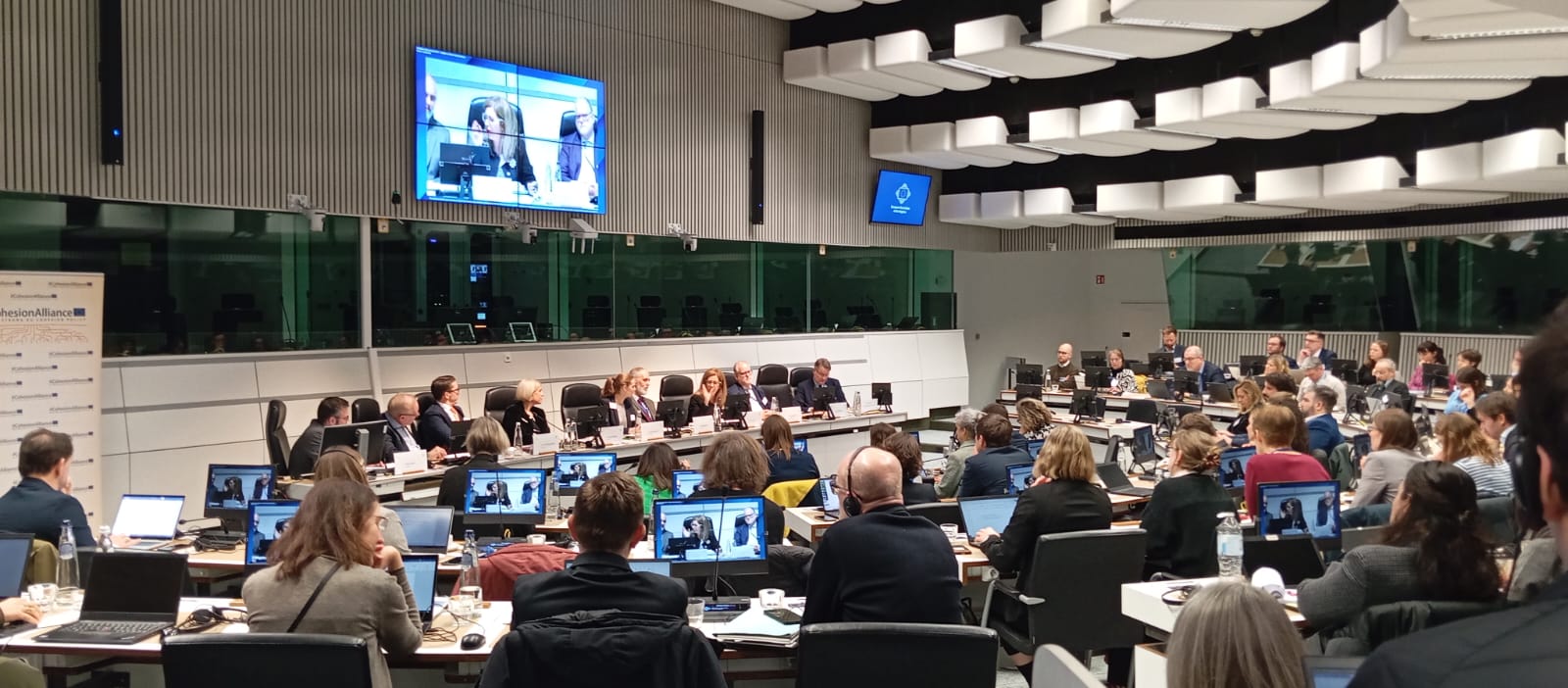
    Presentation of the report on the governance of the future of cohesion at the European Committee of the Regions

    From rigorist Germany, thus comes rigor in cohesion. Underlying the functioning of the EU and its programs are public funds, national resources put in by individual states, and, thus, German taxpayers as well. For the new cohesion cycle to come, while waiting for the European Commission to unveil what it intends to do with the next multi-year budget (MFF 2028–2034), the game’s rules are being dictated. These include re-introducing advance evaluations in parallel with the current program, i.e., analyses of policy success before the intervention is declared finished.

    Planned in the 2014-2020 programming cycle and eliminated in the current one, ex-ante verifications are conditionalities that link the disbursement of funds to the demonstration of socioeconomic benefits achieved in the medium term against the mobilised resources. In a nutshell, money for real reforms and real growth. In the reform of resource use management, however, the intention is to maintain an active role for local governments through regional foresight processes to prepare strategic programs.

    Nicola De Michelis, Deputy Director-General of the European Commission’s Directorate-General for Regional Policies, understands the proposal’s principle, which aims for the efficiency needed for competitiveness: “There is a perception that one-third of the EU budget is lost in so many fragmented projects, and that this makes the link between the budget and the EU agenda get lost.”

    English version by the Translation Service of Withub
    Tags: budgetary policiescohesion policieseuropean committee of the regionseuropean semesterpenaltyquality of spendingreformsterritories

    Related Posts

    Il commissario per l'Economia, Valdis Dombrovskis, in conferenza stampa a Strasburgo [12 febbraio 2025]
    Politics

    Budget 2028–2035, EU Commission insists on new own resources

    12 February 2025
    Politics

    Regions to Fitto: “Budget up to challenges and local authorities core of new Cohesion”

    28 January 2025
    map visualization

    Mercosur reshapes Italy’s alliances in Europe: PD with FdI and FI, League with M5S

    by Emanuele Bonini emanuelebonini
    16 January 2026

    The plenary session of the European Parliament has the free trade agreement with South American countries as the main item...

    Defence: Commission approves first SAFE disbursements to eight Member States

    by Emanuele Bonini emanuelebonini
    16 January 2026

    The Council has been asked to authorise disbursement for Belgium, Bulgaria, Cyprus, Croatia, Denmark, Portugal, Romania, and Spain. Von der...

    Migrazione frontiere pushback

    EU, decline in asylum applications continues, down 28 per cent in October compared to 2024

    by Enrico Pascarella
    15 January 2026

    The countries that received the most requests in October were Spain and Italy, but with lower figures than in the...

    Air Canada flights show as cancelled at Pearson International Airport as flight attendants go on strike in Toronto on Saturday, August 16, 2025. Photo by Sammy Kogan/CP/ABACAPRESS.COM

    Flight cancelled, airlines must also reimburse commission costs

    by Ezio Baldari @eziobaldari
    15 January 2026

    This has been established by the Court of Justice of the European Union. When purchasing from a travel agency or...

    • Director’s Point of View
    • Letters to the Editor
    • Opinions
    • About us
    • Contacts
    • Privacy Policy
    • Cookie policy

    Eunews is a registered newspaper
    Press Register of the Court of Turin n° 27


    Copyright © 2025 - WITHUB S.p.a., Via Rubens 19 - 20148 Milan
    VAT number: 10067080969 - ROC registration number n.30628
    Fully paid-up share capital 50.000,00€


    No Result
    View All Result
    • it ITA
    • en ENG
    • Politics
    • Newsletter
    • World politics
    • Business
    • General News
    • Defence & Security
    • Net & Tech
    • Agrifood
    • Altre sezioni
      • European Agenda
      • Culture
      • Diritti
      • Energy
      • Green Economy
      • Gallery
      • Finance & Insurance
      • Industry & Markets
      • Letters to the Editor
      • Media
      • Mobility & Logistics
      • News
      • Opinions
      • Sports
    • Director's Point of View
    • L’Europa come non l’avete mai ascoltata
    • Draghi Report
    • Eventi
    • Eunews Newsletter

    No Result
    View All Result
    • it ITA
    • en ENG
    • Politics
    • Newsletter
    • World politics
    • Business
    • General News
    • Defence & Security
    • Net & Tech
    • Agrifood
    • Altre sezioni
      • European Agenda
      • Culture
      • Diritti
      • Energy
      • Green Economy
      • Gallery
      • Finance & Insurance
      • Industry & Markets
      • Letters to the Editor
      • Media
      • Mobility & Logistics
      • News
      • Opinions
      • Sports
    • Director's Point of View
    • L’Europa come non l’avete mai ascoltata
    • Draghi Report
    • Eventi
    • Eunews Newsletter

    Attention