- Europe, like you've never read before -
Saturday, 18 April 2026
No Result
View All Result
  • it ITA
  • en ENG
Eunews
  • Politics
  • World
  • Business
  • News
  • Defence
  • Health
  • Agrifood
  • Other sections
    • Culture
    • Diritti
    • Energy
    • Green Economy
    • Finance & Insurance
    • Industry & Markets
    • Media
    • Mobility & Logistics
    • Net & Tech
    • Sports
  • Newsletter
  • European 2024
    Eunews
    • Politics
    • World
    • Business
    • News
    • Defence
    • Health
    • Agrifood
    • Other sections
      • Culture
      • Diritti
      • Energy
      • Green Economy
      • Finance & Insurance
      • Industry & Markets
      • Media
      • Mobility & Logistics
      • Net & Tech
      • Sports
    No Result
    View All Result
    Eunews
    No Result
    View All Result

    Home » Green Economy » More ‘Too Good to Go’, less ‘Fast fashion’: EU reaches deal to cut food and textile waste

    More ‘Too Good to Go’, less ‘Fast fashion’: EU reaches deal to cut food and textile waste

    The goal is to reduce waste from food processing and production by 10 percent and waste from retail, restaurants and households by 30 percent. The responsibility of textile producers on collection, sorting and recycling is confirmed. Exemptions for farmers, and second-hand items

    Simone De La Feld</a> <a class="social twitter" href="https://twitter.com/@SimoneDeLaFeld1" target="_blank">@SimoneDeLaFeld1</a> by Simone De La Feld @SimoneDeLaFeld1
    19 February 2025
    in Green Economy, Business
    rifiuti alimentari

    A French bailiff records the waste of food in the dustbin of Leclerc supermaket in Mimizan-Plage, southwestern France on February 4, 2019 as a claim is to be filed. (Photo by GEORGES GOBET / AFP)

    Brussels – The EU has set the bar for reducing food waste by 2030.  The co-legislators of the European Parliament and the EU Council reached an agreement overnight to amend the Waste Framework Directive: the goal is to reduce waste from food processing and production by 10 percent and waste generated in retail, restaurants, food services, and households by 30 percent. The agreement also envisages the extended responsibility of textile producers, who must pay a fee to help collect and treat waste.

    In this way, Brussels tries to patch on the indigestion of food and textile waste that member countries produce yearly: 60 million tons of food waste – roughly 132 kilos per European citizen – and 12.6 million tons of textile waste. In the old continent, food waste results in an economic loss of 132 billion euros per year, while for textiles, it is estimated that less than 1 percent of them are recycled globally.

    In the end, the reduction targets remained as in the European Commission’s original proposal: the European Parliament had asked for more ambitious binding targets – at least a 20 percent reduction in food processing and production and a 40 percent reduction in retail, restaurants, food services, and households – but in the inter-institutional negotiations it had to give way to the stance of member states. Parliament did, however, secure the inclusion of measures to facilitate the donation of unsold food that is safe for human consumption by economic operators. “We have made sure that unsold food can be donated or redistributed through platforms such as ‘Too Good To Go’ without unnecessary obstacles,” said the rapporteur for the European Parliament, Anna Zalewska (ECR).
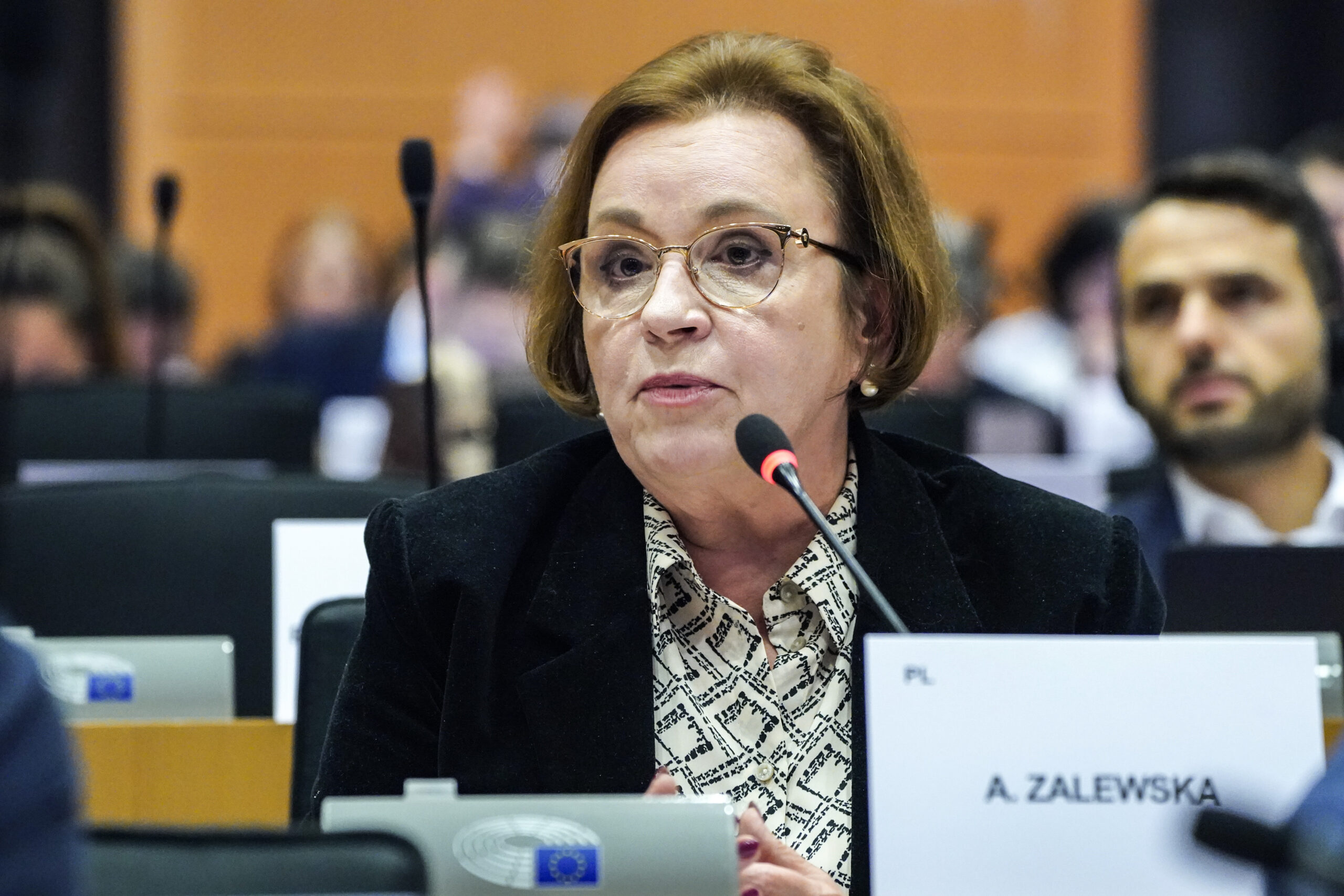
    Conservative and Reformist (ECR) MEP Anna Zalewska, rapporteur for the European Parliament on the revision of the Waste Framework Directive

    Farmers were left out – at least initially: the text that resulted from the agreement does not include any targets aimed at primary production, the impact of which will be assessed later in the review scheduled for 2027. “Today, we have taken concrete steps to reduce waste without overwhelming businesses with red tape. At the same time, we have ensured that policies to reduce food waste have absolutely no negative impact on the agricultural sector,” Zalewska exulted.

    Textile waste: fast-fashion in the crosshairs, exemptions for second-hand items

    The agreement on the revised directive also establishes harmonized rules on extended producer responsibility for textile manufacturers and fashion brands. In essence, they will be held responsible for the entire life cycle of textile products – and thus their waste – and will be required to pay a fee to help finance its collection and treatment. The cost will depend on how circular and sustainable their product design is.

    The new rules cover clothing, accessories, footwear, blankets, bed and kitchen linen, curtains, and hats. They will apply uniformly to all manufacturers, including e-commerce, whether established in an EU country or outside. Charges on textile collection, sorting, and recycling costs will apply 30 months after the directive is implemented, except for micro-enterprises, which will have an additional year to comply.

    The targets of the directive are fast fashion manufacturers: to prevent textiles from being discarded before they reach their potential lifespan, member states can adjust the fees paid by manufacturers based on textiles’ usage life and durability. At the opposite end of the spectrum, there are incentives for second-hand products: “It was essential to exclude second-hand stores from paying a tax for each item sold,” the rapporteur for the European Parliament noted because “such charges would be contrary to the objective of the directive, which is to promote circularity by encouraging repair and reuse.”

    English version by the Translation Service of Withub
    Tags: anna zalewskafood wastetextile wastetrilogueswaste framework directive

    Related Posts

    A sign promoting plastic free packaging is seen above a display of loose fresh fruit as a shopper browses at Budgens supermarket in Belsize Park, north London on July 2, 2019. British supermarkets are starting to go "nude". Bowing to increasing pressure from environmentally conscious consumers, big brand shops have begun taking steps to strip their shelves of plastic wrapping over concerns about saving the oceans from waste. (Photo by TOLGA AKMEN / AFP) / TO GO WITH AFP STORY BY CLARA WRIGHT
    Green Economy

    EU packaging regulation becomes law: crackdown on fruit and vegetable plastic packaging in sight

    16 December 2024
    Green Economy

    Recycling and resale, EU circularity rate increases in 2023

    13 November 2024
    Green Economy

    EU, amount of waste recovered on the rise. Italy leads the way in recycling

    17 October 2024
    rifiuti spreco alimentare
    Business

    The EU is wasting more and more food. 132 kilograms of food per inhabitant thrown away in 2022

    27 September 2024
    map visualization
    French President Emmanuel Macron, accompanied by Italian Prime Minister Giorgia Meloni, British Prime Minister Keir Starmer and German chancellor Friedrich Merz, arrives at the Elysee Palace for a conference on the initiative for maritime navigation in the Strait of Hormuz on April 17, 2026, in Paris, France. Photo by Jeanne Accorsini/Pool/ABACAPRESS.COM

    The Strait of Hormuz has reopened; the willing from Paris ready for a peace mission

    by Giulia Torbidoni
    17 April 2026

    At the summit organised by the leaders of France and the United Kingdom, the news of the reopening of the...

    Seggi elettorali. Fonte: Sara Minelli via Imagoeconomica

    Following Hungary, Bulgaria, Cyprus, Sweden, and Latvia: EU elections in 2026

    by Redazione eunewsit
    17 April 2026

    As of April 2026, the centre-right leads 13 of 27 governments, plus three right-wing governments (such as Giorgia Meloni’s in...

    Mediterraneo Patto

    Turning current challenges into opportunities: the EU presents its action plan for the Mediterranean

    by Annachiara Magenta annacmag
    17 April 2026

    Dubravka Šuica, the Commissioner for the Mediterranean, outlined the three key pillars today: people and education, the economy, and security...

    TERRORISTI ISLAMICI TERRORISTA TERRORE GUERRIGLIA MILIZIANI GENERATE AI IA ISLAMICO FONDAMENTALISTA FONDAMENTALISTI FONDAMENTALISMO ISLAM TERRORISMO

    The Middle East is a cause for concern for the EU: “Keep a close eye on the threat of terrorism”

    by Emanuele Bonini emanuelebonini
    17 April 2026

    The issue at the top of the foreign ministers’ agenda. A meeting with the Lebanese Prime Minister is scheduled, and...

    • Director’s Point of View
    • Opinions
    • About us
    • Contacts
    • Privacy Policy
    • Cookie policy

    Eunews is a registered newspaper
    Press Register of the Court of Turin n° 27


    Copyright © 2025 - WITHUB S.p.a., Via Rubens 19 - 20148 Milan
    VAT number: 10067080969 - ROC registration number n.30628
    Fully paid-up share capital 50.000,00€


    No Result
    View All Result
    • it ITA
    • en ENG
    • Politics
    • Newsletter
    • World politics
    • Business
    • General News
    • Defence & Security
    • Health
    • Agrifood
    • Altre sezioni
      • Culture
      • Diritti
      • Energy
      • Green Economy
      • Gallery
      • Finance & Insurance
      • Industry & Markets
      • Media
      • Mobility & Logistics
      • Net & Tech
      • News
      • Opinions
      • Sports
    • Director’s Point of View
    • Draghi Report
    • Eunews Newsletter

    No Result
    View All Result
    • it ITA
    • en ENG
    • Politics
    • Newsletter
    • World politics
    • Business
    • General News
    • Defence & Security
    • Health
    • Agrifood
    • Altre sezioni
      • Culture
      • Diritti
      • Energy
      • Green Economy
      • Gallery
      • Finance & Insurance
      • Industry & Markets
      • Media
      • Mobility & Logistics
      • Net & Tech
      • News
      • Opinions
      • Sports
    • Director’s Point of View
    • Draghi Report
    • Eunews Newsletter

    Attention