



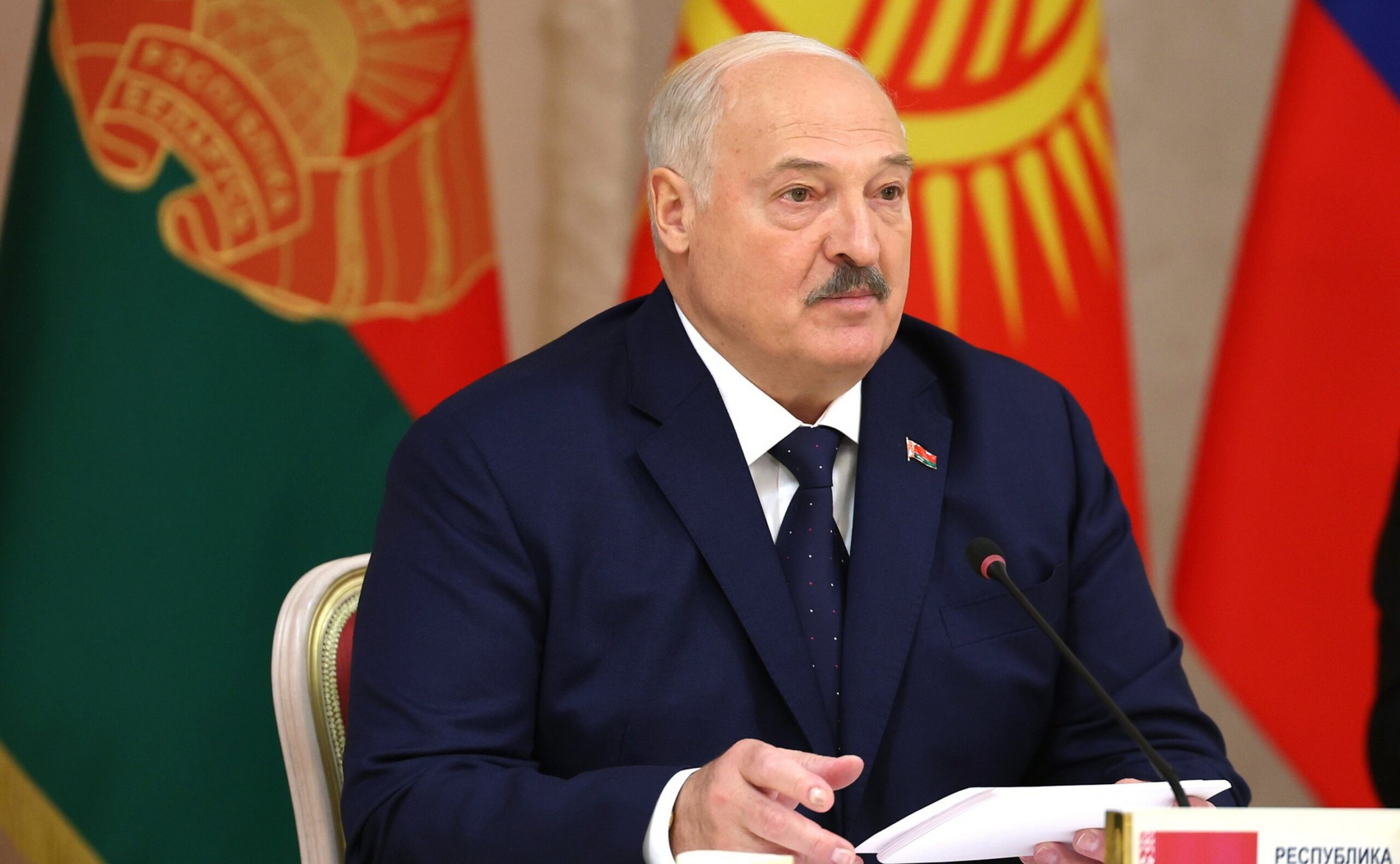
Brussels – It seemed to belong to the past, but the saga involving Belarus weaponising migrants is making a comeback, only this time at the EU’s southern borders. This, at least, is what the European Commission set out to find by investigating a series of dubious flights between Minsk and Benghazi, Eastern Libya’s capital which is firmly in the hands of pro-Russian General Khalifa Haftar.
There is a certain unease in these summer recess days in Brussels’ corridors of power. In addition to the White House tariffs, a new episode in the artificial migratory crisis engineered by Alexander Lukashenko‘s Belarus, a satellite of Vladimir Putin’s Russia and for years the protagonist of what the EU and its member states consider to be a full-scale hybrid war, is likely to spoil the Commission’s August.
This time, what arouses the EU executive’s suspicions are a series of flights between Minsk and Benghazi, where the self-proclaimed government of eastern Libya – in open opposition to the one in Tripoli, recognized by the UN and the EU – is based, led by the authoritarian General Khalifa Haftar, an strong ally of the Tsar in the strategic North African region.
The Commission fears that the strongman in Eastern Libya is preparing a new wave of irregular migrants towards the southern borders of the Union, especially those of Italy and Greece. Under scrutiny, yet again, is the Belarusian airline Belavia, already at the centre of the storm in recent years for the transport of migrants and refugees to European borders in coordination with the Kremlin. Flows from Libya to the EU increased significantly in the first six months of 2025, with 27,000 arrivals in Italy and over 7,000 in Greece, respectively twice and three times as many as in the same period last year.
Belarus is not new to this kind of instrumentalisation of migration flows. Beginning in summer 2021, thousands of desperate people were pushed from the Eastern European country towards the borders of Poland, Lithuania, and Latvia, triggering a severe political crisis in the EU that led, among other things, to the reintroduction of anti-migrant walls and barriers along the borders of several states.
Since then, Lukashenko has, in fact, never stopped using human beings as a weapon in his strategy to destabilize the 27 member states. New episodes of this kind occurred for the last time in chronological order in autumn, with the countries most directly concerned (see Poland of Donald Tusk) intending to “suspend” the right to asylum for the sake of security, even though international conventions guarantee it.
To face this emergency, which in recent times also included the pressure directed from Russia towards Finland, the European Commission decided in December to allocate €170 million to militarize the borders with Belarus and the Federation, which largely coincide with the Eastern flank of NATO (which extends to the Black Sea).
English version by the Translation Service of Withub




![La video riunione dell'Eurogruppo [27 marzo 2026. Foto: European Council]](https://www.eunews.it/wp-content/uploads/2026/03/eurogruppo-260327-120x86.jpg)
