
Brussels –European Union-United States trade, Russian oil is now likely to weigh in on the tariff issue. The political agreement announced by the parties at the end of July has not yet come into force, and already everything could be called into question, as US President Donald Trump is determined to “punish” those who buy energy from Moscow and his suppliers, Gazprom and Lukoil. Such a decision has already been taken against India, and now Washington’s “anti-Putin axe” could fall on the twelve-star Europe and its Member States.
The White House position has already been stated, but it is the ominous message from Republican Senator Lindsey Graham that casts a shadow over the immediate future. “President Trump’s decision to attack countries that support Putin’s war machine by buying cheap Russian oil is a turning point,” he premised. Then the warning for the EU: ”
To my European friends who have been helping Ukraine, it is much appreciated. However, it is not lost upon me or others that you are buying oil from India – that India originally purchased from Russia. We are watching.”
President Trump’s decision to go after countries that prop up Putin’s war machine by buying cheap Russian oil is a gamechanger. These countries are about to pay a long overdue and heavy price.
To my European friends who have been helping Ukraine, it is much appreciated.…
— Lindsey Graham (@LindseyGrahamSC) August 6, 2025
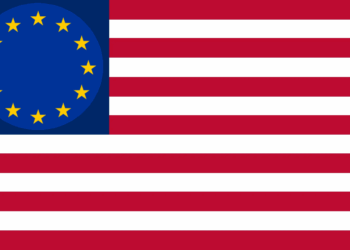
EU under observation, then. A message that is part of the delicate and increasingly complicated agreement on tariffs that was immediately called into question. Trump has already warned that the EU must keep its commitment to make $750 billion worth of energy purchases from the US, or the 15 per cent tariffs will be increased to 35 per cent. The call on Russian oil inevitably fits into the context and conditions of the understanding reached with the European Commission.
It is a fact that EU member states still buy Russian gas and oil. In a minimal and residual way, of course, but revenue is still guaranteed to the Kremlin. According to the European roadmap, the account will be cleared no earlier than the end of 2027.
A known fact, but one that the US administration could now use to its advantage in order not to implement a tariff agreement that is struggling to get off the ground and is causing nervousness in Brussels.
Tariffs for cars have not yet dropped from 27.5 per cent to 15 per cent, and it is still unclear whether semiconductors will be part of the deal. “We have a political agreement and we are working to stabilise it,” merely comments Olof Gill, spokesman for the EU Trade Executive. As for when the terms of the agreement will come into force and what they will cover, “we cannot give an answer,” he admits. “The questions have to be addressed to the United States; everything depends on them now.” The announced agreement is increasingly a big question mark.
English version by the Translation Service of Withub![[foto: Avisadehh/Wikimedia Commons]](https://www.eunews.it/wp-content/uploads/2025/08/EU_USA-350x250.jpg)



!['Alta rappresentante per la politica estera e di sicurezza dell'UE, Kaja Kallas [Bruxelles, 16 marzo 2026]](https://www.eunews.it/wp-content/uploads/2026/03/kallas-260316-120x86.png)