




Brussels – While Europe tries to turn the White House super-summit into tangible outcomes, Hungary proceeds on its collision course with Ukraine. Not only by obstructing Kyiv’s path towards accession to the twelve-star club (on which Donald Trump has demanded explanations from Viktor Orbán), but also by threatening to suspend electricity supplies to the aggrieved country in retaliation for its bombing of the Druzhba pipeline, through which Budapest imports Russian oil.
An end to Hungary’s and Ukraine’s standoff over energy supplies is nowhere in sight. Hungarian Foreign Minister Péter Szijjártó started the latest bitter exchange, lashing out against the Kyiv government for having hit a couple of pumping stations along the 4,000-kilometer-long Druzhba pipeline supplying Central and Eastern Europe with Russian oil via Belarus and Ukraine.
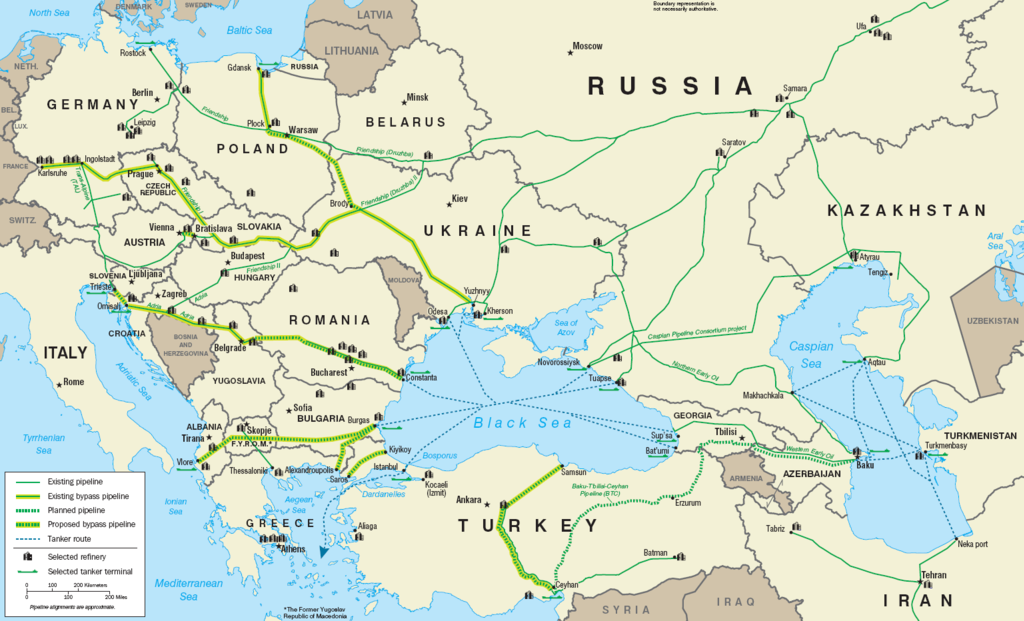
The Czech Republic has recently disconnected itself from the so-called “Friendship Pipeline.” Now, however, Hungary and Serbia want to extend it to make it arrive in the Balkan country, defying Brussels’ plans to phase out Russian fossil fuels. Even Slovakia (which
has long leveraged the issue of its energy security by putting its foot down on sanctions against the Kremlin) has seen its oil supply cut off as a consequence of the Ukrainian attacks.
“Ukraine has once again attacked the pipeline to Hungary, cutting off supplies. This latest attack on our energy security is outrageous and unacceptable!” the head of Budapest’s diplomacy complained in a post on X, accusing Kyiv and Brussels of wanting to “drag Hungary into war.“
“This is not our war,” Szijjártó reiterated, seasoning it with a far from subtle threat: “A reminder to Ukrainian decision-makers: electricity from Hungary plays a key role in powering your country…,” he added. According to Hungarian government data, in 2024 Kyiv imported approximately 2.14 terawatt-hours of electricity from Budapest, accounting for around 40 percent of Ukraine’s total needs.
Peter, it is Russia, not Ukraine, who began this war and refuses to end it. Hungary has been told for years that Moscow is an unreliable partner. Despite this, Hungary has made every effort to maintain its reliance on Russia. Even after the full-scale war began. You can now send… https://t.co/yvMq8slTG0
– Andrii Sybiha August 18, 2025
His Ukrainian counterpart Andrij Sybiha firmly rejected the accusations. “Hungary has been told for years that Moscow is an unreliable partner,” the foreign minister replied. “Despite this, Hungary has made every effort to maintain its reliance on Russia. Even after the full-scale war began. You can now send your complaints—and threats—to your friends in Moscow,” he concluded.
Moreover, Hungary is also in the political headlines these days for two other episodes, both related to Donald Trump and the peace process that the tycoon is trying to initiate to end the Ukraine war. During the marathon meeting on Monday (18 August) at the White House, the US president picked up the phone to speak to Viktor Orbán, among his most loyal supporters on the Old Continent, but only after calling Vladimir Putin.
In the exchange with the authoritarian Hungarian prime minister, under alleged pressure from the EU leaders present, Trump reportedly demanded an account of Orbán’s systematic obstructionism on the dossier of Kyiv’s entry into the Union. The Hungarian prime minister justifies his opposition with continental security, reversing the prevailing narrative in Brussels. While for the over 27 member states, integrating Kyiv into the EU means increasing security for everyone, for him, “Ukraine’s accession to the EU does not provide any guarantee of security,” neither for the Ukrainians nor for the Europeans, who, he argues, would bring war home.

In that same phone call, Orbán reportedly proposed to Trump to host a trilateral summit in Budapest with Putin and Volodymyr Zelensky, strongly advocated by the US president. However, the symbolism for Ukraine would be ominous. It was there, in 1994, that Kyiv and Moscow signed the memorandum by which the former Soviet republic handed over its nuclear warheads to Russia in return for a promise that the Federation would respect its territorial integrity. Ten years later – without London and Washington providing the security guarantees required by the treaty – the Kremlin annexed Crimea and supported the uprising of pro-Russian separatists in the Donbas.
Wherever it takes place, however, the Trump-Putin-Zelensky meeting should follow a face-to-face meeting between the leaders of the two belligerent countries, on which diplomats halfway around the world are working. One of the possible locations for the bilateral meeting could be Geneva, Switzerland, as suggested by France and Italy. The Swiss government has already announced that it would provide the tsar with immunity from arrest warrants from the International Criminal Court, should he decide to travel to the Alpine state for peace talks.
English version by the Translation Service of Withub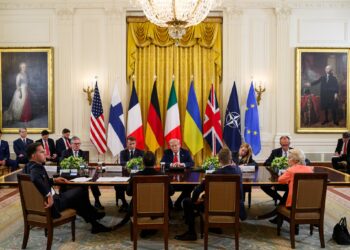






![[foto: Guillaume Baviere/WikimediaCommons]](https://www.eunews.it/wp-content/uploads/2026/01/Cuba_Che-120x86.jpg)
