Brussels – The European Parliament is forging ahead and taking the governments of member states to court. At the centre of yet another head-on clash between the EU institutions is the SAFE rearmament fund, which has come under fire in the Chamber for procedural reasons rather than its substance. According to the legal services of the House, the legal basis chosen by the Commission is inappropriate and undermines the democratic legitimacy of the entire process.
It will now be the turn of the judges of the Court of Justice of the EU (CJEU) to rule on the issue formally raised by the European Parliament on 20 August. As explained to Eunews by parliamentary sources, following the recommendation of its legal committee (JURI), the European Parliament formally asked the Court to annul the SAFE regulation under Article 263 of the Treaty on the Functioning of the EU (TFEU), which governs the review of the legality of official acts adopted by EU institutions.
In referring the matter to the Union’s highest judicial body, the MEPs lashed out at the 12-star executive’s use of the controversial Article 122 of the Treaty on the Functioning of the EU (TFEU), which, through an accelerated procedure, de facto excludes the Strasbourg Chamber from the consultation procedure.
“The use of Article 122 as a legal basis for the SAFE regulation was, according to Parliament, procedurally incorrect and unnecessary, as it compromises the democratic legitimacy” of the whole process, the sources say. The appeal by the Strasbourg Chamber, therefore, has more to do with form than substance, and now the ball is in the hands of the CJEU.
“The SAFE regulation enjoys the full support of the Parliament, as it is significant for Europe and Ukraine,” they point out. The appeal “does not affect the implementation of the regulation,” the sources added. Indeed, “Parliament itself demands that, should it be upheld, SAFE should remain in force until a new replacement legislative act is passed.”

The EU executive has always defended the soundness of its choice, arguing that the use of the emergency clause is fully justified because the EUR 150 billion maxi-fund for joint military projects (both between Member States and between them and third countries such as Norway, the United Kingdom and Ukraine, in the framework of the broader ReArm Europe plan) is an exceptional response to urgent circumstances.
The European Parliament targeted the Council, the other co-legislator of the Union, because it was this institution that approved the von der Leyen maxi-fund, with the final green light from the governments in May. The head of the Commission had announced her willingness to activate Article 122 to shorten the timeframe, obtaining the approval of the main parliamentary groups in early March.
However, the situation was already tense. Parliament does not like to be sidelined (not even for allegedly urgent reasons) and it made this clear to the Commission and the Council during that same month’s plenary session, issuing a strong warning backed across party lines, including the European People’s Party (EPP) itself, to which von der Leyen belongs.
The Legal Committee of the Parliament (JURI) formalized the Chamber’s grievances in an opinion back in April. The president of the Chamber, the popular Roberta Metsola, therefore took the matter into her own hands and, in June, threatened legal action against the governments of the 27 member states. To date,
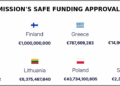
18 Member States have made preliminary requests for access to the 150 billion made available through SAFE. The chancelleries still have time until 30 November to express their interest.